
Permits and Building Codes in Chula Vista: A Complete Guide

If you’re planning a construction or renovation project in Chula Vista, California, understanding the local permits and building codes is essential. These regulations, governed by the City of Chula Vista Municipal Code (Chapters 15.06 and 15.08), ensure that all projects meet safety, zoning, and environmental standards.
Chula Vista kitchen remodels require permits to comply with safety, zoning, and energy codes.
From owner-builder permits to contractor applications, this guide outlines steps, fees, inspections, and ADU rules, ensuring homeowners and contractors complete projects legally and efficiently in Chula Vista, San Diego, and surrounding areas.
You can check and download Building Forms here.
When Do You Need a Permit?
Permits are required for any project that:
- Involves a new or changed use of the property.
- Physically alters existing structures, even if the changes aren’t visible from the outside.
However, some minor work is exempt from permits, as outlined in Form 4551. For example, small repairs or cosmetic updates may not require a permit, but it’s always best to check with the city to confirm.
Adopted Building Codes
Chula Vista follows the 2022 California Building Code, which sets the foundation for construction standards. Additionally, the city has adopted the Green Building Code (CALGreen) and Energy Code for both residential and non-residential development, effective since January 1, 2020. These codes ensure that projects meet energy efficiency and sustainability goals.
Owner-Builder Permits vs. Contractor Permits
- Owner-Builder Permits: Property owners can obtain permits and complete work themselves without hiring a contractor, as long as the structure isn’t intended for sale within one year.
- Contractors: General contractors can obtain permits on behalf of property owners. However, all contractors must hold a valid City of Chula Vista business license.
Planning Division Review: A Crucial Step
Before applying for a building permit, all new, altered, or expanded structures must be reviewed by the Planning Division. This ensures compliance with zoning requirements, such as:
- Setbacks
- Height restrictions
- Lot coverage limits
Skipping this step can lead to project delays or rejections, so it’s important to start with the Planning Division.
Check out our guide on kitchen sink installation for more plumbing tips.
Discretionary Approvals
Some projects may require additional approvals, such as:
- Design Review
- Conditional Use Permits
These discretionary approvals must be secured before a building permit can be issued. If your project falls into this category, plan for extra time to complete the approval process.
Electronic Permitting: Streamlining the Process
Chula Vista offers a convenient online system through Accela Citizen Access, where you can:
- Submit permit applications
- Check permit status
- Schedule inspections
- Pay fees
This digital platform makes it easier to manage your project from start to finish.
Fees and Inspections
- Permit Fees: Calculated based on project type and valuation. Be sure to budget for these costs early on.
- Investigation Fees: If work is done without a required permit, you may face an additional investigation fee.
- Inspections: Required to ensure your project complies with approved plans and codes. You can schedule inspections online or by phone.
Accessory Dwelling Units (ADUs)
ADUs, or granny flats, have specific regulations in Chula Vista, including:
- Size limitations
- Setback requirements
If you’re considering adding an ADU to your property, review the city’s guidelines to ensure compliance.
Contact Information
For questions or more details, reach out to the Chula Vista Development Services Department:
- Phone: (619) 476-2332
- Email: [email protected]
You can also visit the City of Chula Vista’s official website for forms, specifications, and additional resources.
Important Notes
- This guide is for general information only. Always consult the City of Chula Vista’s Development Services Department for project-specific requirements.
- For a full list of forms and detailed guidelines, visit the Forms & Specifications page on the city’s website.
Step-by-Step Guide to Getting a Permit
Embarking on a kitchen remodel in Chula Vista, California, can transform your home, but it’s crucial to navigate the permitting process correctly to ensure compliance with local regulations. Below is a clear, step-by-step guide to obtaining a building permit for your kitchen remodeling project, based on the City of Chula Vista’s requirements.
Step 1: Determine if a Permit is Required
Most kitchen remodels involve structural, electrical, or plumbing work, which typically requires a building permit in Chula Vista. However, minor cosmetic updates, like repainting or replacing cabinet doors, may be exempt. Check Form 4551 on the City of Chula Vista’s website for a list of exempt projects. When in doubt, contact the Development Services Department at (619) 476-2332 or [email protected] to confirm.
Step 2: Verify Compliance with Local Codes and Zoning
Your kitchen remodel must adhere to the 2022 California Building Code, as well as Chula Vista’s Green Building Code (CALGreen) and Energy Code. Additionally, the project must comply with zoning regulations, such as setbacks and height restrictions. Contact the Planning Division early to confirm that your plans align with these requirements and avoid delays later.
Step 3: Prepare Detailed Plans and Documents
Create comprehensive project plans, including:
- Floor plans showing the proposed layout.
- Project specifications detailing materials and scope.
- Contractor details (if applicable).
- For older homes (45 years or older), you may need to submit a photographic survey and the Assessor Building Record.
Ensure your plans are accurate and complete to streamline the review process.
Step 4: Submit Your Permit Application
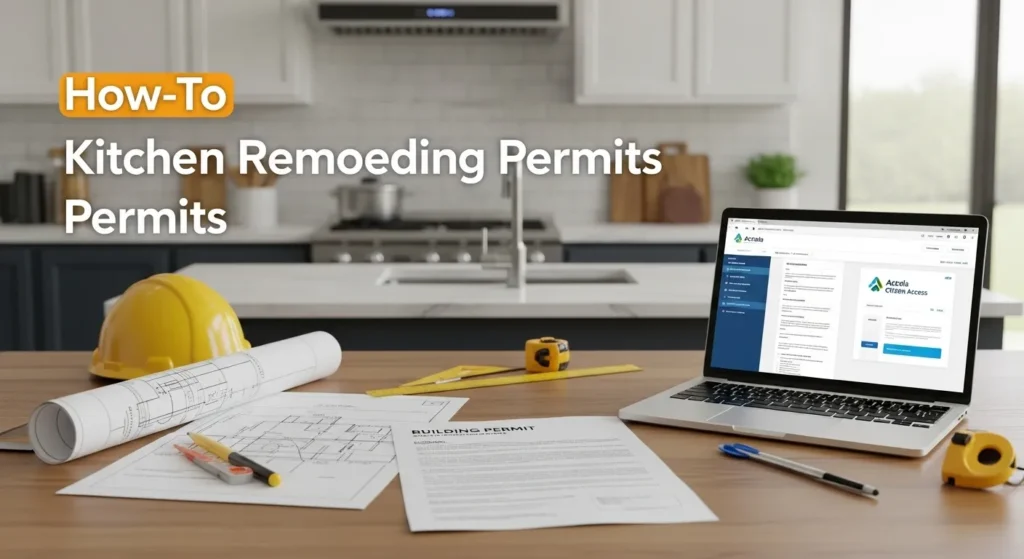
Chula Vista offers a convenient online platform, Accela Citizen Access, for submitting permit applications. Follow the User Guide on the city’s website to upload your plans and documents. Be prepared to provide all required submittal documents, such as engineering calculations or specifications, to avoid rejection.
Step 5: Respond to Plan Checks and Corrections
City staff will review your application for compliance with building codes and zoning regulations. Be ready to address any corrections or revisions they request. Promptly resubmit updated plans to keep the process moving forward.
Step 6: Pay Permit Fees
Permit fees are based on your project’s type and valuation. You’ll need to pay an intake fee and plan review fees upfront. Final fees, including inspection costs, will be calculated after the review process. All fees must be paid before the permit is issued. Note that starting work without a permit may result in an investigation fee.
Step 7: Begin Construction and Schedule Inspections
Once your permit is approved, you can start your kitchen remodel. Schedule inspections at key stages (e.g., rough plumbing, electrical, or framing) to ensure compliance with approved plans and codes. Inspections can be booked online via Accela Citizen Access or by calling (619) 476-2332.
Step 8: Obtain Final Approval
After passing the final inspection, the city will issue a final approval notice, confirming that your kitchen remodel meets all requirements. This marks the official completion of the permitting process.
Additional Tips
- Work with a Licensed Contractor: If hiring a contractor, ensure they have a valid City of Chula Vista business license and are familiar with local permitting processes.
- Owner-Builder Option: If you’re doing the work yourself, you can apply for an owner-builder permit, provided the property isn’t intended for sale within one year.
- Explore Fast-Track Programs: Check with the city for any fast-track permitting options to expedite your project.
- Stay in Touch: For questions or clarification, contact the Development Services Department at (619) 476-2332 or [email protected].
Local Permit Statistics & Trends
Use this trend data to plan remodel timing, avoid permit backlogs, and ensure all inspections are scheduled promptly.
Permit Volume & Growth in Chula Vista
- Chula Vista averages 1,185 residential building permits per year (1980–2019).
- In some early 2000s years, residential permits exceeded 3,000 units annually.
- Permit issuance dipped to around 840 residential units in 2019, including single- and multi-family projects.
- Recent filings (2024–2025) show permits valued at over $1.35 million, mainly for renovations.
- Weekly permit activity can include 20 new permits, mostly for repairs and remodels.
Common Permit Violations & Challenges
- Incomplete submittals: Missing or unclear plans are a frequent cause of delays.
- Plan review back-and-forth: Revisions can extend processing time.
- Inspection scheduling issues: Failing or missing inspections stalls projects.
- Permit bypass risks: Starting work without a permit can trigger investigation fees.
Processing Time & Efficiency Trends
- First plan review: Typically takes 21 calendar days, with 14 days for resubmittals.
- Average approval times: Around 12 days for simple permits; median processing can be same-day for minor projects.
- Comparison: San Diego’s general permit processing averages 49 business days, though simple permits may be issued faster.
Trends in ADU Permitting
- Chula Vista is promoting more Accessory Dwelling Units (ADUs) to meet housing goals.
- In San Diego County (2023), 18% of new housing permits were ADUs.
- Tools like Chula Vista’s Accela Citizen Access portal and San Diego’s Permit Finder streamline tracking and approvals.
Why It Matters
- Renovation and remodel permits remain strong, even when new-home construction fluctuates.
- Efficient permit processing helps homeowners plan remodels strategically.
- Rising ADU permits offer homeowners extra living space or income potential.
- Non-compliance carries real risks, including fines, inspection failures, and investigation fees.
Common Mistakes & How to Avoid Them
1. Submitting Incomplete or Inaccurate Plans
- Mistake: Missing floor plans, material specifications, or contractor details.
- Consequence: Delays during plan review or outright rejection.
- How to Avoid: Prepare detailed plans with accurate dimensions, materials, and scope. Double-check that all required documents (including older home surveys if applicable) are included.
2. Skipping Planning Division Review
- Mistake: Assuming zoning compliance without city approval.
- Consequence: Non-compliant setbacks, height violations, or project rejection.
- How to Avoid: Consult the Planning Division early to confirm zoning alignment, including setbacks, lot coverage, and height restrictions.
3. Misunderstanding Permit Requirements
- Mistake: Thinking minor renovations like painting or cabinet replacement require a full permit.
- Consequence: Either unnecessary expense or accidental permit violations.
- How to Avoid: Check Form 4551 for exempt projects and confirm with the Development Services Department at (619) 476-2332 or [email protected].
4. Ignoring Inspection Schedules
- Mistake: Starting construction without scheduling required inspections.
- Consequence: Work stoppages or fines.
- How to Avoid: Use Accela Citizen Access to schedule inspections promptly for plumbing, electrical, framing, and final approvals.
5. Working Without Proper Licensing
- Mistake: Hiring unlicensed contractors or attempting work without an owner-builder permit.
- Consequence: Fines, voided insurance coverage, or permit denial.
- How to Avoid: Always verify contractor licenses and ensure any owner-builder permits meet city rules.
6. Overlooking Fees and Deadlines
- Mistake: Not budgeting for plan review, permit, or investigation fees.
- Consequence: Permit delays or unexpected costs.
- How to Avoid: Review fee schedules early and pay required fees promptly to keep your remodel on track.
Comparison: Chula Vista vs. San Diego Permit Process
| Feature | Chula Vista | San Diego |
|---|---|---|
| Processing Time | First plan review ~21 days; minor permits may be approved same-day | Average general permit approval ~49 business days; simple permits faster |
| Online Platforms | Accela Citizen Access: submit applications, pay fees, track status, schedule inspections | Permit Finder & DSD portal: online applications and permit monitoring |
| Permit Complexity | Focused on residential remodels and ADUs; minor projects streamlined | Larger city with more complex zoning and discretionary approvals |
| Fees & Inspections | Based on project type and valuation; investigation fees apply if work done without permit; inspections via Accela | Generally higher fees due to scale; multiple inspections required; scheduling online |
| ADU Regulations | Size limits, setbacks, safety codes; city encourages ADU construction | ADUs ~18% of 2023 housing permits; more complex neighborhood-specific regulations |
| Key Takeaway | Faster processing for residential remodels; efficient for smaller projects | Requires more planning and documentation; plan ahead to avoid delays |
Case Study: Successful Kitchen Remodel
Project Overview
- Location: Chula Vista, CA
- Client: Residential homeowner
- Scope: Full kitchen remodel including structural changes, electrical upgrades, new cabinetry, countertops, and lighting.
- Permit Type: General building, plumbing, and electrical permits via Chula Vista Development Services.
Step-by-Step Permit Process
- Determine Permit Requirements:
- Verified all structural, plumbing, and electrical work required permits. Minor cosmetic updates were exempt.
- Planning Division Review:
- Confirmed setbacks, height limits, and zoning compliance.
- Prepare Detailed Plans:
- Floor layouts, material specifications, contractor info, and photographic survey of existing kitchen.
- Submit Application via Accela Citizen Access:
- All documents uploaded, fees paid online, status tracked digitally.
- Respond to Plan Checks:
- City requested minor revisions to electrical layout; updated plans submitted promptly.
- Schedule Inspections:
- Rough plumbing, electrical, framing, and final inspections scheduled and passed successfully.
- Final Approval:
- Permit closed with no fines, confirming the remodel met all building codes.
Results
- Timeline: 8 weeks from initial permit submission to final approval.
- Compliance: Zero violations or rework required.
- Client Satisfaction: Homeowner praised smooth coordination, clear communication, and efficiency.
- Vexkitch Role: Managed permit process, documentation, and coordination with city staff to ensure compliance and timely completion.
Lessons Learned
- Early consultation with the Planning Division avoids delays.
- Detailed, accurate plans prevent back-and-forth revisions.
- Using the Accela Citizen Access portal streamlines the process and keeps everything organized.
- Clear communication between contractor, client, and city ensures a smooth remodel.
✅ Pro Tip for Readers: Document every step, from permit applications to inspections. A well-managed permit process reduces stress and ensures a compliant, high-quality remodel.
Permit Types, Fees, and Inspections
| Permit Type | Typical Projects | Estimated Fees* | Required Inspections | Notes / Tips |
|---|---|---|---|---|
| Building Permit | Structural remodels, wall removal, kitchen expansions | $500–$2,500 depending on valuation | Foundation, framing, final | Submit detailed floor plans; check zoning compliance |
| Plumbing Permit | New or relocated sinks, dishwashers, plumbing upgrades | $150–$600 | Rough plumbing, final | Include plumbing schematics in plans |
| Electrical Permit | New circuits, lighting upgrades, outlets, appliance hookups | $100–$500 | Rough wiring, final | Licensed electrician required |
| Mechanical / HVAC Permit | Vent hood installation, ductwork, new appliances | $100–$400 | Rough, final | Ensure ventilation meets code |
| ADU Permit | Accessory dwelling units (granny flats) | $1,000+ | Foundation, framing, plumbing, electrical, final | Must meet size, setback, and safety code requirements |
| Owner-Builder Permit | Homeowners performing their own remodel | Varies | Same as applicable trades | Property cannot be sold within 1 year |
*Fees are approximate; final costs depend on project valuation and city calculations.
✅ Pro Tip for Readers: Use this table as a quick checklist before starting your kitchen remodel. Confirm exact fees and inspection requirements with the Chula Vista Development Services Department to avoid delays or fines.


Great breakdown, Alex Lina This guide makes navigating Chula Vista’s permits and building codes much clearer for anyone planning a project. Very practical and easy to follow.
Thanks, jordan