Kitchen Sink Installation

Kitchen sink installation means fitting a sink unit into a countertop or wall setup, connecting water supply and drainage lines, and sealing it to prevent leaks. It usually takes 2–6 hours and costs between $250–$1,500 depending on the type and labor.
Why It Matters
Installing a kitchen sink isn’t just a cosmetic upgrade—it directly affects how smoothly your kitchen runs. From washing dishes to prepping dinner, it’s one of the most used fixtures in the house. Done right, it improves efficiency, prevents leaks, and can even raise your home’s value.
Quick Facts:
| Detail | Typical Range |
|---|---|
| Install Time | 2–6 hours |
| Total Cost | $250–$1,500 |
| DIY Skill Level | Moderate to High |
A new sink setup can streamline your space, modernize your look, and fix nagging issues like poor drainage or wobbly fixtures. If you’re updating or starting fresh, it’s a smart move with everyday impact.
Don’t overlook ventilation during your remodel, see our complete guide to kitchen hood and ventilation systems to keep air clean and moisture-free.
Choose the Right Sink Type & Style
Your sink type affects installation ease, cost, and how well it fits your kitchen layout. Here’s a quick side-by-side:
🔧 Sink Types Compared
| Type | Install Ease | Cost | Best For | Considerations |
|---|---|---|---|---|
| Drop-in | Easiest (DIY) | $$ | Most counters | Visible rim, simple to seal |
| Undermount | Moderate–Hard | $$$ | Granite, quartz | Sleek look, needs solid support |
| Farmhouse | Advanced | $$$–$$$$ | Large kitchens | Heavy, cabinet mods needed |
| Wall-mount | Advanced | $$–$$$ | Small or open layouts | Wall must be reinforced |
Tip:
Match your sink style to your countertop, space, and daily kitchen habits. It’ll save you time, money, and headaches down the line.
Planning & Pre-Installation Prep
Before you lift a wrench or cut into a countertop, it pays to prep properly. A solid plan helps avoid costly mistakes and ensures your new sink fits—and functions—flawlessly.
🧰 What to Check Before Installation
- Cabinet Size
Your base cabinet should be at least 2–3 inches wider than the sink bowl. For farmhouse or deeper sinks, cabinet modifications may be needed. - Countertop Material
Some sink types only work with specific surfaces.- Undermount: best with stone or solid surfaces
- Drop-in: works with nearly any material
- Workspace Layout
Think through access to plumbing, proximity to dishwasher, and if you’ll need to move electrical or water lines.
📏 Measure Twice—No Do-Overs
- Confirm sink width, depth, and height
- Check drain alignment with existing plumbing
- Ensure clearance for faucet and sprayer movement
🚰 Plumbing & Local Code Considerations
- Inspect hot/cold water lines, P-trap, and disposal compatibility
- If you’re rerouting plumbing or cutting into cabinetry, local building codes may apply
- Some areas require licensed installers for structural changes or disposal hookups
A little planning upfront saves a lot of backtracking later. Think of it as setting the stage so the real work goes off without a hitch.
Tools & Materials Checklist
Having the right tools and materials at hand makes the installation smoother and faster. Here’s a straightforward list to get you ready.
🛠️ Essential Tools
- Tape measure
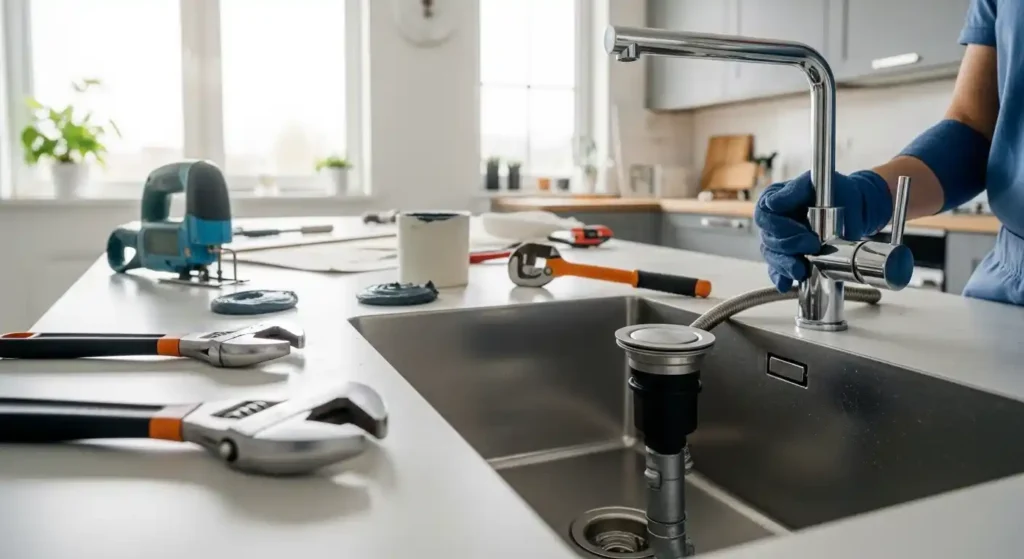
- Jigsaw (for cutting countertop openings)
- Plumber’s putty or silicone sealant
- Adjustable wrench
- Basin wrench (for tight faucet spaces)
- Drill with drill bits
- Mounting clips or brackets
🧱 Key Materials
- Kitchen sink (drop-in, undermount, farmhouse, etc.)
- Faucet and accessories (sprayer, soap dispenser)
- Drain assembly and strainer
- Sealant or caulk (silicone recommended)
- Mounting clips or hardware
- Supply lines and drain piping
Being well-equipped avoids unnecessary trips to the hardware store and keeps your project on track from start to finish.
Once your sink is in, keep it spotless with our quick guide on how to clean kitchen cabinets and remove grease safely, a perfect finishing touch for a refreshed kitchen.
How to Install a Kitchen Sink (Step-by-Step Guide)
Installing a kitchen sink can be straightforward with the right preparation. Follow these key stages to ensure a secure, leak-free fit and a professional finish.
1️⃣ Removing the Old Sink
- Turn off the water supply and open the faucet to release pressure.
- Carefully disconnect the hot and cold plumbing lines.
- Remove all mounting clips and scrape off old sealant.
- Take clear photos of the existing setup for easy reference during reassembly.
2️⃣ Preparing the Countertop Opening
- Position the sink template on the countertop and trace the cut line.
- Drill pilot holes and cut along the outline using a jigsaw.
- Protect the countertop edges with masking tape or padding while cutting.
3️⃣ Installing Faucet & Accessories First
- Mount the faucet, sprayer, and soap dispenser before setting the sink.
- Pre-installation makes it easier to access tight spaces and ensures proper alignment.
4️⃣ Setting the Sink
- Apply a continuous bead of silicone sealant around the countertop opening.
- Lower the sink into place (for drop-in models) or secure it with brackets (for undermount types).
- For heavy farmhouse sinks, reinforce the base cabinet with additional support.
5️⃣ Plumbing Connections
- Assemble and attach the drain, strainer, and disposal unit (if applicable).
- Connect supply lines and the P-trap using plumber’s tape or thread sealant.
- Check all joints for snug, leak-free connections.
6️⃣ Finishing & Leak Testing
- Wipe away excess sealant and tighten mounting clips evenly.
- Turn on the water supply and inspect for leaks.
- Fill the sink and drain it completely to confirm proper sealing and drainage.
⚡ Pro Tip:
A smooth installation depends on patience and precision, measure twice, seal once, and always verify every connection before finalizing.
DIY vs. Hiring a Pro
DIY Benefits
- Saves money by cutting out labor costs
- Full control over timing and pace of work
DIY Drawbacks
- Risk of leaks or improper sealing if skills fall short
- Requires specialized tools and know-how
Why Hire a Pro
- Licensed plumbers ensure code compliance and secure installations
- Warranties cover future issues and offer peace of mind
- Professionals handle complex tasks like plumbing reroutes and heavy sink setups
When to Call a Pro
- Moving or adding plumbing lines
- Installing sinks with new countertops
- Dealing with large, heavy farmhouse or custom fixtures
Choosing the right approach depends on your confidence, tools, and project complexity. Sometimes, a pro’s expertise can save time and costly fixes down the road.
Cost & Time Breakdown
What You’re Looking At
| Item | Typical Cost Range |
|---|---|
| Sink Unit | $150 – $1,600 |
| Installation Labor | $200 – $500+ |
| Cabinet Reinforcement | Additional if needed |
Time Estimates
- Drop-in sinks: 2 to 4 hours
- Undermount or farmhouse sinks: 4 to 6+ hours
Local Factors
Labor costs vary by location. In Chula Vista, expect rates to align with regional averages, which may fluctuate based on demand and complexity.
Planning with these figures in mind keeps surprises at bay and helps budget your project realistically.
Maintenance & Care Tips
Keeping your kitchen sink in top shape requires simple habits and a bit of attention.
- Daily Cleaning: Use mild soap and warm water. Avoid abrasive cleaners that can scratch surfaces.
- Wipe Dry: After use, drying prevents water spots and mineral buildup.
- Leak Checks: Regularly inspect plumbing connections and caulk lines for drips or cracks.
- Aerator Care: Clean faucet aerators periodically to maintain steady water flow.
Material-Specific Notes
| Material | Care Tips |
|---|---|
| Stainless Steel | Avoid steel wool; polish with a soft cloth. |
| Porcelain | Use non-abrasive cleaners to prevent chips. |
| Composite | Clean with mild detergent; avoid harsh chemicals. |
Routine upkeep extends your sink’s life and keeps it looking fresh—small efforts for lasting results.
⚠️ Common Mistakes to Avoid
Even experienced DIYers can trip up on a few key details during kitchen sink installation. Catching these ahead of time prevents leaks, warping, or wasted effort.
| Mistake | Why It’s a Problem | How to Avoid It |
|---|---|---|
| Skipping a Dry Fit | The sink or faucet may not align with plumbing or countertop cutouts. | Always test-fit the sink and fixtures before applying sealant. |
| Over-Tightening Drain Fittings | Too much pressure can crack gaskets or warp the drain flange. | Hand-tighten first, then give a quarter turn with a wrench. |
| Ignoring Plumber’s Tape | Missing tape on threaded joints often causes slow leaks. | Apply Teflon tape or sealant on every threaded fitting. |
| Neglecting Cabinet Support | Heavy sinks—especially farmhouse models—can sag or loosen over time. | Reinforce the cabinet base before installing the sink. |
| Rushing Sealant Application | Uneven caulk lines lead to leaks and poor adhesion. | Use a steady bead of silicone and allow proper curing time. |
| Skipping Leak Tests | Small drips can cause cabinet damage or mold later. | Fill the sink, run water, and inspect all joints before finishing. |
💡 Quick Tip:
If the sink wobbles or sealant pulls away within the first 24 hours, recheck mounting clips and retighten connections gently. A steady, sealed setup now means fewer headaches later.
Thinking of pairing your new sink with upgraded countertops? Check out our kitchen countertop installation guide for expert tips on selecting durable, stylish surfaces.
🌿 Eco & Water Efficiency Upgrades
Modern kitchens are shifting toward smarter, greener designs. Small fixture upgrades can lower water bills, minimize waste, and make your kitchen more responsive to everyday use.
| Upgrade Type | Description | Savings & Benefits |
|---|---|---|
| Low-Flow Faucets | Designed to limit flow without reducing pressure. | Cuts water use by up to 30%, saving hundreds of gallons per year. |
| Touchless Faucets | Activate automatically using motion sensors. | Improves hygiene, reduces water waste during prep and cleanup. |
| Smart Leak Detectors | Monitor moisture and alert you to leaks early. | Prevents costly water damage and reduces insurance risks. |
| Aerators & Flow Restrictors | Simple add-ons that mix air with water for efficient flow. | Inexpensive, easy DIY option for quick conservation gains. |
| Energy-Efficient Water Heaters | Support steady flow with less heat loss. | Lowers both energy and water costs over time. |
💧 Pro Insight:
When upgrading your sink or faucet, look for EPA WaterSense-certified fixtures. They meet strict efficiency standards while maintaining strong performance — a win for both your wallet and the environment.
🧩 Local Expert Tip — From Vexkitch (Chula Vista)
Pro Tip:
Before installing or replacing a kitchen sink, inspect your cabinet base for any signs of moisture, soft spots, or wood rot. Even minor water damage can weaken the cabinet structure and shorten the life of your new setup.
Planning a full kitchen overhaul? Our kitchen remodeling services in Chula Vista cover everything from layout design to plumbing upgrades.
🛠️ Vexkitch Advice:
If you notice swelling or discoloration, seal the area or replace the affected panels before continuing. A sturdy foundation ensures your sink remains secure and level for years, saving you costly repairs later. For related planning, see Fireplace and Fire Pit ideas.
FAQs
If your project involves new fixtures or plumbing reroutes, learn more about professional plumbing installation and how it ensures long-term reliability.
Sink Material Showdown: Hygiene & Longevity
Choosing the right sink material isn’t just about aesthetics, it affects durability, cleaning ease, and even hygiene. Here’s a clear comparison to help you make a smart choice.
| Material | Durability | Stain Resistance | Bacterial Growth | Cost Range | Best Use |
|---|---|---|---|---|---|
| Stainless Steel | High | Very High | Low | $$ – $$$ | Modern kitchens, heavy use |
| Porcelain / Ceramic | Medium | Medium | Medium | $$ – $$$ | Classic or vintage-style kitchens |
| Composite Granite / Quartz | Very High | High | Low | $$$ – $$$$ | Luxury kitchens, scratch resistance |
| Copper / Brass | Medium | High | Anti-microbial | $$$ – $$$$ | Statement sinks, smaller kitchens |
💡 Pro Insight:
- Stainless steel is favored by 70% of remodelers for durability and ease of cleaning.
- Composite sinks reduce scratches and stains by roughly 25–30% compared to porcelain.
- Copper naturally inhibits bacterial growth, making it a small hygiene advantage in busy households.
Mini Checklist for Choosing a Material:
- ✅ How often do you cook or wash dishes?
- ✅ Do you want a low-maintenance surface?
- ✅ Does your countertop support heavy sinks (like composite granite)?
- ✅ Are you aiming for a long-term investment or short-term aesthetic?
DIY Readiness Self-Assessment
Not every homeowner is ready to tackle sink installation alone. Use this quick self-assessment to determine if DIY is right for you.
Ask Yourself:
| Question | Yes | No |
|---|---|---|
| Do you have basic plumbing knowledge? | ☐ | ☐ |
| Can you safely handle a jigsaw and power drill? | ☐ | ☐ |
| Are you comfortable sealing and testing for leaks? | ☐ | ☐ |
| Do you have the time to complete installation in 1 day? | ☐ | ☐ |
| Can you reinforce cabinets for heavy sinks if needed? | ☐ | ☐ |
How to Score:
- 4–5 Yes: You’re likely ready to DIY.
- 2–3 Yes: Consider partial DIY (e.g., faucet installation only).
- 0–1 Yes: Hiring a pro is safer and more efficient.
💬 Expert Tip from Vexkitch:
Even experienced DIYers should consider professional help for undermount or farmhouse sinks. A proper installation reduces leaks, prevents cabinet damage, and protects your warranty.