Village Kitchen Ideas: Old-World Character With Modern Function

Village Kitchen Ideas: Old-World Character With Modern Function
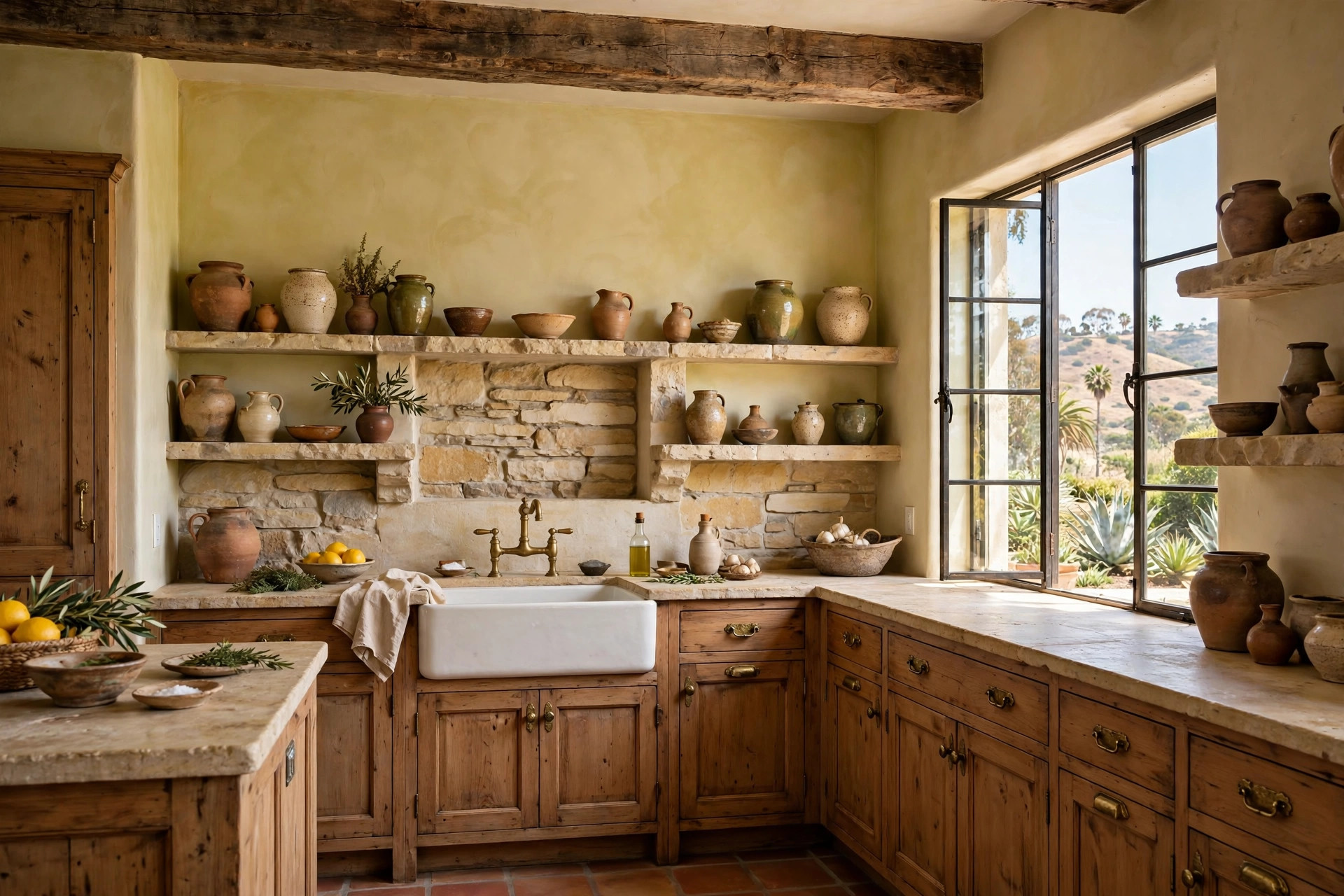
A village kitchen feels like it grew up over generations. Plaster walls carry a soft hand-troweled texture, stone or handmade tile shows small shifts in color, and wood cabinets wear their grain instead of hiding it. While bright white kitchens dominated recent years, village kitchen ideas lean the other way — toward age, patina, and gathered character.
The catch is that most homeowners want the look without giving up how they actually cook. Pull-out storage, layered lighting, and proper ventilation matter every day in a Chula Vista home, and a successful design holds both sides at once. This post explains what gives a kitchen old-world character, how village style differs from farmhouse, and how to build the look around genuinely modern function in a South Bay remodel.
Village Style Is Not Farmhouse Style
Farmhouse and village styles share a love of wood and stone, but they pull from different roots. Farmhouse reads American: apron sinks, shiplap, painted beadboard, and a bright, clean nostalgia. Village kitchens reach further back and across the map — English cottage kitchens, Provençal stone houses, the warm interiors of Mediterranean farmsteads — materials with visible age and rooms that feel gathered over time rather than styled in a single afternoon.
The practical difference sits in the finish work. Farmhouse kitchens often rely on crisp paint and new materials styled to look rustic. Village kitchens commit to materials that actually carry texture: lime-washed plaster instead of flat drywall, honed stone instead of polished quartz, wood left to show its grain. If you lean toward the farmhouse direction, our farmhouse style kitchens overview covers it. The rest of this post stays on the European, collected end of the spectrum.
Where Old-World Kitchens Fight Modern Life
A genuine centuries-old village kitchen has charm to spare — and, in a modern household, a list of daily frustrations. Original worktops sit lower than today’s 36-inch standard. Storage means deep, dark cabinets where pans stack three high. One ceiling fixture throws harsh shadows across the work area, and the range vents into the room instead of outside.
The answer is not to abandon the character. It is to keep the character in the surfaces your eyes register — walls, stone, wood, hardware — and rebuild everything you touch and use every day. Cabinet boxes stay period-correct on the outside; the insides get full-extension drawers, soft-close hinges, and pull-out shelving. Old proportions stay in the beam work and plaster; the layout follows modern clearances and work triangles. Deciding early which elements carry the old-world look and which ones serve modern function keeps the design from splitting in two directions mid-project.
Start With the Shell: Plaster, Stone, and Wood
Character lives in the fixed surfaces. Three materials do most of the work in a village kitchen:
- Lime-washed or clay plaster walls. Flat drywall reads modern no matter what hangs on it. A hand-troweled plaster or limewash finish catches light in soft shifts and gives walls a depth paint alone cannot reach. It also hides small surface imperfections instead of broadcasting them, which matters in older Chula Vista homes whose walls have settled over the decades.
- Honed natural stone. A stone backsplash or honed stone countertop brings the old-world anchor. Honed finishes matter more than the stone type: they mute reflections, feel soft to the touch, and age gracefully. Proper sealing keeps maintenance reasonable in a working kitchen.
- Wood with visible grain. Warm oak or walnut cabinets, a reclaimed-wood beam across the ceiling, or a solid wood range hood mantle — wood supplies the warmth that keeps stone and plaster from feeling cold. Let the grain show through a stain or matte lacquer instead of painting over it.
These three decisions set the room’s age. Everything else — hardware, shelving, textiles — sits on top of them.
Layer Collected Details Without Clutter
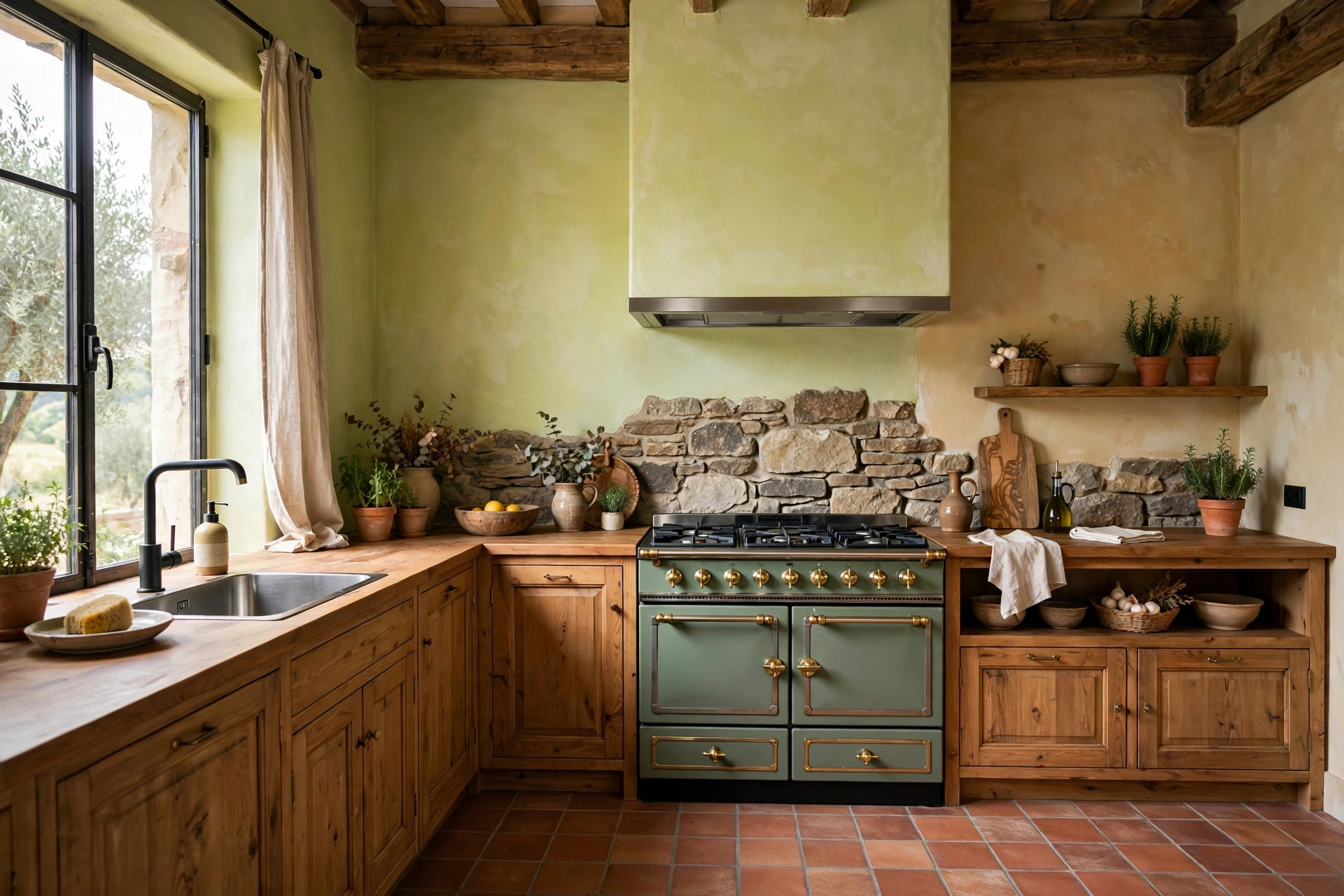
Old-world kitchens feel gathered, not staged. The difference between collected and cluttered comes down to editing: a few pieces with real age beat a dozen small decorations.
- Aged brass or iron hardware. Cup pulls, latches, and knobs in unlacquered brass develop patina with handling. Iron hardware adds weight and reads authentically against wood cabinets.
- Open stone or wood shelving. One or two runs of open shelves hold handmade pottery, ceramic bowls, and a few glass pieces. Keep the pieces you actually use there; shelf displays that never get touched collect grease and dust.
- One statement piece with history. An antique dough bowl, a weathered cutting board, or a vintage scale gives the room its gathered feel. One or two is enough — the materials should do most of the talking.
- Natural textiles. A linen or cotton runner, a woven basket for produce, and plain wood cutting boards add softness without pattern noise.
Closed storage handles the everyday clutter. A village kitchen forced to absorb every appliance and cereal box on the countertop loses its calm quickly, and it is the cabinet interiors — not the shelves — that do that job.
Keep Modern Function Behind the Character
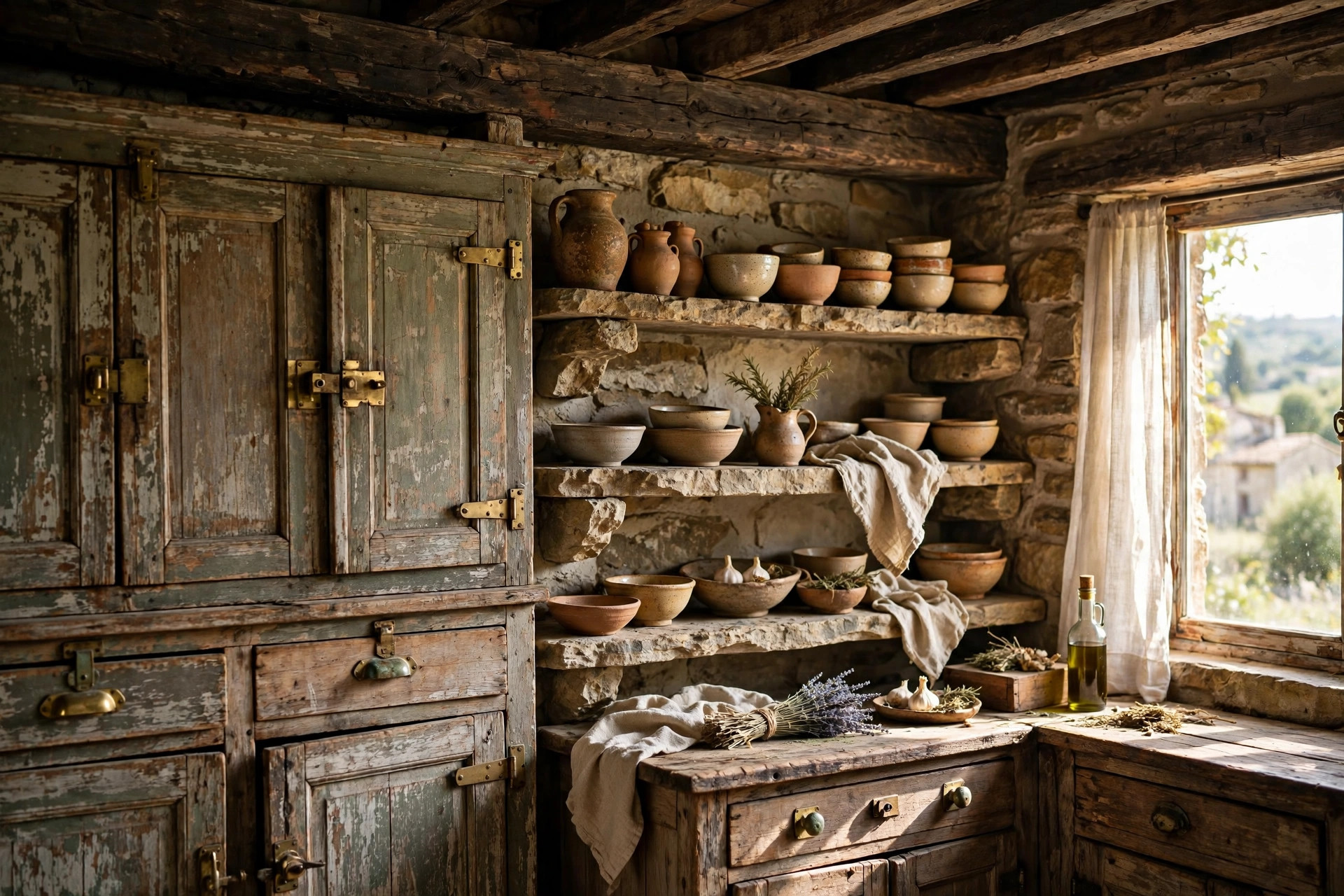
This is where a village kitchen succeeds or fails as a daily workspace. Nothing about old-world character prevents modern performance; it just asks that the modern parts stay out of sight or blend in.
Cabinet interiors. Full-extension drawers, deep drawer stacks for pots, pull-out trash and recycling, and tray dividers near the range. From the outside, the kitchen reads old-world. Inside the cabinets, it works like a new build.
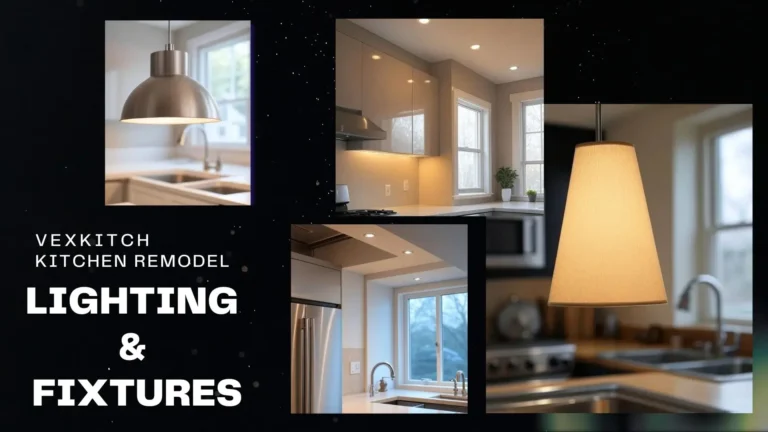
Lighting in layers. Old kitchens relied on daylight and one pendant. Modern village kitchens need recessed or ceiling lights for general coverage, under-cabinet strips to light the worktop, and pendants over the island for focus. Warm bulb temperatures (2700K–3000K) keep plaster and wood glowing instead of washing them flat.
Appliances that blend. Panel-ready dishwashers and refrigerators disappear behind cabinet fronts. A range can carry a traditional look while offering modern ovens and induction underneath. Hoods wrapped in plaster or wood become a feature instead of a stainless interruption.
Ventilation that actually vents. Real cooking produces grease and moisture, and porous materials like plaster and wood show it. A properly sized range hood vented to the exterior protects the surfaces you chose for character. This is one place where cutting corners costs more later, in refinishing.
A full remodel is the natural moment to handle this pairing, since walls are open and the layout is already on the drawing board. Our interior kitchen remodeling services cover this kind of whole-room plan, where finishes and function get decided together instead of patched in afterward.
Fitting Village Style Into a Remodel Plan
Budget follows a simple order: shell first, guts second, details last. Plaster walls, stone, beams, and flooring cost real money to get right, and they are the hardest to change later. Modern cabinet interiors, lighting, and ventilation belong in the same construction pass, since opening walls twice costs more than doing it once.
Collected details can wait. Hardware, open shelving pieces, and textiles are easy to add after the remodel wraps, and living in the room a few weeks helps you choose pieces that fit how you actually cook. The room’s character comes from the shell; the shelves and pottery are the accent marks.
For South Bay homes, the light helps. Chula Vista’s bright daylight plays beautifully across plaster and honed stone, and the mild climate lets you keep windows open to the garden — which suits the village idea of a kitchen connected to the outdoors. Planning the layout around that daylight, with prep space near the windows, costs nothing extra and pays off every morning.
Explore our complete kitchen remodeling services in Chula Vista to see how a structured design process handles character finishes and modern function in one plan.
Old Character, Daily Comfort
Village kitchen ideas work when the old-world character sits in the permanent surfaces and modern function hides in the parts you touch every day. Plaster, stone, and wood give the room its age. Drawers, lighting, and ventilation give you a kitchen that works as hard as it charms.
The next step is practical: gather a few reference photos of rooms you like, note which surfaces carry the character in each one, and bring them to a design conversation. A clear picture of the look you want makes the material and layout decisions faster — and keeps the budget where it belongs.
Free Download
Want a one-page reference while you plan? Download the Village Kitchen Planning Checklist, drawn from this article’s guidance — shell materials, collected details, and modern-function items to check off as you plan.
Frequently Asked Questions
What defines a village kitchen style?
A village kitchen combines old-world European character — plaster walls, natural stone, aged wood, and collected details — with modern function. It leans toward materials with visible age and texture rather than the crisp painted finishes of American farmhouse style.
How is a village kitchen different from a farmhouse kitchen?
Farmhouse style draws on American nostalgia with apron sinks, painted beadboard, and bright finishes. Village style pulls from European country homes with lime-washed plaster, honed stone, aged brass, and rooms that feel gathered over generations.
Can a village kitchen still feel modern and functional?
Yes. The character lives in visible surfaces like plaster, stone, and wood, while cabinet interiors get full-extension drawers, layered lighting, panel-ready appliances, and proper ventilation. The room reads old-world while working like a new kitchen.
What materials matter most in a village kitchen?
Lime-washed or clay plaster walls, honed natural stone, and wood with visible grain carry most of the character. Aged brass or iron hardware, open shelving, and natural textiles layer on top.
Does a village kitchen cost more than a standard remodel?
The shell materials — plaster, stone, and woodwork — can cost more than standard drywall and painted finishes. Prioritizing those first and adding collected details after the build helps keep the budget under control.
Planning Your Kitchen Remodeling Project?
Vexkitch Kitchen Remodeling has been remodeling kitchens in Chula Vista and the surrounding South Bay communities since 2017, with more than 700 completed projects. Our design process pairs character finishes with the modern storage, lighting, and ventilation your household actually needs.
Explore our complete kitchen remodeling services in Chula Vista or reach out through our contact page to start the conversation about your project.