Viola Marble Kitchen: How to Use Bold Veining Without Overdoing It

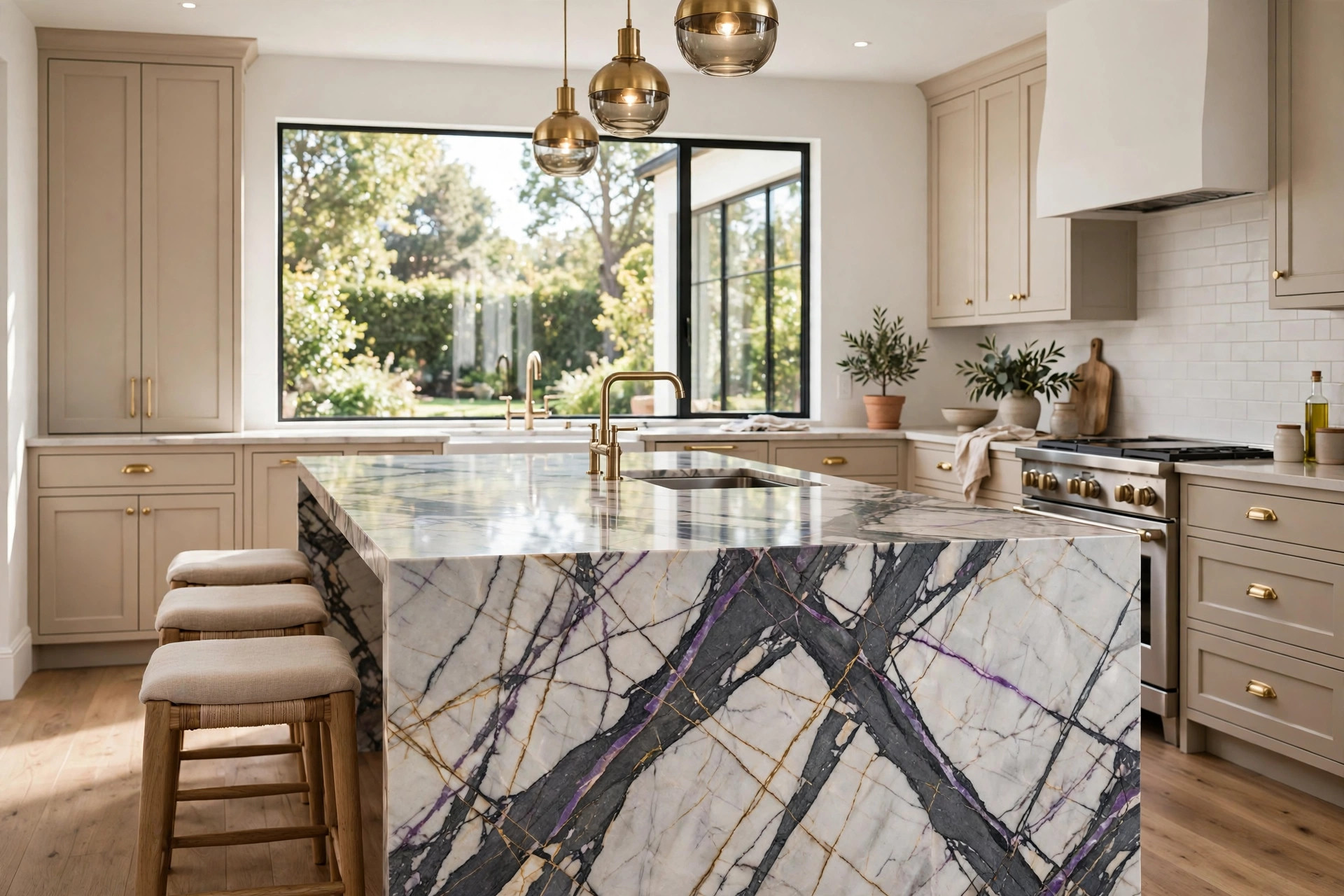
Viola marble has a way of stopping people mid-scroll. The veining runs dark and dramatic — charcoal and ink-gray strokes, sometimes with faint violet or gold running through a pale ground. In a viola marble kitchen, the stone becomes the conversation piece before anything else gets a chance to speak.
The challenge for Chula Vista homeowners is balance. This stone rewards restraint. Used in the right places and paired with quieter finishes, it reads as rich and intentional. Spread thin across every surface, it turns a kitchen loud instead of striking. Below is practical guidance on where to let viola marble shine, where to pull back, and how to choose a slab worth the investment.
The Risk of Letting Bold Stone Take Over
Bold-veined marble is the loudest material in most kitchens. Dark veins pull the eye from across the room, and across a full kitchen of counters, backsplash, and island, that visual weight adds up fast. The result can feel busy rather than beautiful, especially in South Bay homes where open floor plans put the kitchen on display from the living room.
The fix is placement discipline, not less stone. Pick one or two moments where the veining takes center stage, then give every other surface a supporting role. That single decision shapes the whole remodel: once the stone has its stage, everything else gets simpler to choose.
Where Viola Marble Earns the Spotlight
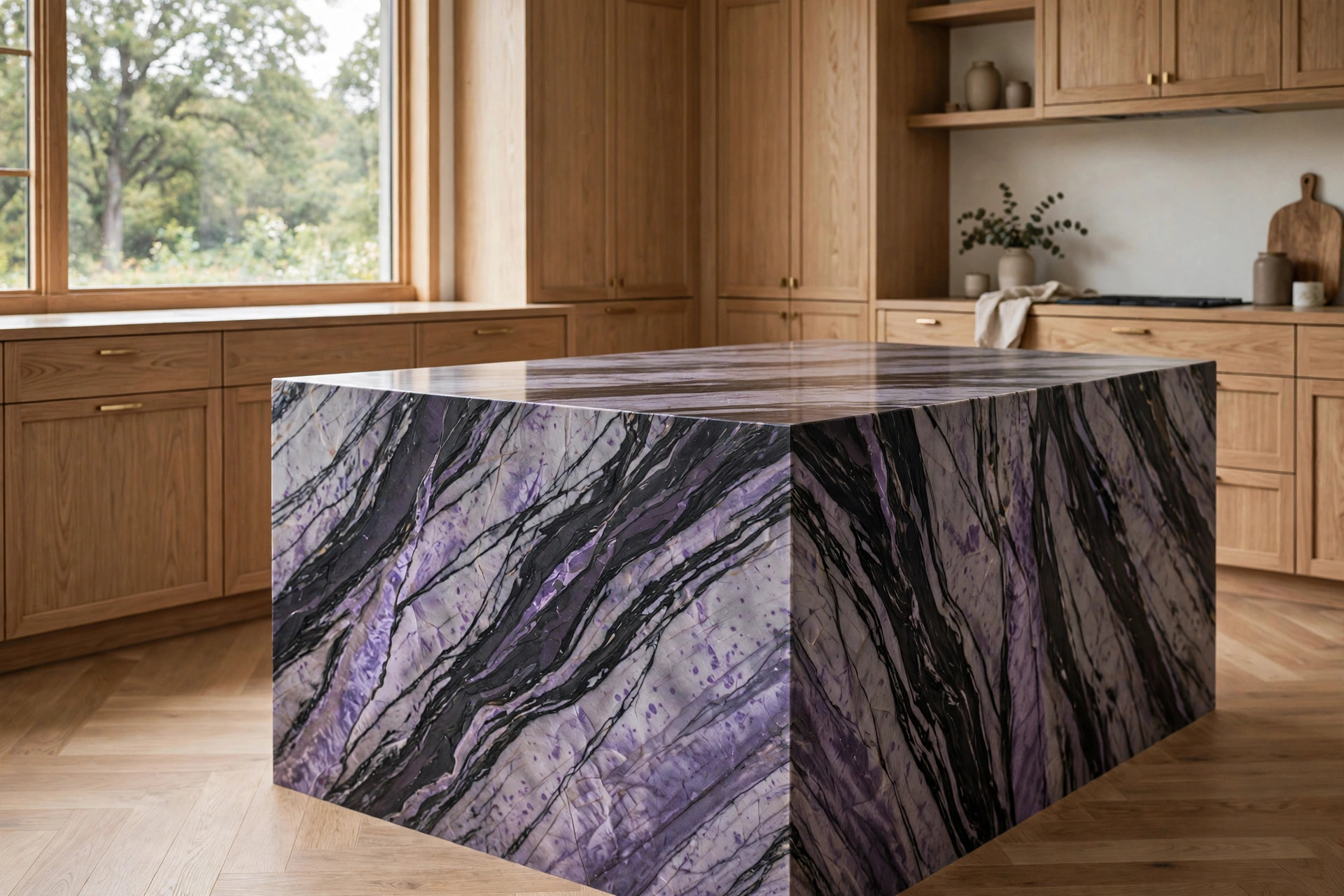
The island is the natural home for a statement slab. A waterfall island in viola marble shows off the veining across a broad, continuous surface, and matched edges turn the stone’s movement into a deliberate design feature. Perimeter counters can carry the same slab, though many homeowners keep those quieter and let the island carry the drama.
Shop for the slab in person. Photographs flatten veining and shift tones; the violet and gold hints in viola vary from slab to slab. Tape off the island footprint on the floor at home first, so the busiest areas of the stone land where they will be seen, not where a cooktop cutout removes them.
Perimeter counters deserve their own decision. Running the same viola slab around the whole kitchen looks cohesive in a large space, but in many Chula Vista kitchens a quieter perimeter — a honed quartz or a soft gray solid surface — keeps the island as the one bold gesture. The two materials still need to relate: pull a mid-tone from the marble’s background for the perimeter so the pairing feels planned rather than mismatched.
On a waterfall edge, talk through the miter with the fabricator. A clean mitered corner keeps the veining continuous as the stone turns from horizontal to vertical, which is what makes a waterfall island look carved from one block. A visible seam at the bend breaks that illusion, so confirm the shop’s mitering approach before the slab is cut.
Where to Pull Back
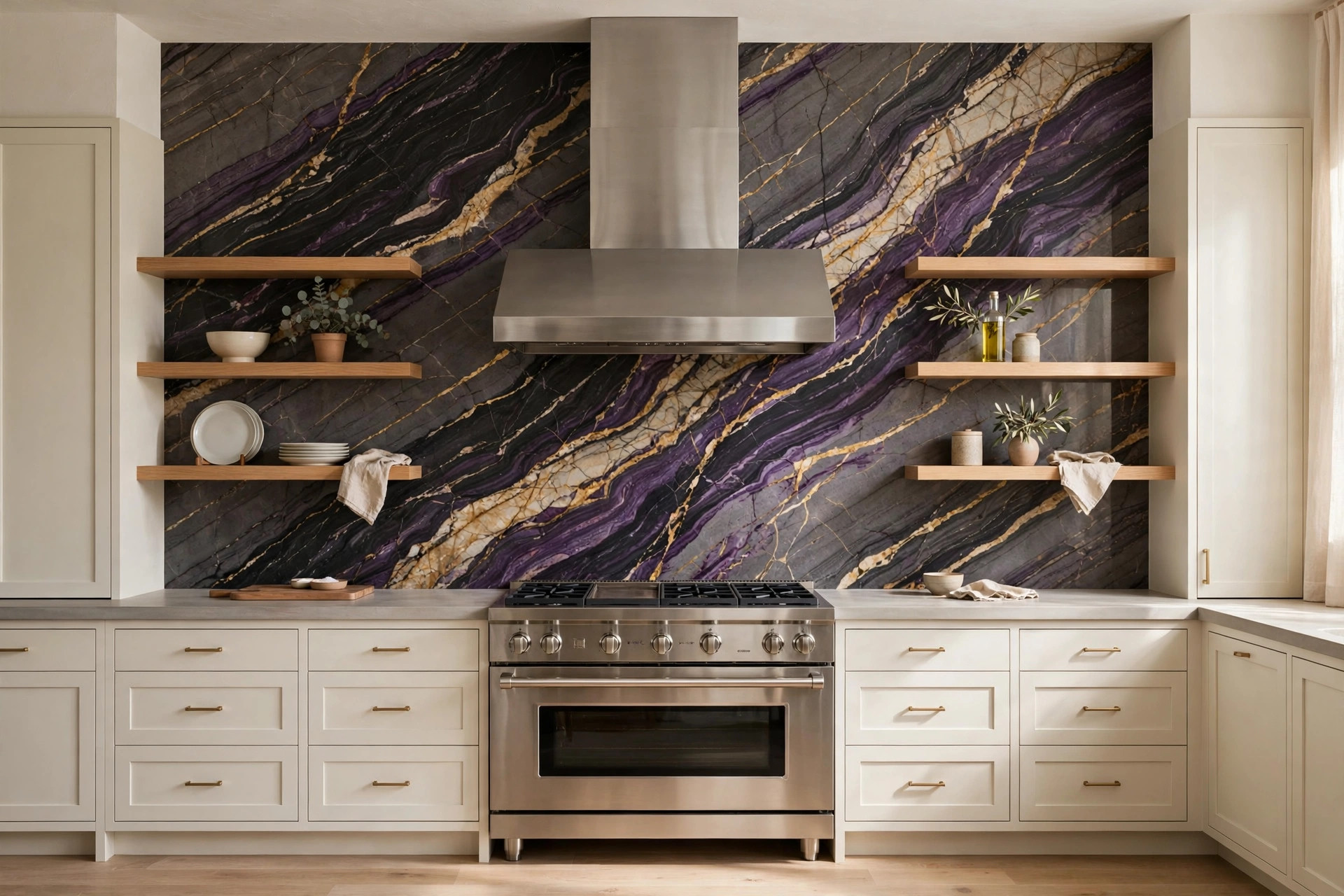
A full-height viola backsplash behind the range looks stunning in photos, but it competes with an island wearing the same stone. One of the two should win. If the island is the star, keep the backsplash to a simple handmade-look tile or a honed solid surface in a tone pulled from the marble’s pale background.
Cabinets, hardware, and lighting stay calm when the stone is loud. Flat or simple shaker fronts in a warm neutral keep attention on the veining. Dark hardware echoes the charcoal veins; oversized brass pulls would argue with the gold traces in the stone. Under-cabinet lighting at a modest brightness keeps the veining visible after dark without washing it out.
Pairing Cabinets and Finishes With Dramatic Veining
White oak is viola marble’s most reliable partner. Its honeyed grain warms up the stone’s cool veining without adding pattern competition. Painted cabinets work too — warm greige or putty tones sit between the stone’s pale background and its dark veins, giving the eye a place to rest.
Vexkitch’s custom cabinetry and countertop service plans cabinet finishes around the actual slab, not the other way around, so the wood tone and stone veining read as one composition. For more on warm wood pairings, browse these warm wood kitchen ideas.
Hardware and fixtures follow the stone’s lead. Matte black pulls echo the darkest veins; brushed brass picks up the gold traces. Choose one metal for the perimeter and let the stone’s secondary tones decide which.
Flooring stays quiet by default. A pale oak or a large-format light tile keeps the floor from becoming a third pattern in the room. When the kitchen opens to the living area, carry the same flooring through both spaces so the marble reads as the single focal point.
Wall color matters more than most people expect. A warm off-white with a hint of gray keeps the stone’s dark veins from feeling harsh, while a stark cool white can make the contrast look severe. Sample the paint next to the actual slab, not against a photo of it — the violet undertones in viola shift noticeably against different whites.
Ceilings and trim get the simplest treatment available: the same warm white, no accent color. With bold veining in the room, every extra color decision is a chance to compete with the stone. Neutral trim lets the island hold the eye from every angle, including sightlines from the living room.
Choosing the Right Slab at the Yard
Start with finish. Honed viola marble hides etching better than polished and gives the veining a soft, chalky depth. Polished slabs reflect more light and make the dark veins pop harder — right for a showpiece island, less forgiving on a hard-working perimeter.
Ask the fabricator how the slab will be cut. A diagonal or vein-cut layout keeps the veining flowing in one direction across the island, while a random cross-cut breaks it up. Bookmatching two consecutive slabs on a waterfall edge gives a mirror-image effect that looks deliberate from every angle. Reserve the slab’s quietest section for the area around the sink, where clutter competes with pattern.
Bring a cabinet door sample and a flooring swatch to the yard. Under the yard’s harsh lighting, hold the samples against the slab at arm’s length — this is the closest preview of how the finished kitchen will read.
Layout and Lighting Choices That Help Bold Stone
Sightlines decide how loud the stone feels. In an open-plan kitchen, the island is visible from the sofa, the dining table, and the entry — which is exactly why it earns the stone, and also why surrounding finishes need to stay calm from those same angles. Walk the sightlines during planning and check what sits behind the island from each viewpoint.
Lighting temperature changes how viola reads. Warm 2700–3000K light brings out the gold and violet hints in the veining; cool daylight bulbs can flatten them into plain gray. Pendant lights over the island double as jewelry for the stone — simple glass or matte metal shades keep the focus downward, on the veining, rather than on the fixture itself.
Sealing and Day-to-Day Care for Marble
Marble is softer than quartz or granite, and viola is no exception. It etches from acids like lemon and vinegar, and it stains when spills sit. That does not rule it out for a real kitchen; it means the care routine matters.
Seal the stone at installation and reseal on the fabricator’s schedule, usually once a year. Wipe spills as they happen rather than at the end of cooking. Cutting boards, trivets, and a wipe-down habit protect the surface without changing how the kitchen works. Many homeowners treat the island as the showpiece and choose a tougher material for the busiest prep zones — a practical split that keeps the marble beautiful where it is seen most.
Accept that marble develops a patina. Light etching over time gives the stone a lived-in softness that many homeowners end up preferring to the day-one finish, especially on honed surfaces. If a pristine, unchanging surface matters more to you than the stone’s character, viola marble may not be the right call — and that is better to know before the slab is cut than after it is installed.
A Bold Stone That Rewards Restraint
A viola marble kitchen succeeds on placement more than square footage. Give the veining one clear stage — usually the island — choose a slab whose tones you love in person, and keep cabinets, backsplash, and flooring in supporting roles. Sealed and maintained with normal kitchen habits, the stone stays as striking in year five as on day one.
Chula Vista homes, from Eastlake new builds to the older ranch homes near the bay, have the light and open layouts that let bold veining breathe. The difference between a kitchen that wows and one that overwhelms is the discipline to let the stone speak once, clearly.
Free Download: Viola Marble Decision Checklist
Working through slab selection and placement decisions? Grab our one-page Viola Marble Decision Checklist — it covers slab selection, where to use the stone and where to pull back, pairing decisions, and sealing and maintenance questions to ask your fabricator.
Download the Viola Marble Decision Checklist (PDF)
Frequently Asked Questions
Is viola marble too bold for a small kitchen?
Not when the placement is disciplined. In a compact kitchen, one viola marble feature — a small island or a single run of countertop — adds character without crowding the room. Keep the remaining surfaces light and quiet.
Does viola marble work with white cabinets?
It can, but plain white cabinets next to dark dramatic veining can look stark. Warm whites or greige tones bridge the gap between the stone’s pale background and its dark veins better than a cool, bright white.
How do you keep marble countertops from staining?
Seal the stone at installation and reseal yearly, wipe up spills promptly, and use cutting boards and trivets for daily prep. These habits keep marble practical in a working kitchen.
Is a waterfall island worth it with viola marble?
Yes — a waterfall edge doubles the visible stone and turns the veining into a continuous design feature. Bookmatching the two sides gives a mirror-image effect that looks intentional from every angle.
What backsplash goes with bold-veined marble?
A simple, quiet backsplash: handmade-look tile, a honed solid surface, or a tone pulled from the marble’s pale background. Let the stone carry the pattern and keep the backsplash in a supporting role.
Should the island and backsplash use the same stone?
Usually not. One of the two should be the star. When the island wears viola marble, keep the backsplash simple — and when the backsplash is the feature wall, choose a calmer island top.
Planning Your Kitchen Remodeling Project?
A viola marble kitchen starts with the slab and succeeds with the plan around it. Vexkitch Kitchen Remodeling has completed 700+ projects across Chula Vista and the South Bay since 2017, and our design process pairs statement materials with cabinetry and finishes that support them. Explore our kitchen remodeling services in Chula Vista to see how we plan material-first remodels, then reach out through our contact page to start the conversation about your kitchen.