Cottage Kitchen Ideas: Cozy Remodels With Rustic Charm

A cottage kitchen wins people over fast. Beadboard on the walls, an apron sink under the window, warm wood underfoot — the whole room reads cozy before you register a single detail. Plenty of Chula Vista homeowners want that feeling in an older ranch or a small kitchen that never got a proper remodel.
The trouble starts when cottage, farmhouse, and rustic get treated as the same thing. Each style has its own logic, and mixing all three leaves you with a kitchen that reads as “a bit of everything” instead of intentional. A cottage remodel works when the choices commit to one clear look.
This covers what makes a cottage kitchen unmistakable: beadboard placement, apron sinks, eat-in nooks, the finish palette, and how cottage differs from farmhouse and rustic. Use the checklist at the end to keep every decision in the right lane.
Cottage vs. Farmhouse vs. Rustic: Know the Difference Before You Spend
These three styles share wood and warmth, but they aim at different feelings.
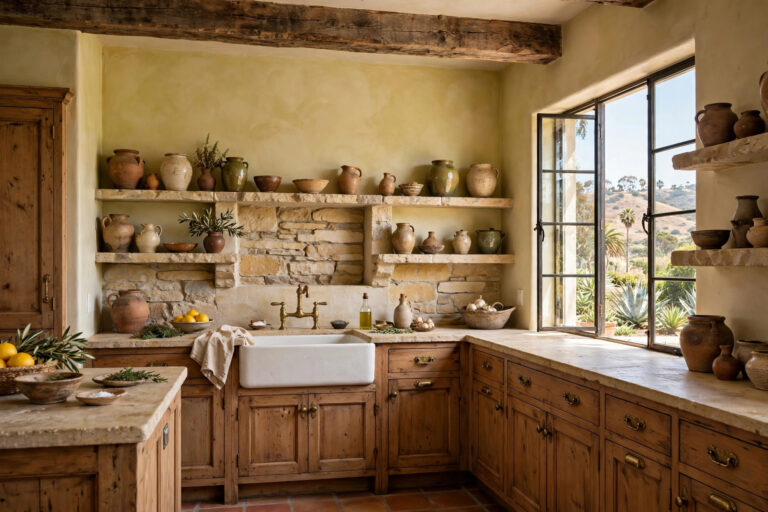
A cottage kitchen is the small-scale, soft-edged one. Painted finishes, beadboard, collected details, a sense that everything has a home. It reads comfortable and slightly nostalgic without going full theme.
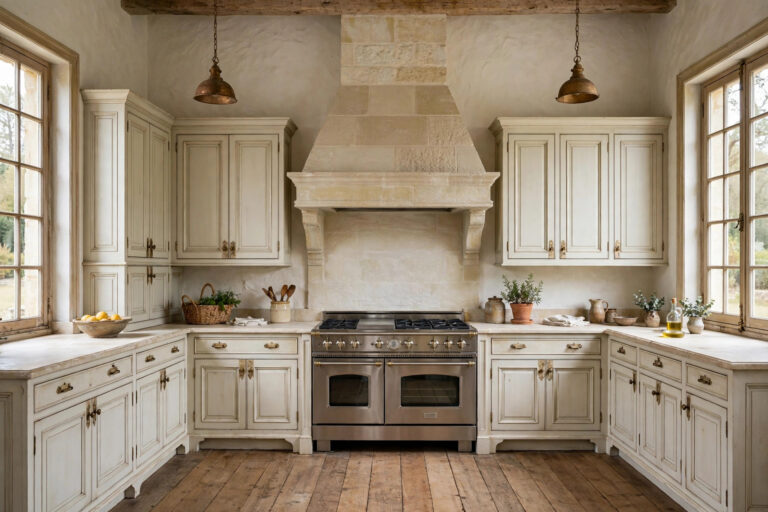
A farmhouse kitchen comes from working-kitchen roots: bigger scale, apron sinks shared by both styles, open shelving, reclaimed wood, and a heavier hand on practical storage. Our guide to farmhouse style kitchens goes deeper on that look — the two styles borrow from each other, but farmhouse leans utilitarian while cottage leans romantic.
Rustic runs rougher: log-and-lodge textures, heavy beams, bark edges, stone that looks quarried rather than cut. It wants to feel like a cabin. Cottage wants to feel like a home.
Pick one. A cottage kitchen with rustic beams and farmhouse open shelving on every wall reads cluttered, not collected. Decide which feeling you want when you walk in, then judge every purchase against it.
Beadboard: The Cottage Kitchen’s Signature Move
Nothing says cottage faster than beadboard, and placement decides whether it looks crisp or busy. The strongest uses in a kitchen:
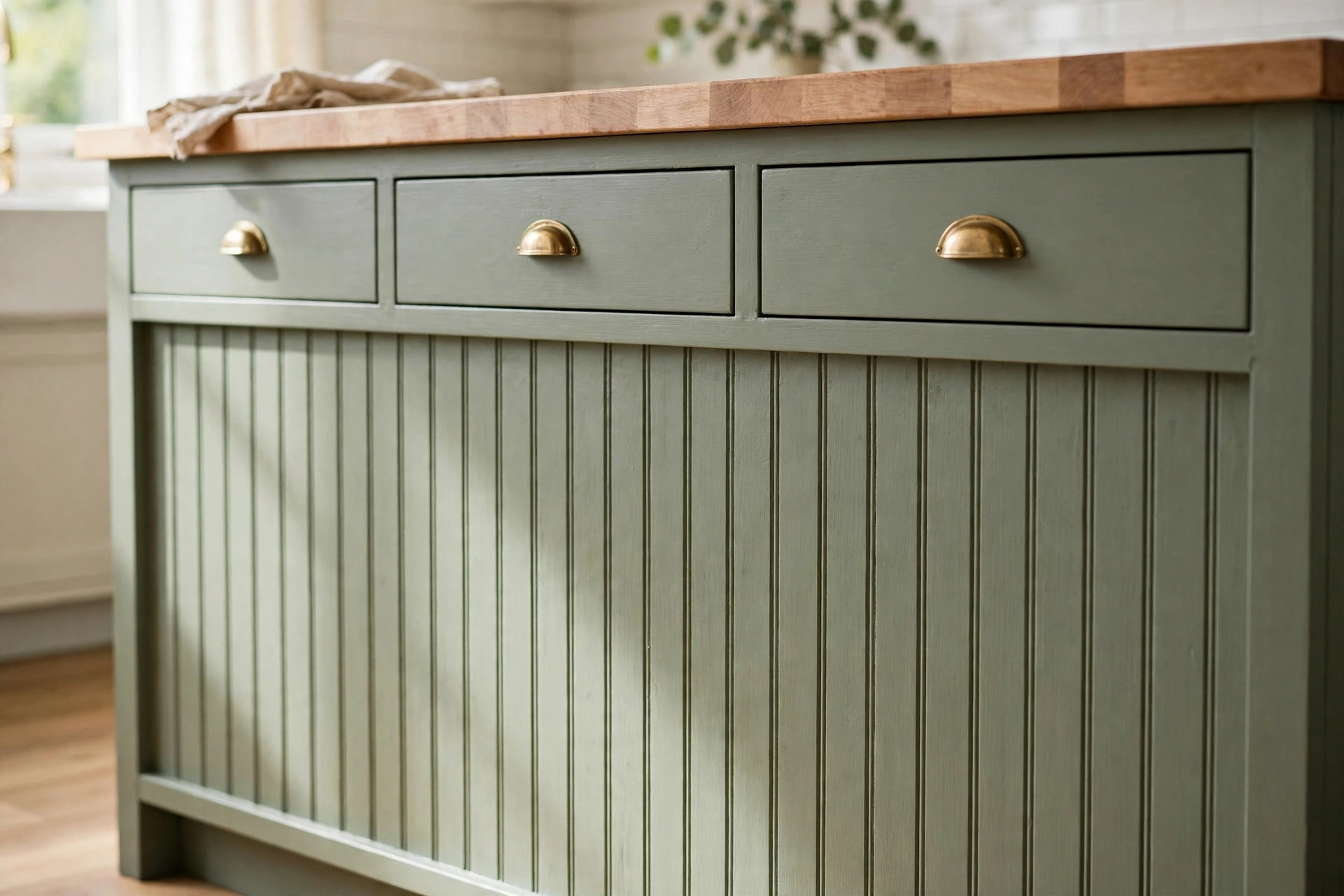
- Island back and sides — texture where people see it most, easy to paint.
- A wainscot run on one wall — behind the eating nook or along a window wall.
- The ceiling — painted white, it adds cottage character without touching cabinet space.
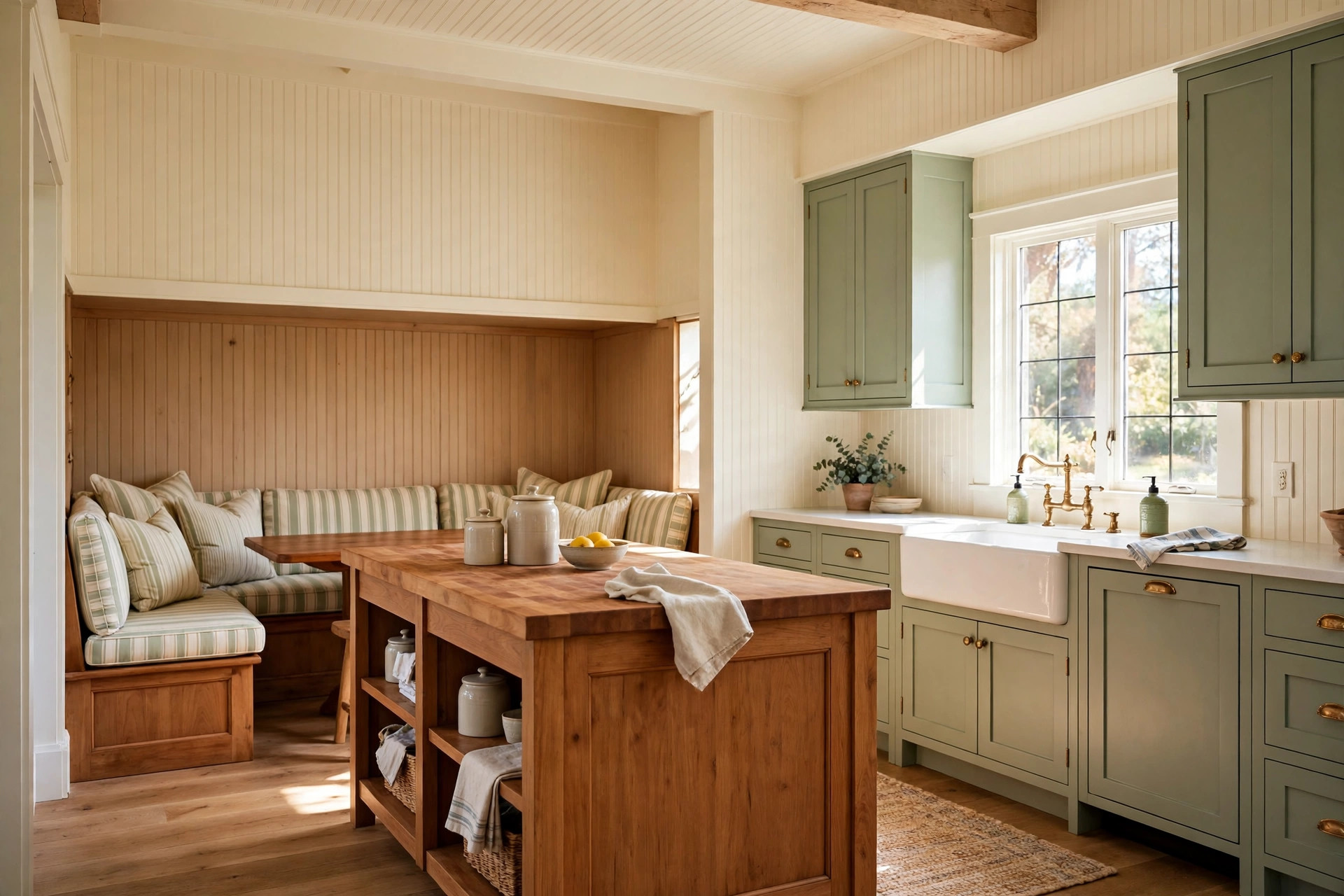
Painted beadboard wipes down fine in a kitchen; use a scrubbable finish and keep raw wood away from the range and sink splash zones. Real tongue-and-groove boards cost more than sheets but read better up close, especially on an island. Either way, limit beadboard to one or two surfaces. Cottage charm comes from restraint — beadboard on every wall turns cozy into a texture overload.
The Apron Sink: Make It the Centerpiece
The white fireclay apron-front sink is the one farmhouse-cottage crossover worth keeping. Hung slightly proud of the cabinet face, under a window when the plumbing allows, it becomes the visual anchor of the room.
Practically, the deep single basin swallows sheet pans and stockpots, and the high front keeps countertop splashes contained. Pair it with a bridge faucet in aged brass or matte black, and give it a real window view when the layout allows — that sink-and-window pairing is half of what people picture when they say “cottage kitchen.”
One caution: fireclay chips when a cast-iron pan hits it edge-first. For a household that cooks heavy, a stainless apron-front version keeps the look with more forgiveness.
Eat-In Nooks: The Cottage Kitchen’s Favorite Seat
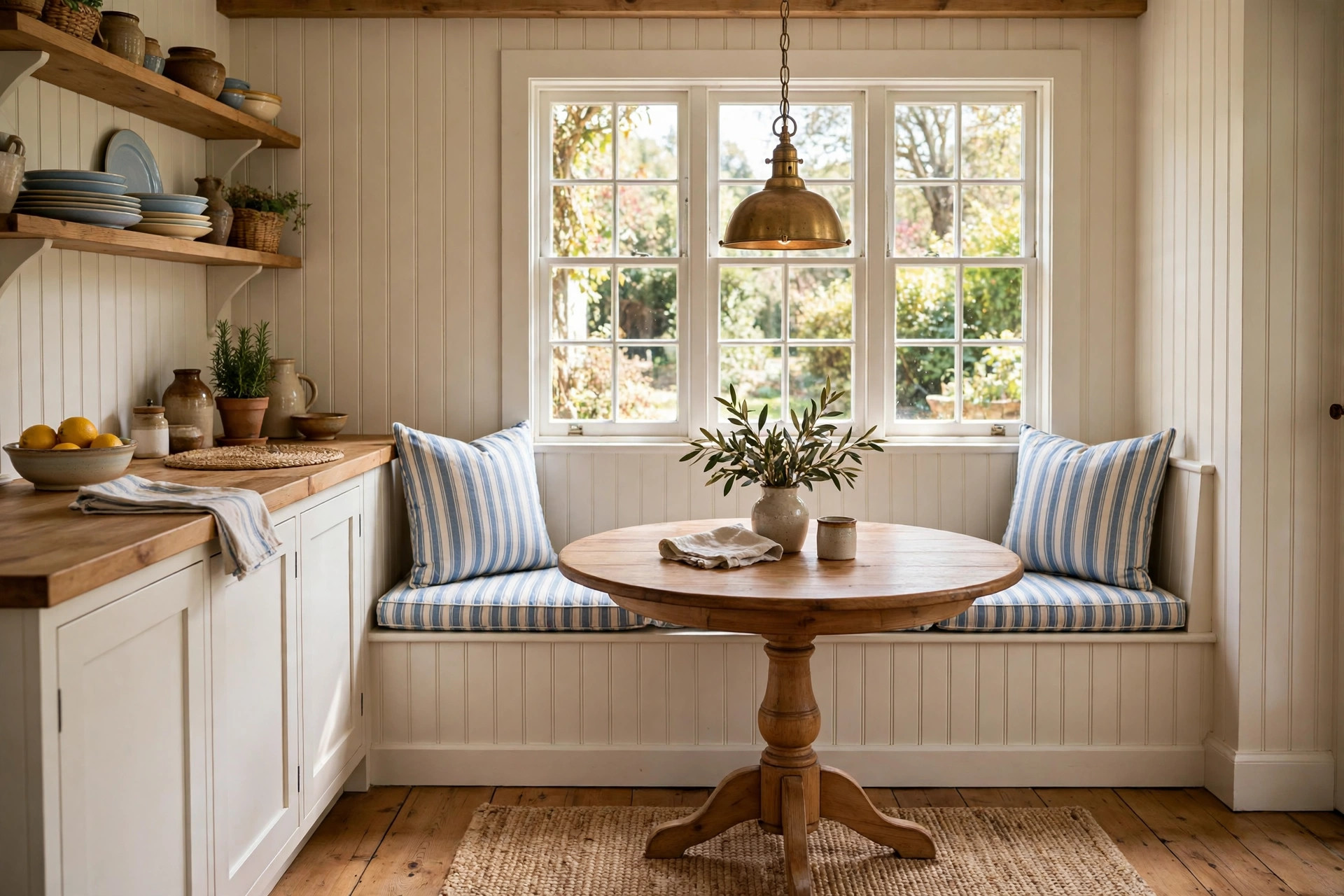
A cottage kitchen almost always includes a place to sit with coffee. A built-in banquette nook along a wall or under a window turns dead corner space into the room’s warmest spot — and it beats a formal dining set in small footprints. An eat-in kitchen setup like this needs only a 30-inch table and two sides of bench seating to feel complete.
Build the bench with a hinged top or drawer fronts and the nook doubles as storage for table linens, placemats, and serving pieces that don’t earn daily counter space. Hang one pendant low over the table, add washable cushion covers, and keep the sightline from the sink to the nook clear. That little view across the room is what makes a cottage kitchen feel lived-in rather than staged.
Cabinets, Color, and Hardware
Cottage cabinets stay simple: shaker or flat-panel doors, painted in soft colors. Warm white, sage green, soft blue-gray, and buttery cream carry the look. Stark modern white can feel clinical against wood floors, so pick whites with a touch of warmth.
Hardware does more work here than in most kitchens. Cup pulls on drawers and simple knobs on doors, in aged brass or oil-rubbed bronze, read cottage instantly. Keep the finish consistent — mixed metals fight the collected-but-coherent feeling.
When your existing cabinet boxes are solid, cabinet refacing vs. replacing is worth reading before you price a full replacement. New shaker fronts in the right paint color can deliver the cottage look for a fraction of a full tear-out, and that guide’s decision framework maps directly onto this style question.
Stone, Wood, and Finishes That Age Gracefully
Cottage kitchens look better when materials are honest. Butcher block on the island, honed soapstone or a soft marble on the perimeter, warm oak or pine floors — nothing shiny, nothing pretending to be something else. A modern rustic kitchen borrows the same material honesty; the difference is that cottage keeps the palette lighter and the edges softer.
Keep the stone matte or honed. Polished granite fights the soft-edged cottage feel, and high-gloss finishes show every fingerprint in a room built for daily use. For backsplashes, handmade-look subway tile or a simple beadboard splash behind the range keeps the texture story consistent without adding a fourth material to the mix.
Keep It Cottage, Not Cluttered
The most common cottage mistake is confusing “collected” with “crowded.” A few guardrails:
- One open-shelf run, not four. Style it with pieces you use, grouped by color or material.
- Two or three patterns total across textiles, then solids everywhere else.
- Corral countertop clutter into a tray or a single crock by the range.
- Leave some wall and counter space empty. Cottage coziness comes from warmth, not volume.
Edit ruthlessly during the install. Pull everything off the counters on day one, live with the empty surfaces for a week, then add back only what you reach for or genuinely love looking at.
Our kitchen remodeling services in Chula Vista start from layout-first planning like this — because the cottage look only works when the room functions as well as it photographs.
A cottage kitchen rewards commitment: one style, honest materials, and a layout built around how you cook and gather. Get those right and the coziness takes care of itself.
Free Download: Cottage Kitchen Remodel Checklist
Grab the one-page Cottage Kitchen Remodel Checklist (PDF) — the style decisions, material picks, and nook measurements from this guide, in a printable checklist you can take to the showroom.
Frequently Asked Questions
What is the difference between a cottage kitchen and a farmhouse kitchen?
Farmhouse kitchens lean utilitarian — bigger scale, open shelving, reclaimed wood, working-kitchen roots. Cottage kitchens are softer and smaller-scale: painted finishes, beadboard, eat-in nooks, and a collected feel. They share the apron sink, but the mood of each room is different.
Can a cottage kitchen work in a small kitchen?
Yes — cottage is one of the best styles for a small kitchen. Its signatures (beadboard, painted shaker cabinets, a banquette nook) don’t need square footage. A built-in nook seats four in the footprint of a small table, and light painted finishes make tight rooms feel open.
What countertop goes best with a cottage kitchen?
Butcher block on the island and a honed stone like soapstone or soft marble on the perimeter. Both age gracefully and stay in the cottage lane. High-polish granite clashes with the style’s soft edges.
Is beadboard hard to maintain in a kitchen?
Painted beadboard with a scrubbable finish wipes down easily. Keep raw or unfinished wood away from splash zones, and use moisture-resistant boards or sealed paint near the range and sink.
How much does a cottage kitchen remodel cost in Chula Vista?
Cost depends on layout changes, cabinet strategy, and material picks more than on style — a refacing-based cottage refresh costs far less than a full gut. Our kitchen remodel cost guide breaks down where the money actually goes.
Planning Your Cottage Kitchen Remodel in Chula Vista?
Vexkitch Kitchen Remodeling has completed 700+ kitchen projects across Chula Vista and the South Bay since 2017, and every project starts with a layout-first plan — not a cabinet catalog. Contact our team to talk through your cottage kitchen ideas, or explore our complete kitchen remodeling services in Chula Vista to see how a structured plan comes together.