French Kitchen Aesthetic: Cabinets, Stone, Lighting and Layout Ideas

The French kitchen aesthetic pulls homeowners in with rooms that feel settled rather than decorated. Cabinets sit in careful balance, stone and plaster carry the warmth, and lighting glows in layers instead of blasting from a single source. For Chula Vista and South Bay homeowners planning a remodel, this style works beautifully in everything from 1970s ranch houses to newer builds — it rewards proportion and material choice more than square footage.
Below are the key building blocks of the French kitchen aesthetic: how to get symmetry right, which cabinets and stones read authentically French, how to layer lighting the French way, and where to spend so the finished room feels collected over time rather than installed in a day.
Why Most “French” Kitchens Miss the Mark
The common mistake is collecting French-looking accessories — a script-lettered sign, a rooster figurine, a distressed “bistro” chalkboard — while the bones of the room stay ordinary. Flat-panel cabinets, cool gray quartz, and a single row of recessed lights will read as generic modern no matter what hangs on the wall.
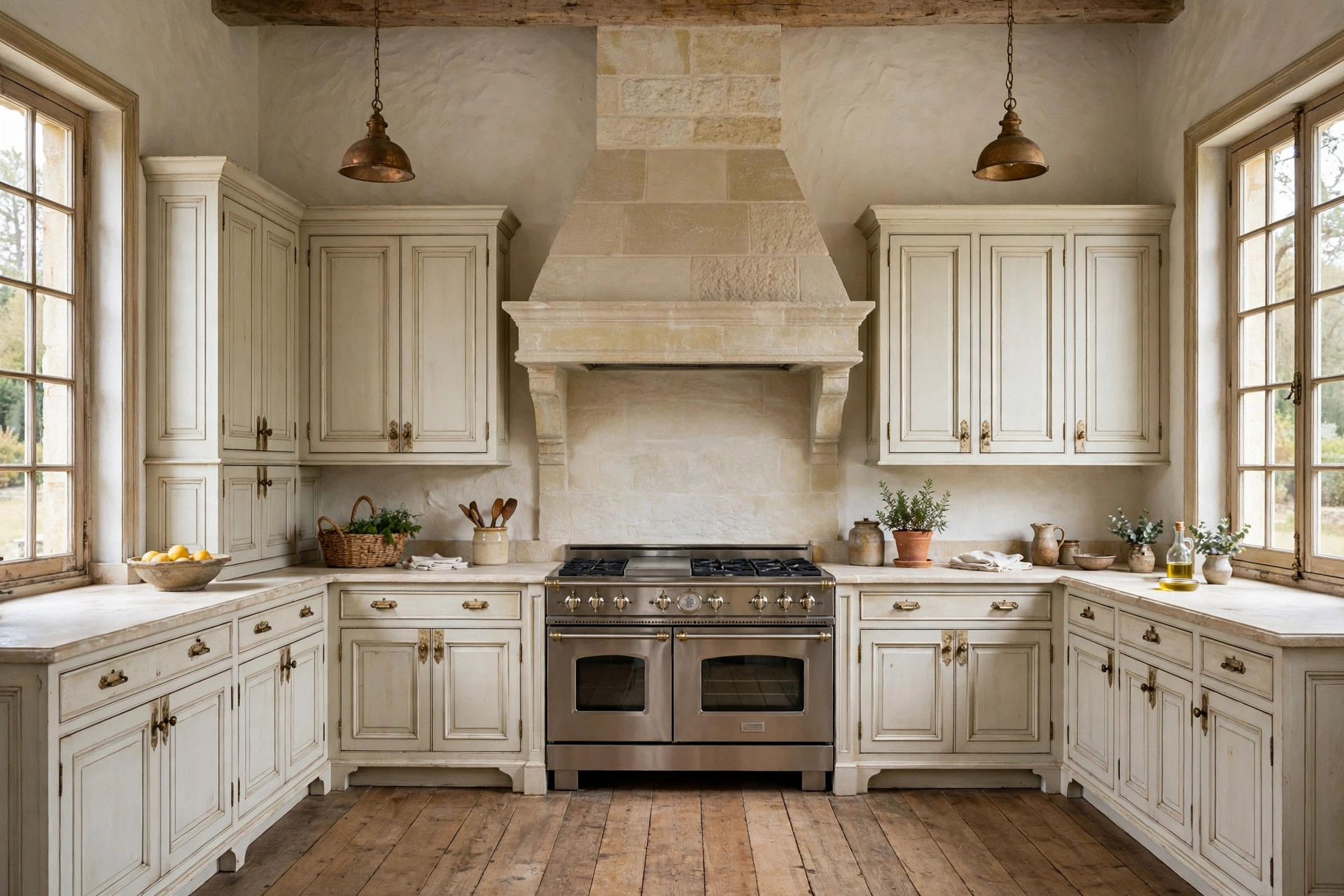
A convincing French kitchen comes from structure first: symmetry around a focal point, full-height cabinets with real molding profiles, stone that ages gracefully, and lighting at three different heights. Accessories come last and should look gathered slowly — a copper pot, a stoneware pitcher, a linen runner. Get the bones right and the room needs almost no decoration.
French Style Is Not American Farmhouse — Know the Difference
These two styles get confused constantly, and they deserve different design decisions. American farmhouse is rustic and casual: shiplap walls, apron-front sinks, open shelving, dark hardware on white cabinets, and a cozy, everything-on-display warmth. It grew out of rural American practicality.
The French kitchen aesthetic is more formal and more restrained. Cabinets tend toward inset or beaded-inset construction with furniture-like legs and molding. The palette leans warm stone, plaster, and aged oak rather than bright white and black contrast. Hardware is patina’d brass or aged bronze — metals that look softer with time, not darker industrial iron. Where farmhouse celebrates the handmade and homespun, French kitchens lean classical: symmetry, carved stone, and plaster walls with a hand-troweled texture.
If you love the casual American look instead, our farmhouse style kitchens breakdown covers that lane in detail. The sections below assume you want the French version: measured, material-driven, and built to age well.
Start With Symmetry: Proportions and Layout
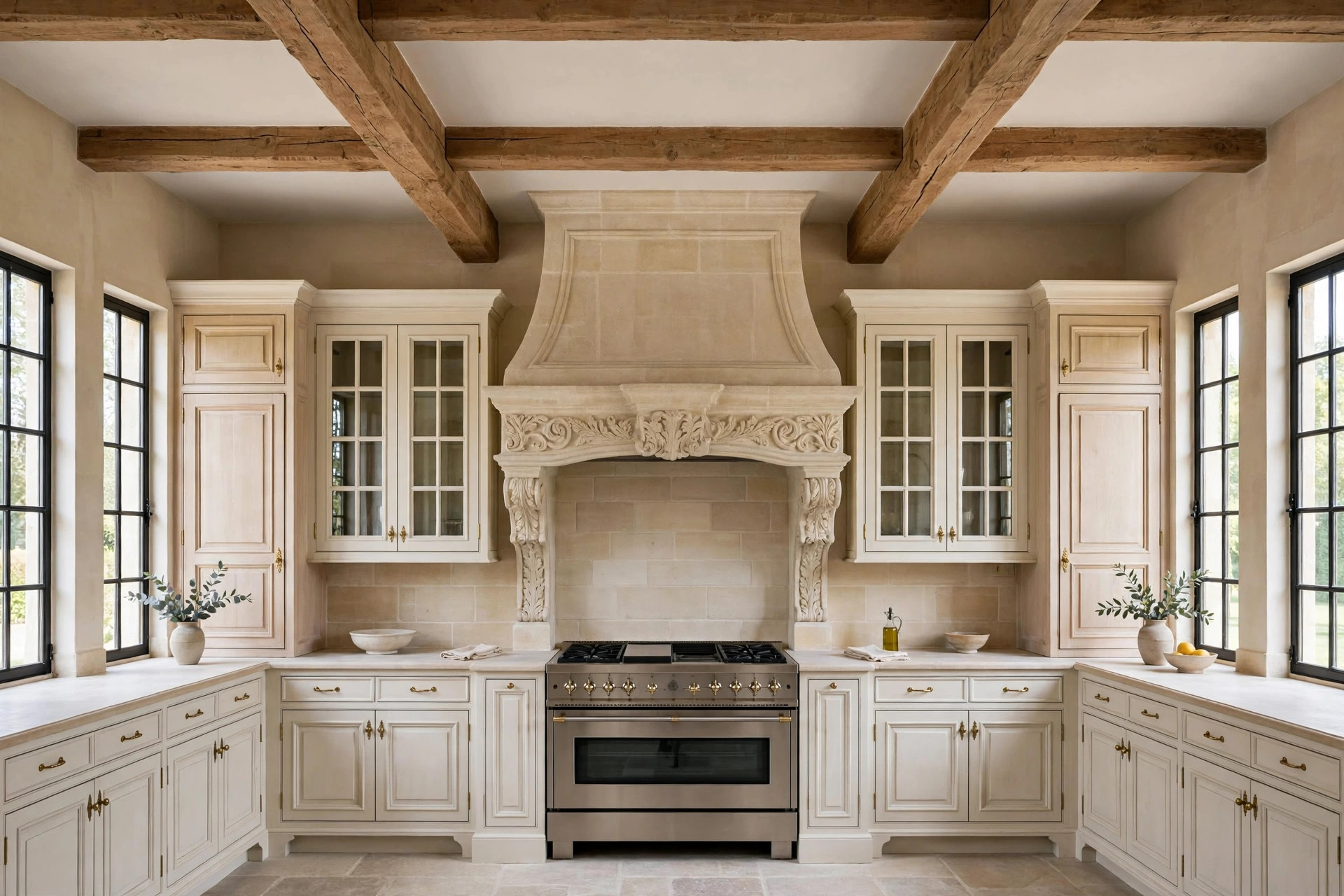
French kitchens are composed around a center line. The range — ideally framed by a stone or plaster hood — anchors the room, with matching runs of cabinets mirrored on either side. Tall elements like pantries or armoires flank the ends of the run, and windows or cabinet groupings stay evenly spaced. This balance is what makes even modest kitchens feel calm and deliberate.
In practice, most Chula Vista kitchens cannot rebuild a wall to achieve perfect symmetry, so work with what the room gives you:
- Center the range on the longest uninterrupted wall, then mirror cabinet widths outward from it as closely as the space allows
- Pair upper cabinets in identical sizes on either side of the hood rather than mixing widths
- Keep the island centered on the range axis — an off-center island breaks the composition faster than anything else
- Use one large element (a full-height pantry pair, a pair of windows) to balance a large appliance like a refrigerator
Galley and L-shaped kitchens can still use this approach. Pick one wall as the “composed” wall with the range and flanking cabinets, and keep the opposite side simple. The eye reads the composed wall as the room’s face.
Cabinets: Profiles, Finishes, and Details That Read French
Cabinet design carries the French kitchen more than any other single element. French-inspired cabinets behave like freestanding furniture: raised-panel or beaded-inset doors, visible frame construction, furniture legs or a valance at the base, and crown molding that meets the ceiling with confidence. Flat-panel doors and wide shaker profiles push the room toward contemporary instead.
For finishes, lean into colors with age in them: warm putty, soft greige, muted sage, deep charcoal-green, or a hand-rubbed aged oak. Bright white can work, but it needs plaster walls and brass to keep it from reading modern. Avoid high-gloss finishes entirely — the French look depends on low sheen and surfaces that forgive fingerprints.
Plan for these details early, since they change cabinet construction and cost:
- Inset or beaded-inset doors for the authentic furniture look
- Furniture feet or a recessed toe with a valance on islands and base runs
- Aged brass or unlacquered brass cup pulls and knobs that will patina
- A plate rack or glass-front cabinet pair flanking the range
- Tall pantry armoires instead of a single deep pantry closet
Vexkitch’s interior kitchen remodeling services include custom cabinetry planning, which matters here because French proportions rarely fit standard box sizes. A few inches of custom width on each flanking cabinet is often the difference between near-symmetry and the real thing.
Stone, Plaster, and Wood: Materials That Carry the Look
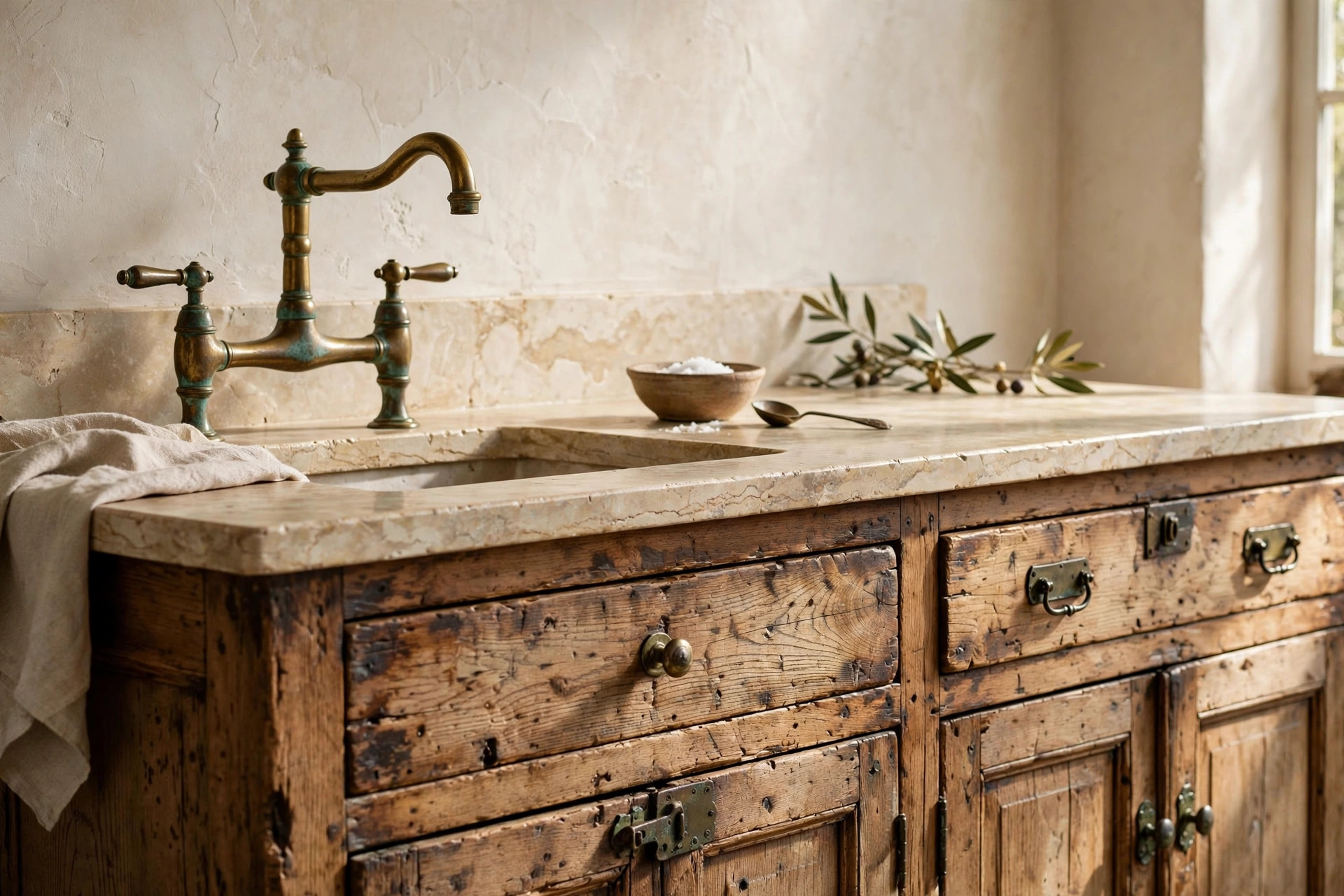
French kitchens favor materials that look better at year ten than at day one. Limestone — or a limestone-look quartzite — brings soft, cloudy veining and a honeyed warmth that marble’s drama and granite’s speckle cannot imitate. Run it on counters and, if the budget allows, up the backsplash in full slabs for the old-world feel. Butcher block or aged oak on the island adds a second texture and keeps the stone from dominating.
Plaster is the wall finish this style asks for. A hand-troweled lime plaster or quality plaster-look finish in warm white gives walls movement and depth flat paint lacks, and hides imperfections common in older South Bay homes. Pair it with wide-plank oak or aged-look wood floors — never gray-toned LVP, which fights the warmth of everything else.
Three material rules keep the palette disciplined:
- Limit the room to three main materials: one cabinet finish, one stone, one wood tone
- Keep metals consistent — unlacquered or aged brass throughout, including faucets, lighting, and hardware
- Let one surface stay plain: if the stone has visible veining, keep the backsplash quiet, and vice versa
Lighting That Layers Like a Paris Apartment
French kitchens rarely rely on a single lighting type. The layered approach — ambient, task, and accent — creates the warm, lived-in glow the style is known for. Start with pendants over the island: aged brass, seeded glass, or simple linen shades in pairs or a row of three, hung so the bottoms sit 30–36 inches above the counter.
Under-cabinet lighting matters more here, since French kitchens often use darker cabinet colors and stone backsplashes that absorb light. Warm-white (2700K) LED strips under the uppers keep counters workable without harshness. Add a small picture light or a pair of sconces over a plate rack or open shelf, and put everything on dimmers. The goal is a kitchen that can shift from bright prep mode to a soft evening glow.
One detail worth the effort: flank the range wall with a pair of small sconces, or leave the hood unlit and let the pendants carry the glow. Symmetry in lighting reinforces symmetry in cabinetry.
Collected Details: Hardware, Sinks, and Final Touches
The last layer is restraint. French kitchens look collected because each detail was chosen once and left alone. Unlacquered brass hardware will darken unevenly with touch — that is the point. A fireclay or hammered-copper farmhouse sink fits better than stainless. Open shelving works in small doses: one short run for daily dishes near the dishwasher, not entire walls of display.
Finishing choices that consistently land:
- Unlacquered brass faucet with a traditional bridge or gooseneck profile
- Stone or fireclay apron-front sink in white or natural limestone tones
- A freestanding-look range, 36 inches or wider
- Linen or cotton cafe curtains on a lower window instead of blinds
- One vintage-scale element: a large clock, a copper pot rail, or a reclaimed wood beam
Resist filling every surface. Negative space on the counters — a clear stretch of limestone beside the range, one empty shelf — is what separates a composed French kitchen from a themed one.
Planning a French Kitchen Remodel in Chula Vista
Sequencing matters: stone and custom-look cabinetry lead the budget, so lock those before finalizing appliances and fixtures. In South Bay homes, two checks come early: can the range wall support a stone or plaster hood, and can the electrical panel handle dedicated circuits for layered lighting plus a 36-inch range?
A realistic phase order looks like this:
- Fix the layout and symmetry plan — range position, island placement, tall elements
- Select cabinets: door profile, finish, and hardware metal
- Select stone for counters and backsplash, plus the wood tone
- Finalize lighting plan: pendants, under-cabinet, sconces, dimmers
- Choose the sink, faucet, and range to match the composed wall
Because French kitchens depend on proportion more than trend finishes, they also tend to date well — a useful trait in a market where kitchens carry real resale weight. For a full project view, explore our kitchen remodeling services in Chula Vista, where design, material selection, and construction run as one coordinated process.
A French kitchen done well feels inevitable: symmetrical without being stiff, warm without being rustic, detailed without being busy. Spend the budget on the bones — cabinets, stone, lighting — and the style holds for decades.
Free Download
French Kitchen Aesthetic Planning Checklist — a one-page printable covering proportions, materials, finishes, lighting, and layout decisions from this article, with checkboxes you can bring to a design consultation.
Download the French Kitchen Aesthetic Planning Checklist (PDF)
Frequently Asked Questions
What defines the French kitchen aesthetic?
Symmetry around a focal range, furniture-style inset cabinets, limestone and plaster surfaces, aged oak, patina’d brass hardware and lighting, and layered lighting. The look is formal and material-driven rather than rustic.
How is a French kitchen different from an American farmhouse kitchen?
American farmhouse is casual and rustic — shiplap, apron sinks, open shelving, dark hardware on white cabinets. French kitchens are more classical and restrained, with inset cabinetry, stone hoods, plaster walls, and aged brass instead of industrial iron.
Which cabinets work best for a French kitchen?
Inset or beaded-inset doors with raised panels, furniture legs or base valances, and crown molding. Finishes like warm putty, muted sage, deep charcoal-green, or hand-rubbed aged oak read authentically French in low-sheen paint or stain.
What countertop stone suits a French kitchen aesthetic?
Limestone or a limestone-look quartzite, with soft cloudy veining and warm honeyed tones. It ages gracefully and pairs well with plaster walls and aged oak. Keep metals consistent — aged or unlacquered brass throughout.
How should lighting be planned in a French kitchen?
Layer it: aged brass pendants over the island, warm-white under-cabinet task lighting, and sconces or a picture light over display storage — all on dimmers. Avoid relying on recessed ceiling lights alone.
Planning Your French Kitchen Remodel?
A French-style kitchen rewards careful proportion and material choices, and those decisions are easiest with an experienced remodeling team. Vexkitch Kitchen Remodeling has completed 700+ projects across Chula Vista and the South Bay since 2017, handling design, cabinetry, stone, and lighting as one coordinated project.
Start with our kitchen remodeling services in Chula Vista to see the full process, then reach out through our contact page to schedule a consultation and talk through your layout, materials, and budget.