Mid Century Modern Kitchen: Cabinets, Colors & Remodel Ideas

Flat-Panel Cabinets: The Signature Detail
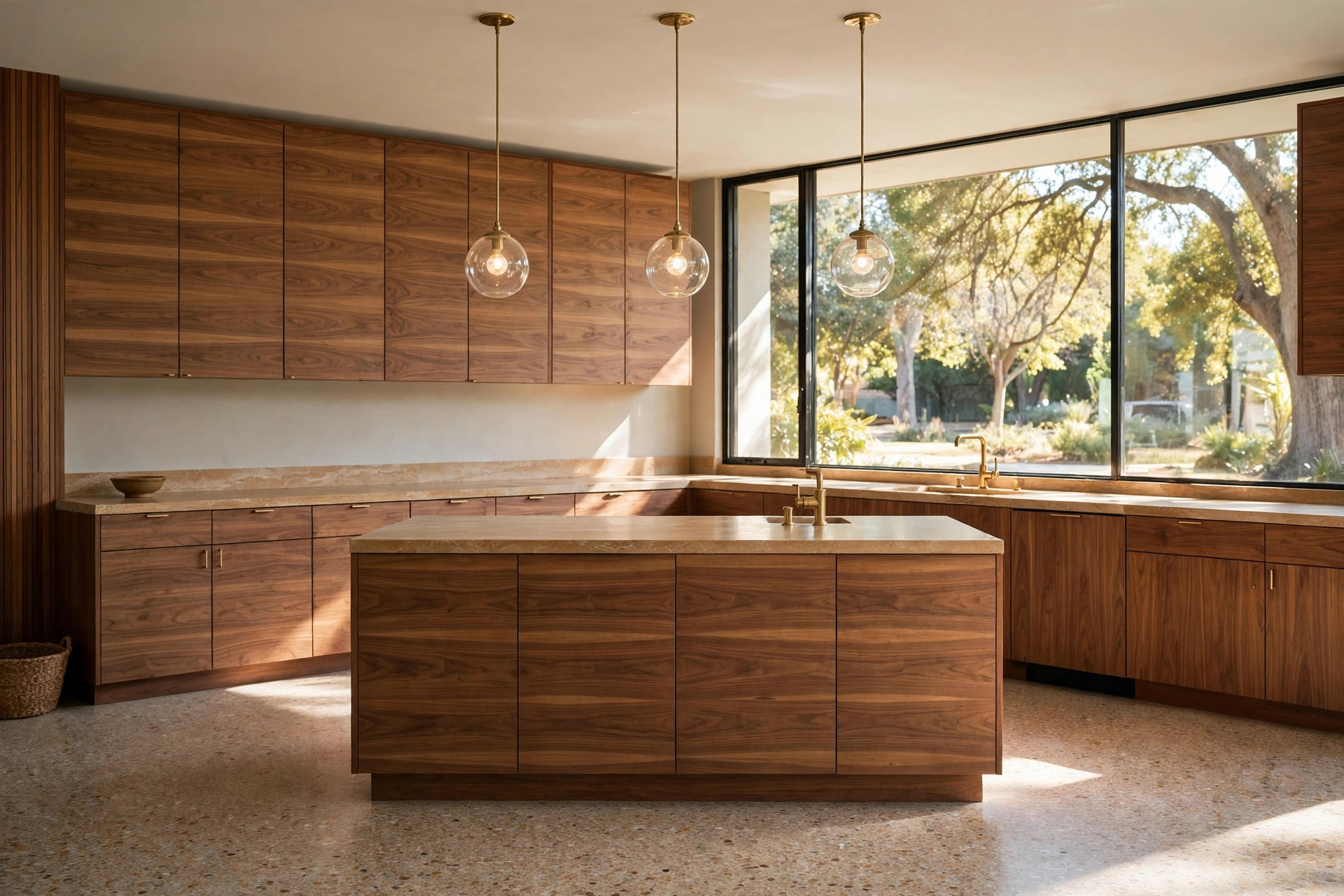
The fastest way to recognize an authentic mid century modern kitchen is the cabinetry. Slab or flat-panel fronts — no raised panels, no arches, no heavy molding. The door face is a single smooth plane, which lets the wood grain or the color do the talking.
Material choice carries the look. Walnut, teak, and white oak are the classic species for mid century modern kitchen cabinets; quality wood veneer over stable cores handles South Bay humidity swings better than solid slab doors and keeps costs in check. Horizontal grain direction reads as distinctly mid-century, so confirm the grain orientation with the cabinet maker before production.
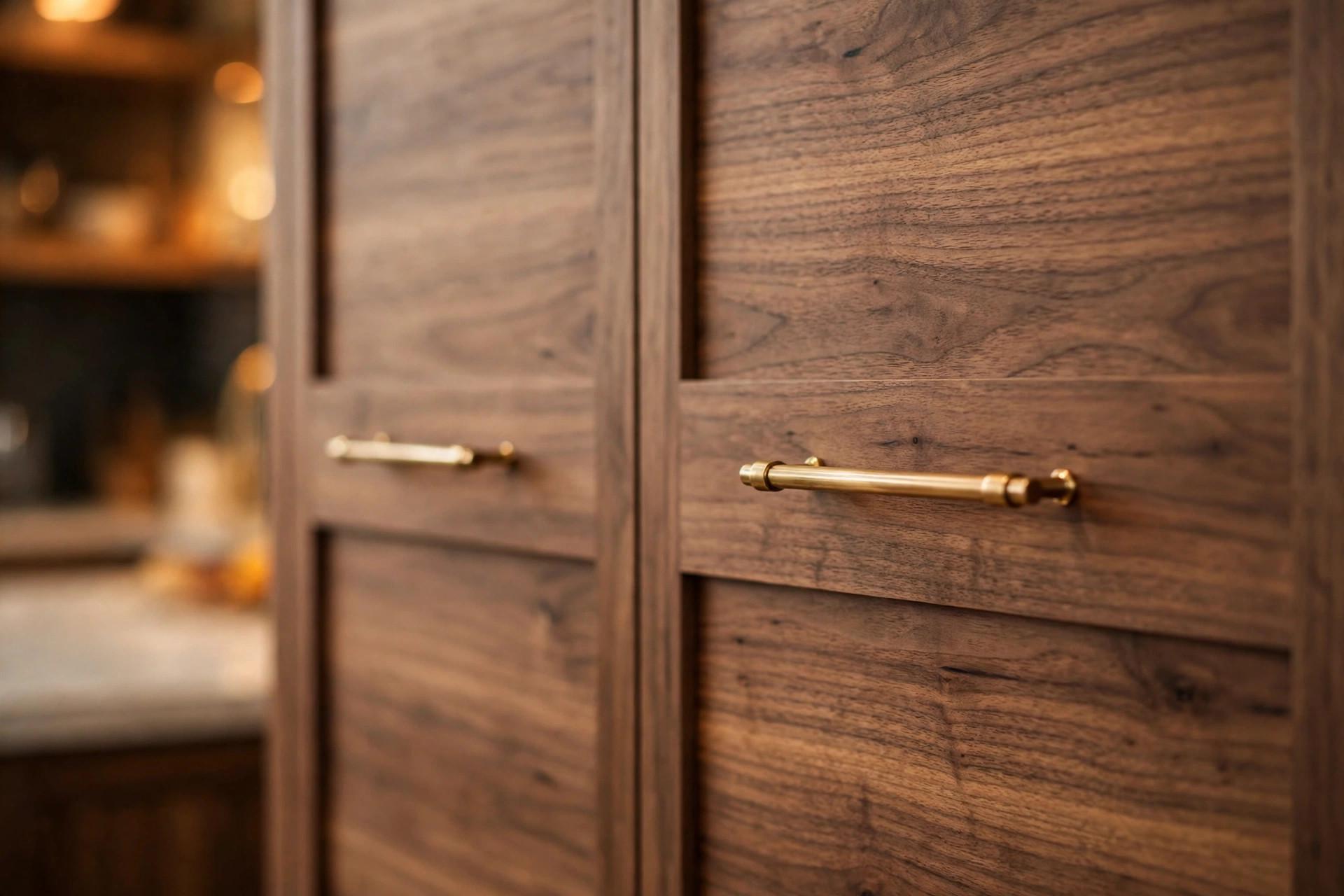
Finish matters as much as species. Matte or satin finishes suit the era; high-gloss laminates push the room toward a different decade. Hardware should stay quiet: slim bar pulls, small round knobs, or handleless fronts with integrated edge pulls. One finish throughout the kitchen keeps the look calm — aged brass and matte black both pair well with warm wood. When the cabinet profile and finish are decided early, our custom cabinetry and countertop design work can lock in the flat-panel look before construction begins.
Warm Wood Tones That Carry the Style
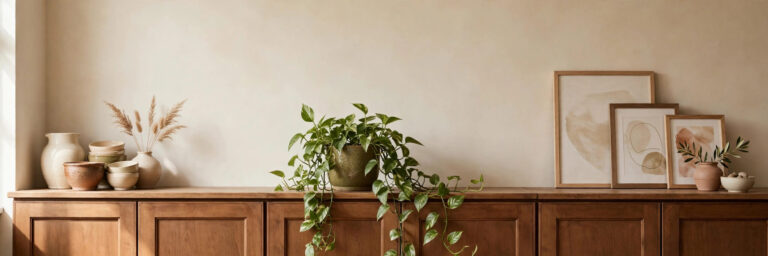
Mid-century design treats wood as the main event. Pick one dominant species — walnut for richness, teak for honey warmth, white oak for a lighter take — and let it anchor the room. A second wood tone works on an island or open shelving, but a third starts to look scattered. Our warm wood kitchen ideas show how different species change the feel of a room before you commit.
Balance keeps the style from turning heavy. Pair wood cabinets with plain, quiet surfaces: honed quartz, butcher block in a contrasting tone, or a simple solid-surface counter. Walls in warm white or soft plaster let the grain breathe instead of competing with it.
Wood also softens the harder modern pieces: walnut open shelves beside stainless appliances, a teak breakfast bar softening a quartz island. Spread the wood across the room instead of trapping it in one wall of cabinets.
Color Palettes: Warm Neutrals With Statement Accents
This is where mid-century kitchens usually succeed or fail. The era’s palette starts with warm neutrals — warm whites, camel, sand, soft plaster tones — and adds color in controlled doses. Olive green, mustard, terracotta, and teal are the period signatures; in a midcentury modern kitchen each one works best as an accent, not a flood.
A practical formula: one warm neutral for walls and major surfaces, one mid-tone for a cabinet run or island, one saturated accent for small moments — a backsplash band, bar stools, or a pendant in colored glass. Three colors, each with a job. A fourth color usually belongs to artwork or plants, not to fixed finishes.
Avoid chalky cool grays and icy whites; they fight the warmth the style depends on.
Statement Lighting That Reads Mid-Century
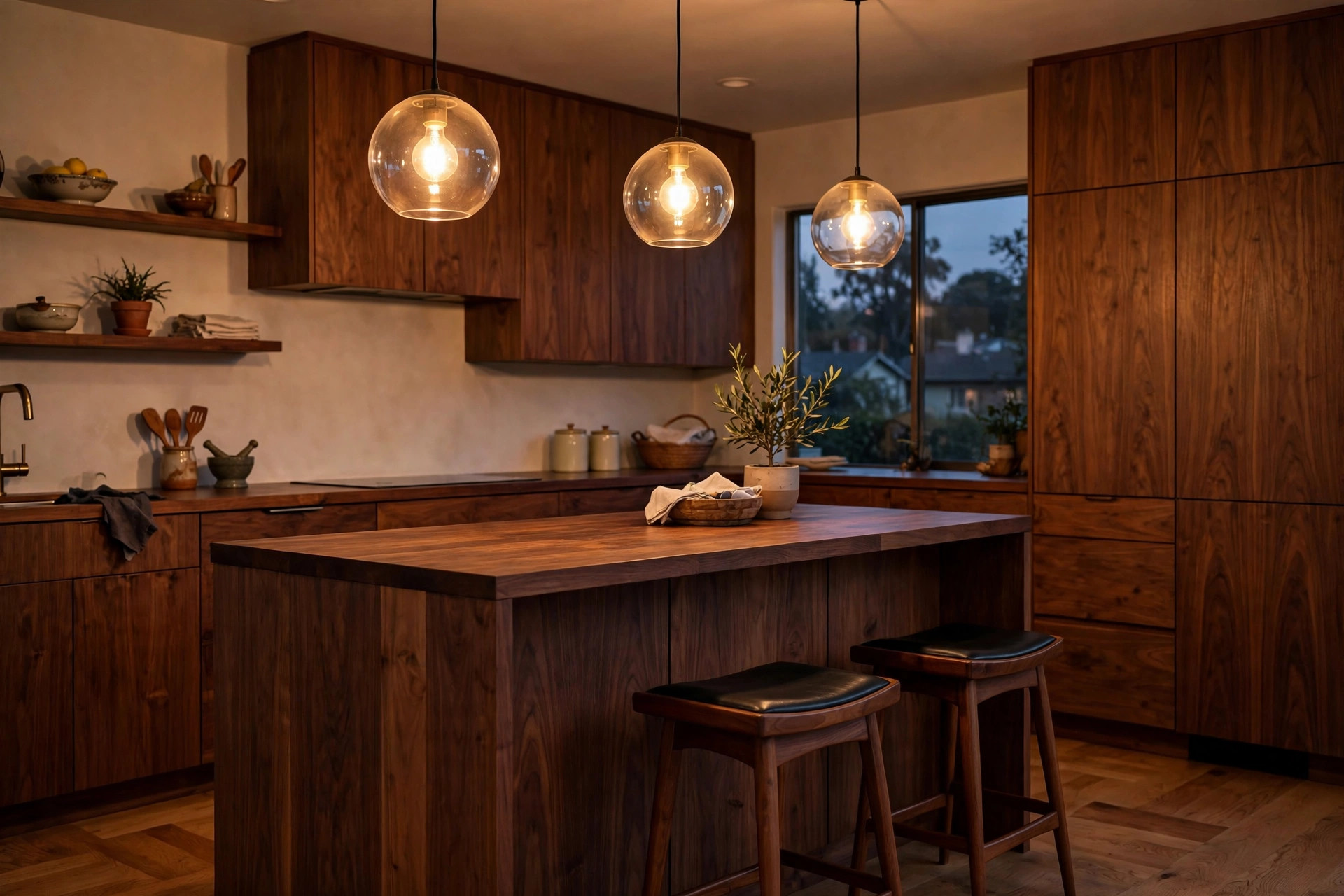
Lighting is the style’s signature accessory, and it is also the part homeowners plan last and regret most. Original mid-century kitchens paired strong geometry with warm light: sputnik chandeliers, globe pendants, drum shades, and arc lamps, usually in brass, black, or colored glass.
Plan the electrical layout before drywall, not after. A practical sequence: choose the statement fixture first, since its mounting and scale set the rest; add recessed or track lighting for real task light; finish with under-cabinet strips so the counters are actually usable at night. Keep the color temperature warm — 2700K to 3000K — because cool daylight bulbs flatten walnut and teak into something gray. Getting this right early is exactly why our kitchen lighting and fixture planning starts with a fixture layout, not a shopping trip.
Layout Moves That Fit Modern Life
Original mid-century kitchens were often small and closed off. The remodel question is how to open the room without erasing its character. Moves that work: replacing the wall between kitchen and living space with a wide opening or peninsula, converting a pass-through into a breakfast bar, and pulling tall storage to one wall so sightlines stay open.
Appliances get integrated or chosen in simple finishes — panel-ready fronts hide the dishwasher and refrigerator behind cabinet faces, which keeps the flat-panel rhythm unbroken. Island or peninsula seating suits the era better than a separate table crammed into a corner; a 12-inch overhang handles most breakfast seating. Start with our complete kitchen remodeling services in Chula Vista to map the layout before choosing finishes.
Remodel Planning Steps for an Authentic Result
- Study the home’s existing bones — beams, brick, clerestory windows, original floors — and decide what stays.
- Lock the cabinet profile: flat-panel fronts on every visible run.
- Choose the wood species and the 3-color palette before ordering anything.
- Finalize the lighting plan early; electrical rough-in is the wrong time to pick fixtures.
- Select counters, backsplash, and flooring that let the wood lead.
- Decide hardware, faucets, and fixtures in one finish family.
- Walk the plan with a designer or contractor before materials are ordered.
Common Mid-Century Mistakes to Avoid
- Mixing raised-panel cabinets with slab fronts — the two profiles clash on sight.
- Adding too many retro accessories: a starburst clock, a record player, and atomic prints together turn the kitchen into a set.
- Skipping the lighting plan and relying on a single ceiling fixture.
- Erasing the home’s original features — exposed beams, brick, or clerestories are the irreplaceable part.
- Choosing glossy, cheap-looking laminates that read as 1980s, not 1960s.
- Letting storage shrink: period kitchens held less stuff; modern life needs real pantry and pull-out storage.
A mid century modern kitchen works when a few strong decisions carry the room: flat-panel cabinets in a warm wood, a restrained three-color palette, statement lighting planned early, and a layout that opens the space without erasing its character. Start with the home’s existing bones, lock the big material choices in order, and keep the retro touches to a few confident pieces.
Free Download: Mid Century Modern Kitchen Planning Checklist
Grab the one-page Mid Century Modern Kitchen Planning Checklist — the cabinet, wood, color, lighting, and layout decisions from this article in a single worksheet you can bring to a design meeting or contractor walkthrough.
Frequently Asked Questions
What defines a mid century modern kitchen?
Flat-panel cabinets, warm wood tones like walnut or teak, low clean lines, and simple geometric lighting. The style runs from the mid-1940s through the early 1970s and favors natural materials over ornament.
Are walnut cabinets right for a mid century kitchen?
Yes — walnut is the classic choice, with teak and white oak as strong alternatives. Quality veneer over a stable core handles humidity well and costs less than solid wood doors.
What colors work in a mid century modern kitchen?
Warm neutrals (warm white, camel, sand) as the base, one mid-tone for cabinets or an island, and one saturated accent such as olive, mustard, terracotta, or teal in small doses.
Can I get the look with refaced cabinets?
Often, yes. If the cabinet boxes are sound, new flat-panel veneer fronts in walnut or white oak can deliver the mid-century profile without a full cabinet replacement.
How much does a mid century style kitchen remodel cost in Chula Vista?
Cost depends on cabinet scope, materials, and layout changes. Flat-panel wood cabinetry and integrated lighting set the baseline — get a detailed quote after a design walkthrough.
Planning Your Kitchen Remodeling Project?
Vexkitch Kitchen Remodeling has completed more than 700 kitchen projects across Chula Vista and the South Bay since 2017. Start with our complete kitchen remodeling services in Chula Vista to plan the layout and materials, or reach out through our contact page to talk through your project.