Kitchen Cabinet Hardware: Knobs, Pulls & Finishes Guide

Cabinet hardware sits in your hand dozens of times a day. Every drawer you open, every door you close, every pot you reach for runs through a knob or a pull. Homeowners planning a kitchen remodel in Chula Vista often spend weeks choosing cabinets and countertops, then pick hardware in an afternoon. That order is backwards. The wrong size, finish, or placement can make good cabinets feel awkward to use, while the right hardware makes the whole kitchen feel finished.
What follows covers kitchen cabinet hardware the way a remodeler thinks about it: knobs versus pulls, sizes that fit the cabinet, finishes that hold up to daily use, and placement rules that keep doors and drawers working well. The goal is simple — hardware that looks right on day one and still works well years from now.
The Small Detail That Changes How a Kitchen Feels
Hardware is the most-touched surface in a kitchen. Fingers, cooking grease, dishwater, and cleaning products all land on it. A finish that looks good in a showroom can show wear fast in a household that cooks every night. A pull that is too short forces a pinch grip on a heavy drawer full of pots. A knob placed too close to the edge makes a door swing into the next cabinet.
Good hardware choices solve small problems before they start. The right pull gives a full grip on a wide drawer. The right finish hides fingerprints instead of showing every one. The right placement keeps knuckles clear of the door frame. None of this is glamorous, and all of it matters every single day.
Vexkitch Kitchen Remodeling has completed more than 700 kitchen projects across Chula Vista and the South Bay since 2017, and hardware is one of the details homeowners notice most after move-in — either because it works quietly, or because it does not.
Knobs vs Pulls: What Fits Your Cabinets
The first decision is the shape itself. Knobs and pulls each have a job, and most kitchens use both.
When Knobs Work Best
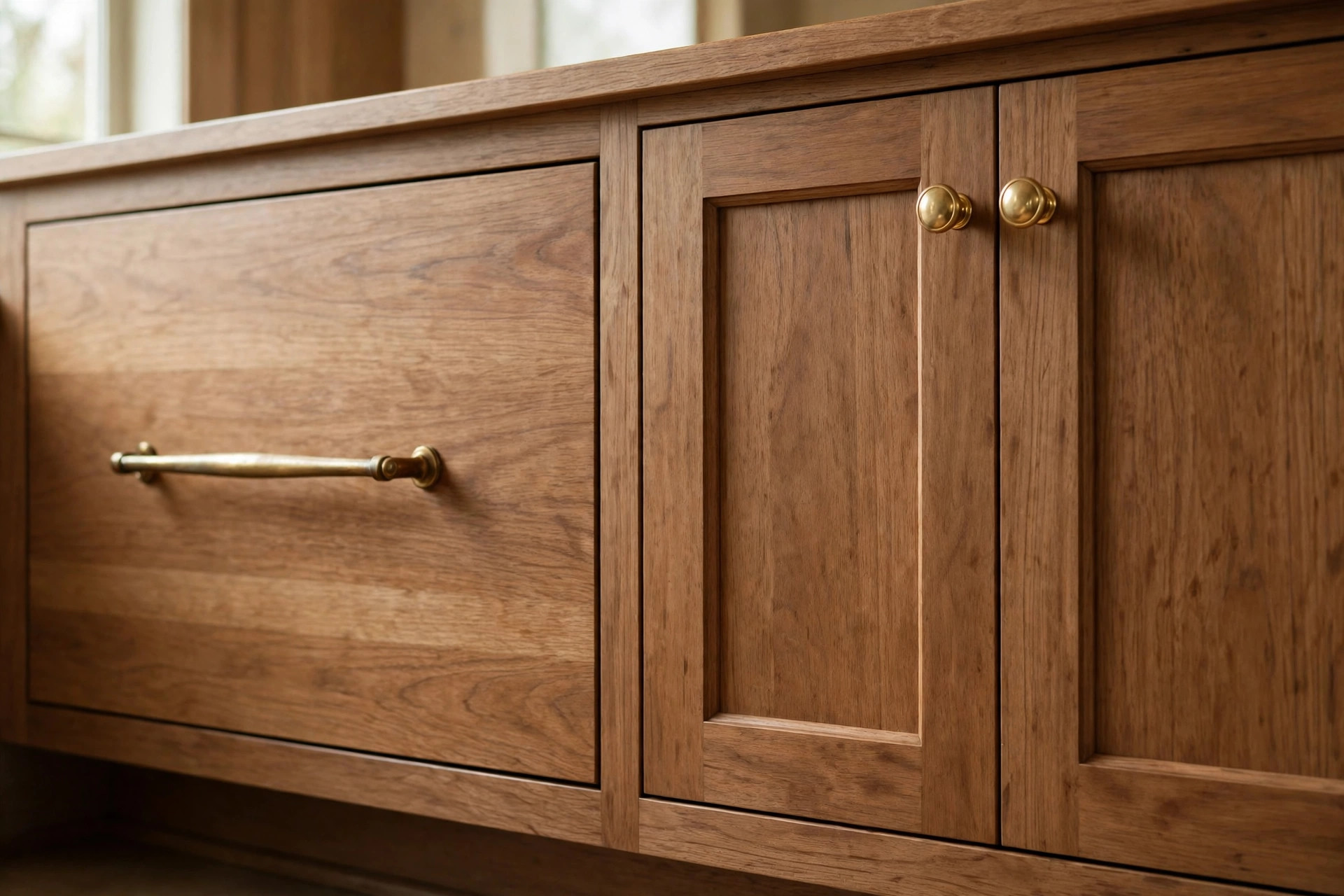
Knobs suit cabinet doors. A single screw holds each one, installation is straightforward, and the cost per piece stays low. Knobs work well on smaller doors, on upper cabinets, and on kitchens where a light, classic look fits the cabinet style. Round and mushroom knobs pair naturally with traditional and shaker cabinets.
Knobs have limits. They offer one point of grip, so a heavy door or a wide drawer can feel awkward with a knob alone. On drawers wider than about 24 inches, a single knob forces an off-center pull that can rack the drawer over time.
When Pulls Make More Sense
Pulls give a full-hand grip with two mounting points. That makes them the better choice for drawers, for heavy doors like the dishwasher panel or trash pull-out, and for any cabinet that gets opened with wet or greasy hands. Bar pulls suit modern and transitional kitchens. Cup pulls, the half-moon shape that sits under the drawer front, fit farmhouse and traditional kitchens and feel natural on deep drawers.
Pulls cost more per piece and take two holes per piece, so a full kitchen of pulls adds up. The payoff is drawers that open smoothly with one hand, even when they are loaded.
Mixing Knobs and Pulls
A common approach in Chula Vista remodels is knobs on doors and pulls on drawers. That split plays to the strengths of each shape and keeps the look consistent. Mixing two different pull styles in one kitchen usually looks scattered, so pick one pull design and one knob design, in the same finish, and carry them through the room.
For a closer look at how cabinet styles shape these choices, see the guide to traditional kitchen cabinets.
Hardware Sizes That Fit the Cabinet
Hardware that is too small looks lost on a wide drawer. Hardware that is too large overpowers a narrow door. A few sizing rules keep the proportions right.
Standard Sizes
For drawers, a pull that spans about one-third of the drawer width looks balanced and gives a comfortable grip. A 24-inch drawer pairs well with an 8-inch pull (measured center to center between the screws). A 30-inch drawer suits a 10-inch pull. Small drawers under 18 inches wide work fine with a 4- or 5-inch pull, or with a knob.
For doors, knobs in the 1- to 1.5-inch range cover most cabinet doors. Pulls on doors usually run 5 to 6 inches center to center. Anything longer on a standard door starts to look heavy.
When to Go Bigger
Oversized pulls have become common on wide drawers and tall pantry doors, and they work when the cabinet is wide enough to carry them. A 12-inch pull on a 36-inch drawer looks deliberate. The same pull on an 18-inch drawer looks wrong. Match the pull to the drawer, not to the trend.
Appliance Pulls
Integrated appliance panels — the dishwasher, the refrigerator, the trash pull-out — need longer, sturdier pulls. Appliance pulls often run 12 to 18 inches and mount with through-bolts rather than short wood screws. If a pull will carry the weight of a full appliance door, confirm the mounting hardware with the installer before ordering.
Finishes That Hold Up in a Working Kitchen
Finish is where looks meet daily wear. The right finish hides fingerprints, resists corrosion, and still matches the faucet and lighting a few years later.
Brass and Gold Tones
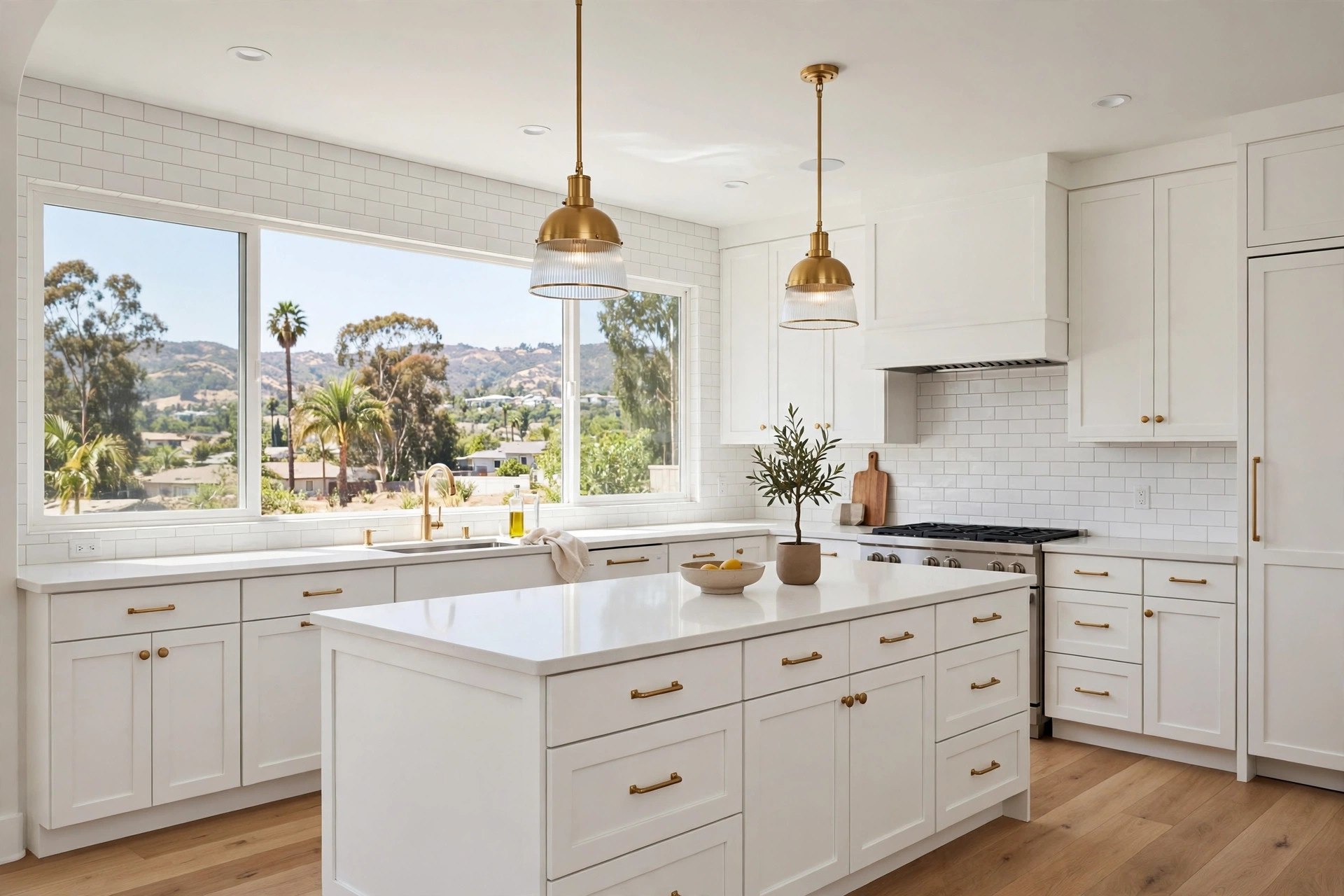
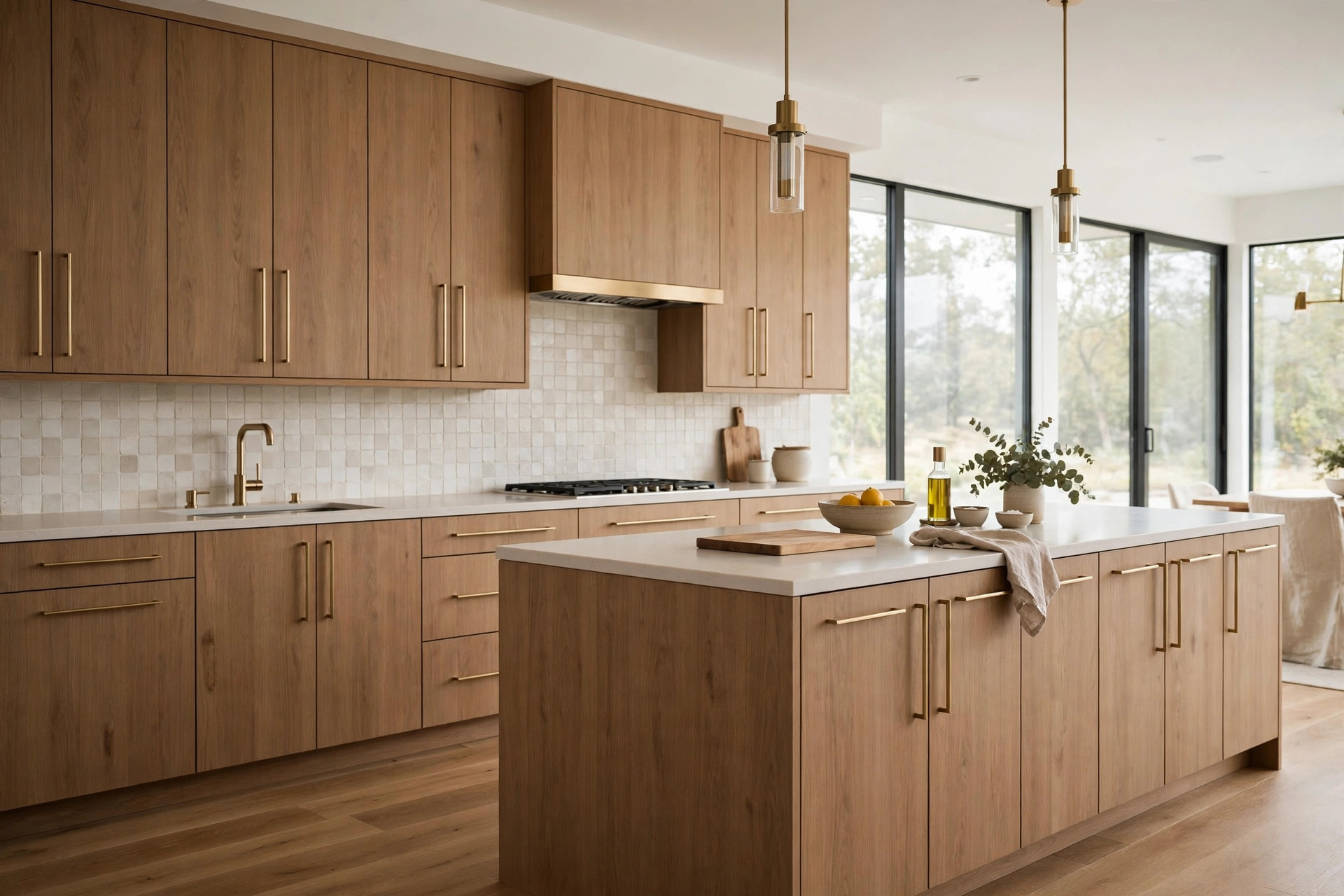
Warm brass has stayed popular in South Bay kitchens, and it pairs well with white, green, and wood-tone cabinets. Unlacquered brass develops a patina over time — some homeowners like the lived-in look, others do not. Lacquered or satin brass holds its color longer and needs less upkeep. Brushed brass hides fingerprints better than polished brass.
Matte Black
Matte black reads modern and works with almost any cabinet color. It hides smudges well and pairs cleanly with black faucets and dark window frames. The trade-off is that a scratched matte black finish shows the metal underneath, so it needs a gentle touch during installation and cleaning.
Nickel and Chrome
Polished nickel and chrome are the workhorses of kitchen hardware. They resist corrosion, clean easily, and match most stainless appliances. Polished chrome shows fingerprints more than brushed nickel does. In coastal homes around Imperial Beach and Coronado, where salt air reaches further inland than most people expect, a corrosion-resistant finish like nickel or chrome is a practical choice.
Bronze and Copper
Oil-rubbed bronze brings warmth and suits traditional and rustic kitchens. The dark finish hides wear well, though the rubbed highlights can fade unevenly on high-touch pieces over many years. Copper makes a strong statement and pairs well with warm wood, but it needs regular cleaning to hold its color.
One rule covers every finish: match the hardware finish to the faucet finish, or stay within the same family. Brass hardware with a chrome faucet can work if it is deliberate, but two competing finishes usually look accidental. When in doubt, carry one metal through the room and let the cabinet color do the talking.
Matching Hardware to Cabinet Style
Hardware should follow the cabinet, not fight it.
Shaker Cabinets
Shaker doors take almost any hardware. Round knobs and simple bar pulls are the safe pairings. Cup pulls suit a shaker kitchen with a farmhouse lean. The clean lines of the door leave room for the hardware to be the accent, so the finish choice matters more here than the shape.
Traditional and Raised-Panel Cabinets
Traditional cabinets call for hardware with a little more detail — a bin pull, a knob with a backplate, or a pull with a slight curve. Oversized modern bar pulls can look out of place on a raised-panel door. The hardware should feel like it belongs to the same era as the cabinet.
Flat-Panel and Modern Cabinets
Flat-panel doors suit long, slim bar pulls and edge pulls that sit flush with the door. Knobs can look fussy on a flat-panel door, so pulls are usually the better call. Edge pulls, which mount to the top edge of the door, keep the flat surface clean and suit handleless designs.
The custom cabinetry and countertops page covers how cabinet construction and countertop choices shape the rest of a remodel, and hardware is the finishing layer on top of those decisions.
Placement Rules That Keep Doors and Drawers Working Well
Placement is the part of hardware selection that gets skipped most often, and it is the part homeowners feel most.
- Door knobs sit 2 to 3 inches up from the bottom corner of an upper door, and 2 to 3 inches down from the top corner of a lower door, on the opening side.
- Door pulls mount in the same corner positions, with the bottom screw of the pull at the knob position.
- Drawer pulls sit centered horizontally on the drawer front. On drawers taller than about 12 inches, center the pull vertically as well; on shallow drawers, a knob centered on the front works fine.
- On a bank of drawers, keep the pull position consistent across every drawer, even when drawer heights change.
- Leave enough clearance that a pull on one door does not strike the pull on the neighboring door when both swing open.
A simple test before drilling: hold the hardware in place with painter’s tape and open the door. If a knuckle brushes the frame, move the piece out by half an inch. That half inch is the difference between hardware that feels right and hardware that annoys.
What Cabinet Hardware Costs
Hardware pricing runs per piece, so the total depends on how many doors and drawers a kitchen has. Basic knobs often cost a few dollars apiece. Standard pulls usually cost several times that. Designer pulls, appliance pulls, and solid brass pieces sit higher still.
A typical Chula Vista kitchen with 30 to 40 pieces of hardware can see the total range widely depending on the finish and the brand. The practical way to budget is to count every door and drawer, price the exact pieces chosen, and add a few spares — a spare knob or pull in the same finish saves a long search later if one loosens or chips.
Hardware is also one of the easiest upgrades to change later. Unlike cabinets or countertops, a full hardware swap takes an afternoon and leaves the kitchen intact. That makes it a good place to spend a little more, since the result is visible every time the kitchen is used.
Hardware Mistakes Worth Avoiding
- Ordering hardware before the cabinets are measured — sizes and counts change once the final cabinet layout is set.
- Mixing two finishes in one room without a plan — one metal, carried consistently, looks intentional.
- Choosing a pull shorter than one-third of a wide drawer — the drawer will feel heavy and pull unevenly.
- Drilling every door before testing one — drill a single door, check the placement, then drill the rest.
- Ignoring the faucet and lighting finishes — hardware that clashes with the faucet stands out for the wrong reason.
- Picking a finish that shows every fingerprint in a household that cooks daily — brushed and matte finishes hide wear better than polished ones.
Free Download
Kitchen Cabinet Hardware Checklist — a one-page checklist from Vexkitch Kitchen Remodeling that walks through the hardware decisions in this guide: knobs vs pulls, sizing, finish, placement, and ordering counts. Print it and bring it to the showroom.
Download the Kitchen Cabinet Hardware Checklist (PDF)
Frequently Asked Questions
Should kitchen cabinet hardware match the faucet?
It should be in the same finish family. Brass hardware with a brass faucet looks intentional; brass hardware with a chrome faucet can look accidental unless the mix is deliberate. When in doubt, carry one metal through the room.
Are knobs or pulls better for kitchen cabinets?
Pulls work better on drawers and heavy doors because they give a full-hand grip with two mounting points. Knobs work well on cabinet doors, especially smaller ones. Most kitchens use knobs on doors and pulls on drawers.
What size pulls should I use on kitchen drawers?
A pull that spans about one-third of the drawer width is a good rule. A 24-inch drawer pairs well with an 8-inch pull, and a 30-inch drawer suits a 10-inch pull. Small drawers under 18 inches wide work with a 4- or 5-inch pull.
What is the most durable finish for kitchen cabinet hardware?
Brushed nickel and chrome hold up well to daily use and resist corrosion, which matters in coastal South Bay homes. Satin brass is durable too. Matte black looks modern but can show scratches, and unlacquered brass will develop a patina over time.
Can I mix knobs and pulls in the same kitchen?
Yes. Knobs on doors and pulls on drawers is a standard approach. Keep the finish the same across both shapes, and avoid mixing two different pull designs in one kitchen.
When should I replace cabinet hardware during a remodel?
Hardware goes on after cabinets are installed and painted, near the end of the project. Order it once the final cabinet layout is set so the counts and sizes match the actual doors and drawers.
Planning Your Kitchen Remodeling Project?
Cabinet hardware is a small decision with a daily impact, and it sits on top of every other choice in a remodel — the cabinets, the countertops, the layout. Getting the details right takes a plan that covers the whole kitchen, not just one piece of it.
Explore our complete kitchen remodeling services in Chula Vista to plan your project with a structured approach. Vexkitch Kitchen Remodeling has served Chula Vista and South Bay homeowners since 2017, with more than 700 completed projects.