
Open Shelving Kitchen Ideas: Styling & Practical Tips

Open shelving has moved past trend status in Chula Vista kitchens. Homeowners keep asking for it in remodels across Eastlake, Otay Ranch, and older ranch-style homes near Third Avenue: a wall of upper cabinets can make a kitchen feel closed in, while a few well-placed shelves open the room up.
The shelves look simple in photos. Living with them takes more thought. Plates collect dust, cooking grease settles on anything near the range, and a shelf loaded with mismatched mugs turns into visual noise fast. The difference between shelves that look intentional and shelves that look cluttered comes down to decisions made before installation.
These open shelving kitchen ideas cover the shelf-versus-cabinet decision, styling rules, materials and mounting that carry real weight, and a cleaning routine that keeps open storage practical.

Open Shelving or Upper Cabinets? How to Decide
Start with how the kitchen gets used, not how it photographs. A household that cooks most nights needs storage that protects dishes from grease and dust. A household that eats out often and owns a small, matching set of everyday dishes can lean harder into open storage.
Open shelving earns its place when a few conditions line up:
- The dishes on display get used and washed every day or two, so dust never settles.
- The wall sits away from the range, where steam and cooking grease stay light.
- The household owns a tight, coordinated set of plates, bowls, and glasses.
- Closed storage already exists elsewhere for the overflow and the rarely used pieces.
Upper cabinets make more sense when the opposite is true. Large families, frequent cooks, and homes with limited total storage usually need the capacity and protection that doors provide. A cabinet holds more per linear foot than a shelf and keeps dishes cleaner between uses. Small appliances, food containers, and cleaning supplies belong behind doors in almost every kitchen.
Most Chula Vista remodels land somewhere in the middle. One open run beside a window or over a coffee station, with upper cabinets handling the rest, gives the airy look without giving up storage. A full kitchen remodeling plan in Chula Vista makes that mix easier to get right, placing open shelves where they help and closed cabinets where they protect.
| Decision factor | Open shelves | Upper cabinets |
|---|---|---|
| Storage capacity | Less per linear foot | More, with doors hiding clutter |
| Cleaning | Weekly wipe-down needed | Occasional wipe of door fronts |
| Grease exposure | High near the range | Low, doors shield contents |
| Visual feel | Open, airy, display-focused | Enclosed, tidy, uniform |
| Best fit | Everyday dishes, small sets | Bulk storage, mixed items, busy cooks |

Styling Rules That Keep Open Shelves Looking Calm
Shelves that look good in photos follow a few consistent rules, and the same rules keep them looking good six months later.
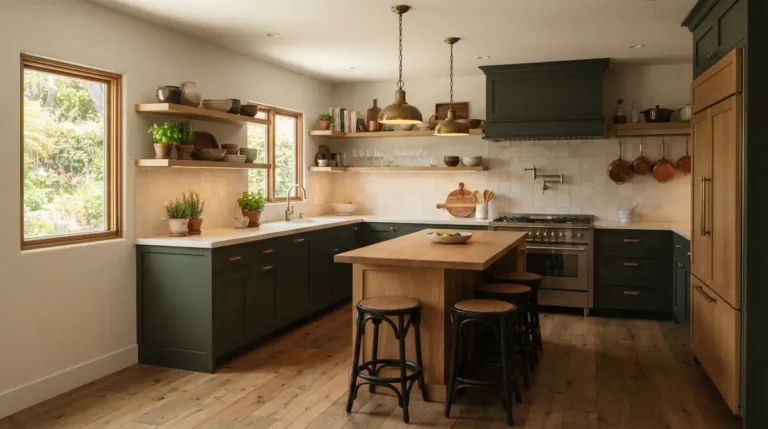
Display what gets used, hide the rest. Everyday plates, bowls, and glasses earn shelf space because they cycle through the dishwasher constantly. Holiday platters, specialty bakeware, and the chipped mug from college belong in a cabinet.
Group in small clusters, not long rows. Three plates stacked together, a pair of bowls, and a small plant read as one arrangement, while a single unbroken line of identical items reads as a store display. Vary heights inside each cluster — a tall pitcher next to a short stack of bowls, a cutting board leaning at the back.
Repeat one or two materials and colors. White dishes on warm wood shelves, clear glass with brushed brass brackets, or matte black brackets with cream ceramics all work because the palette stays narrow. Trouble starts when every shelf introduces a new color, pattern, or material. Pick a base — usually the dish color — and let one accent material repeat across the run. Our guide to warm wood kitchen ideas shows how that balance works across cabinets, islands, and finishes.
Leave a third of each shelf empty. Empty space is what separates styled shelves from crowded ones, so aim for roughly 20 to 30 percent of every shelf left bare. The gap gives each group room to breathe and makes it easy to pull a plate out without knocking the neighbor over.
Put heavy items low, light items high. Stacks of plates and bowls sit on the lowest shelf, where they are easy to reach and safe to lift. Glasses, small plants, and a single decorative piece go higher. Nothing heavy should sit above shoulder height.

Shelf Materials and Mounting That Hold Up in a Working Kitchen
Open shelves carry real weight in a room full of steam, heat, and daily handling. Material and mounting choices decide if they stay level and solid for years or start to sag and wobble.
Solid wood leads for most kitchens. White oak, walnut, and maple all hold up well when sealed properly. A thickness of 1.5 to 2 inches handles spans up to about 36 inches without noticeable sag under a normal load of plates and bowls. Thinner boards look sleeker but need shorter spans or a center bracket. Butcher-block style shelves give the same warmth at a lower cost.
Powder-coated steel and glass have their place. Steel shelves suit a modern or industrial kitchen and wipe clean easily. Glass shelves look light and disappear visually, which helps in a tight space, but they show dust fast and carry less weight. Either one works as an accent run; wood stays the safer pick for everyday shelves.
Finish matters more than most people expect. Raw wood absorbs grease and stains around a working kitchen. A matte polyurethane or hardwax oil finish seals the surface so a damp cloth lifts cooking film instead of pushing it into the grain. Skip high-gloss finishes — they show every fingerprint and dust speck — and re-oil a hardwax finish once a year to keep the seal intact.
Mounting is where shelves fail. Floating shelves need hidden steel rods set into wall studs, not drywall anchors. A shelf loaded with stoneware can weigh 40 pounds or more, and drywall alone will not hold it. Studs in most Chula Vista homes sit 16 inches apart, so bracket spacing should land on studs wherever possible. Where a stud is not available, use heavy-duty toggle bolts rated well above the expected load before trusting them with a stack of plates.
Plan the span before ordering. Measure the wall, mark the studs, and work out bracket positions first. A shelf that spans a long wall with brackets only at the ends will bow in the middle within a year. Shorter shelves with brackets every 24 to 32 inches stay flat.
Dust and Grease Management: Keeping Open Shelves Practical
Dust and grease are the two honest objections to open shelving, and both have workable answers. The fix is placement first, routine second.
Keep open shelves away from the range. Cooking grease travels on steam and settles on the nearest surface, so shelves on the wall directly above or beside the cooktop collect a sticky film within days. Shelves on the opposite wall, beside a window, or over a coffee station stay far cleaner. A properly sized range hood that vents outside cuts grease spread across the room.
Store everyday items on the open shelves and rare items behind doors. Dishes used daily get washed before dust matters; the dusty shelf problem belongs to items that sit untouched for weeks. Glasses used once a month and the good serving platter belong in a cabinet, keeping the open shelves for the rotation that moves.
Build a short cleaning routine and stick to it. A weekly pass takes about five minutes for a typical two-shelf run: lift the dishes off one shelf, wipe the shelf and the dish bottoms with a damp microfiber cloth, and put everything back. Once a month, wash the glasses and plates that sat longest and wipe the brackets and wall behind the shelves. A drop of dish soap in warm water handles most grease film.
A few things never do well on open shelves:
- Cookbooks near the range, where pages absorb grease and warp
- Textured ceramics and woven baskets, which trap dust in every crevice
- Small appliances, which collect grease on vents and buttons
- Oil bottles or anything with a sticky surface stored near heat
Chula Vista homes near the bay deal with a bit more airborne dust and salt air than inland neighborhoods, so sealed shelf finishes and a regular wipe-down matter a little more here. Short, weekly, and consistent beats a deep clean every few months.
Open Shelving in a Small Kitchen
Small kitchens get the most visual benefit from open shelves and the least storage benefit, so the trade needs care. Removing upper cabinets from one wall makes a compact kitchen feel larger the same day, yet losing that cabinet space can leave a small household short on storage if nothing replaces it.
The workable approach mixes the two. One open run — often beside the sink or over a short stretch of counter — opens the sightline while the remaining cabinets hold the bulk of the dishes and food. Keep the open shelves shallow, around 10 to 12 inches deep, so they hold a plate and a bowl without jutting into the walkway. Deeper shelves in a narrow kitchen crowd the space.
Pair the shelves with storage that works harder elsewhere: a full-height pantry cabinet, deep drawers, and a pull-out organizer for pots and lids. Our guide to small kitchen renovation ideas covers those trade-offs in more detail, including layout moves that free up wall space for an open run.
Older Chula Vista homes often have small, closed-off kitchens with one long wall of uppers. Opening that wall — by removing the cabinets entirely or replacing them with a single shelf run — changes how the whole room feels without moving plumbing or walls, and it costs far less than a full layout move.
The shelves themselves should stay simple in a small kitchen. One material, one dish color, and a strict limit on decorative pieces keep the display from competing with the room. When space is tight, every object on a shelf has to earn its place twice: once for use and once for looks.
A small kitchen with open shelves works when the household commits to the edit: fewer dishes, used often, stored where they are easy to reach, and wiped down once a week. Skip any one of those four habits and the shelves start working against the room.
Free Download: Open Shelving Kitchen Planning Checklist
Planning open shelves for a remodel? Download the free one-page Open Shelving Kitchen Planning Checklist. It covers shelf placement, sizing, material and mounting checks, and the weekly cleaning routine from this guide.
Frequently Asked Questions
Are open shelves practical in a kitchen that gets used every day?
Yes, when the shelves hold everyday dishes that get washed often and sit away from the range. Daily-use items cycle through the dishwasher before dust settles, so the shelves stay practical with a short weekly wipe-down.
How much weight can a floating kitchen shelf hold?
It depends on the mounting. A floating shelf anchored into wall studs with hidden steel rods can hold a full load of plates and bowls, often 40 pounds or more. Shelves held by drywall anchors alone should not carry heavy stoneware.
How do you keep open kitchen shelves from getting dusty and greasy?
Place shelves away from the range, store only everyday items on them, and wipe them weekly with a damp microfiber cloth. A range hood that vents outside also cuts the grease that settles on open shelves.
What should you put on open kitchen shelves?
Everyday plates, bowls, and glasses in one or two matching colors, plus a small plant or a single decorative piece. Rarely used items, cookbooks near the range, and small appliances belong behind closed doors.
Do open shelves work in a small kitchen?
Yes, as a mix. One shallow open run beside the sink or over a short counter opens the sightline while the remaining cabinets hold bulk storage. Keep shelves 10 to 12 inches deep so they do not crowd the walkway.
How deep should open kitchen shelves be?
Most open kitchen shelves work best at 10 to 12 inches deep, which fits a dinner plate and a bowl with room to spare. Deeper shelves waste space at the back and jut into the room, especially in a small kitchen.
Planning Your Kitchen Remodeling Project?
Open shelving is one decision inside a larger kitchen plan, and it works best when layout, storage, and materials are planned together. Vexkitch Kitchen Remodeling has served Chula Vista and the South Bay since 2017, completing more than 700 kitchen projects. Explore our complete kitchen remodeling services in Chula Vista to start planning, or reach out through the contact page to schedule a consultation.