Dark Cottagecore Kitchen: How to Get the Cozy Look Without Losing Function

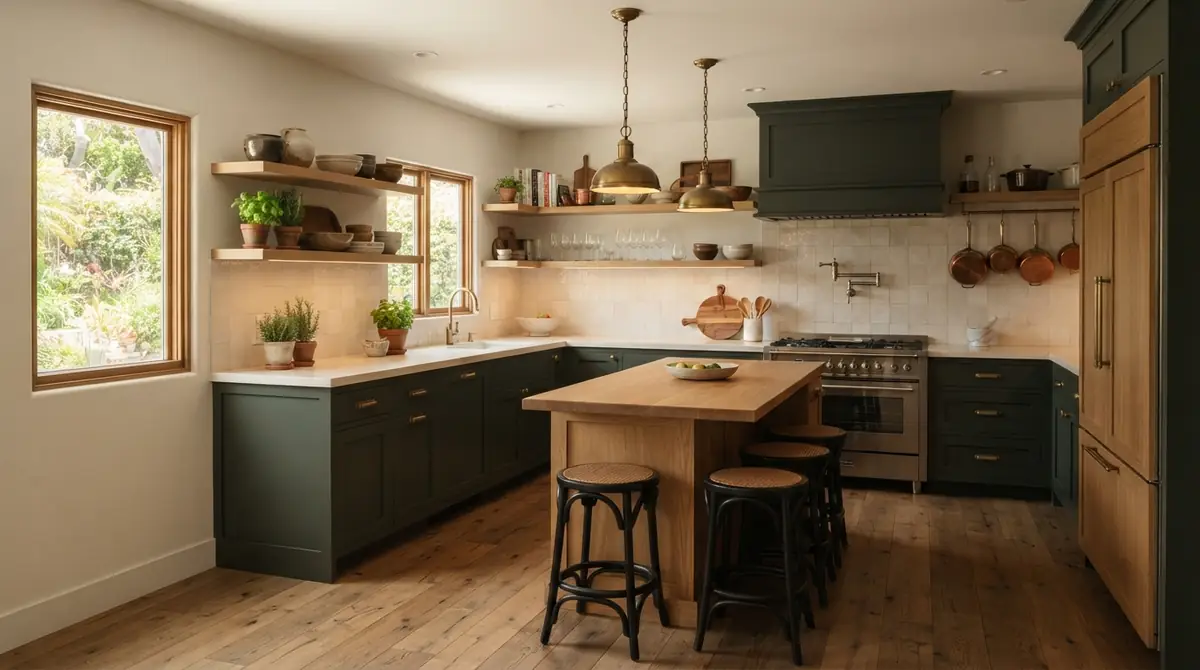
A dark cottagecore kitchen combines moody color, warm natural materials, vintage-inspired details, and a collected feel. Forest green cabinetry, handmade-looking tile, aged brass, natural wood, pottery, and softer lighting can give the room plenty of character. For related planning, see Warm Wood Kitchen Ideas.
The problem starts when every attractive cottagecore idea gets added at once. Dark cabinets, patterned tile, open shelves, decorative cookware, rugs, plants, and dim lighting can leave a kitchen short on storage, prep space, and useful illumination. For related planning, see 15 Kitchen Stool Ideas to Elevate Your Space.
A more practical approach is to build the working kitchen first and add the cottagecore character around it: For related planning, see Kitchen Wall Removal and Structural Work in Chula Vista.
functional foundation → dark color → natural materials → vintage character → decorative details For related planning, see White Oak and Black Kitchen.
A useful Vexkitch planning guideline is to think roughly 70% function and 30% character. It is not an industry rule; it is simply a way to stop the aesthetic from overtaking everyday kitchen needs. For related planning, see Chula Vista ADU Kitchen Requirements.
What Makes a Kitchen Dark Cottagecore?
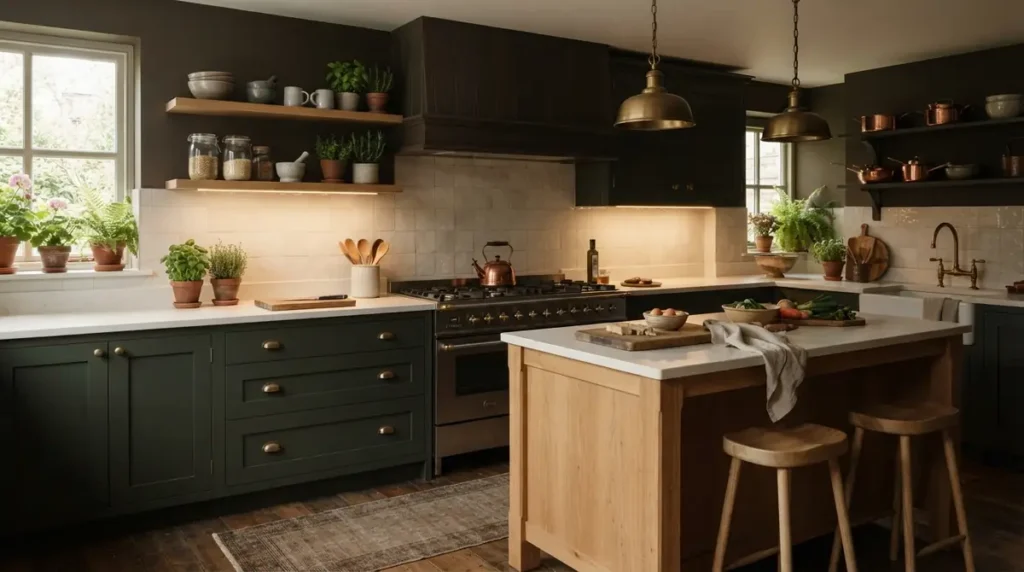
Dark cottagecore takes the softer, nature-inspired character of cottage interiors and gives it a moodier palette.
Common elements include:
- forest green, charcoal, aubergine, inky blue, or earthy brown cabinetry For related planning, see Moody Blue Kitchen Cabinets.
- oak or walnut details
- cream or handmade-looking tile
- aged brass, bronze, copper, or blackened metal
- ceramics and useful cookware on display For related planning, see Aubergine Kitchen Cabinets.
- botanical accents
- vintage-inspired lighting
- furniture-like cabinetry or island details For related planning, see Cabinet Refacing vs. Replacing.
- a collected rather than perfectly matched appearance
Dark cottagecore overlaps with rustic and country styles, but it usually feels more layered, botanical, and romantic. Homeowners interested in a more straightforward rustic look can also review these farmhouse kitchen ideas.
How Dark Should a Cottagecore Kitchen Actually Be?
A dark cottagecore kitchen does not need every major surface to be dark. Concentrating deeper color on cabinetry or one feature area while keeping countertops, backsplash, or upper surfaces lighter usually gives the room better balance. For related planning, see How Much Does It Cost to Move a Kitchen.
Full Dark Cabinetry
Full dark cabinetry works more easily when: For related planning, see Kitchen Sink Installation Cost in Chula Vista.
- the kitchen receives good daylight
- countertops are lighter For related planning, see Kitchen Counter Stools.
- backsplash adds contrast
- work lighting is strong
- flooring does not add another large dark surface
Dark Lower Cabinets With Light Uppers
This is useful in smaller kitchens or rooms with limited daylight. Dark lowers create the mood, while cream or warm-white uppers keep the eye-level area lighter.
Dark Island Only
A dark island gives homeowners a lower-commitment version of the look. Cream, warm-white, or natural-wood perimeter cabinets can keep the rest of the room brighter. For related planning, see Kitchen Island Size & Clearance Guide.
Dark Cabinets With a Wood Island
Natural wood softens darker painted cabinetry and adds warmth without relying on more decorative color. For related planning, see Can You Remodel a Kitchen Without Changing the Layout?.
Before Choosing Full Dark Cabinets, Check Four Things
Look at these conditions before covering the entire kitchen in a deep color:
- Natural light
- Countertop brightness
- Backsplash brightness
- Amount of upper cabinetry
A kitchen with limited daylight and many upper cabinets may benefit from dark lowers instead of full dark cabinetry. For related planning, see how to clean kitchen cabinets grease Fast and Safely.
A brighter kitchen with lighter worktops and strong task lighting can usually carry more dark cabinetry without feeling visually heavy.
Best Colors for a Dark Cottagecore Kitchen
Forest or Olive Green
Green creates a botanical, grounded appearance and works especially well with: For related planning, see Green Kitchen ROI Calculator.
- cream tile
- warm white stone
- natural oak
- aged brass
Charcoal
Charcoal gives the room a smoky neutral base.
Pair it with:
- cream stone
- walnut
- bronze
- warm-white walls
Aubergine or Deep Plum
Aubergine creates a richer, more romantic palette.
It works well with:
- walnut
- warm light stone
- aged brass
- quiet cream tile
Inky Blue
Inky blue feels cooler and slightly more restrained.
Combine it with:
- medium oak
- warm white quartz
- bronze
- textured neutral tile
Deep Blue-Green
Blue-green sits between dark blue and botanical green, making it easy to combine with oak, cream, and warm metal finishes.
How to Light a Dark Cottagecore Kitchen
A cozy kitchen still needs enough light for chopping, cooking, washing, and cleaning.
Functional Task Lighting
Start with:
- under-cabinet lighting
- prep-area lighting
- island lighting
- sink lighting
- range illumination For related planning, see Range Hood Installation Cost in Chula Vista in Should Expect.
- useful general ceiling light
Warm Atmospheric Lighting
Then add:
- vintage-style pendants
- aged-brass sconces
- warm accent lighting
- a small decorative lamp in a safe location
Atmospheric lighting should add mood after the work surfaces are properly lit.
Should You Use Open Shelving in a Cottagecore Kitchen?
No. Cottagecore does not require an entire wall of exposed storage. For related planning, see Kitchen Pantry and Storage Solutions That Improve Functionality and Organization.
Open shelving works best where it can display attractive items without replacing essential cabinet capacity. For related planning, see Kitchen Remodeling Services in National City, CA.
Good locations include:
- a coffee station
- beside a window
- a short mug shelf
- the end of a cabinet run
- a decorative niche away from heavy grease
Keep closed storage for:
- packaged food
- small appliances
- cleaning products
- bulk pantry items
- plastic containers
- rarely used cookware
A practical rule is:
Open shelves for display; closed cabinets for storage.
Protect Your Working Countertop
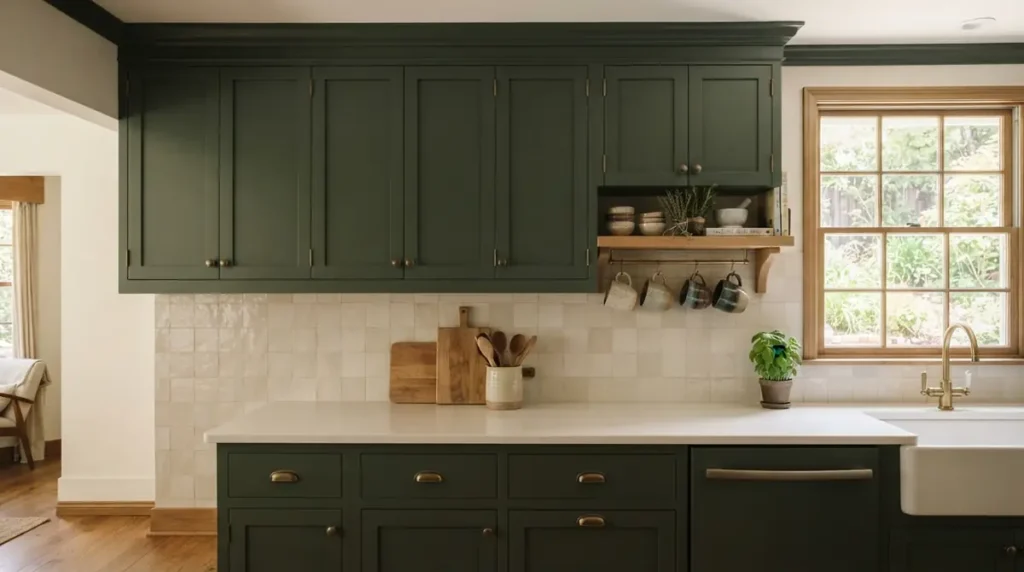
Cottagecore kitchens often show countertops covered with cutting boards, pottery, herbs, jars, lamps, and cookbooks.
Those details add character, but the main work areas still need space.
Keep Working Zones Mostly Clear
Protect:
- main prep counter
- landing space beside the range
- sink landing area
- island prep area
- serving space
Use Separate Display Zones
Good display items include:
- one utensil crock
- a small cutting-board group
- frequently used kettle
- herbs
- a fruit bowl
- cookbooks
Decorate the edges; protect the work zones.
Functional Cottagecore: Display What You Actually Use
Useful objects can provide most of the cottagecore character.
Good examples include:
- wooden cutting boards
- ceramic utensil crocks
- mugs
- cast-iron cookware
- tea kettle
- herbs
- cookbooks
- practical baskets
Store away:
- excess jars
- cleaning products
- appliance cords
- duplicate decor
- backup ingredients
- rarely used gadgets For related planning, see must-have gadgets effortless summer entertaining.
Visible items earn their space more easily when they are both attractive and useful.
The 70/30 Cottagecore Rule
This is a practical Vexkitch planning guideline rather than a formal design standard.
70% Functional Foundation
Prioritize:
- cabinet layout
- storage
- countertops
- appliances
- lighting
- ventilation
- flooring
- sink
- plumbing
- electrical planning
- clear working zones
30% Cottagecore Character
Layer in:
- dark cabinet color
- handmade-looking tile
- aged hardware
- selective open shelving
- pottery
- artwork
- botanical details
- textiles
- vintage-style lighting
Build the useful kitchen first, then add the storybook character.
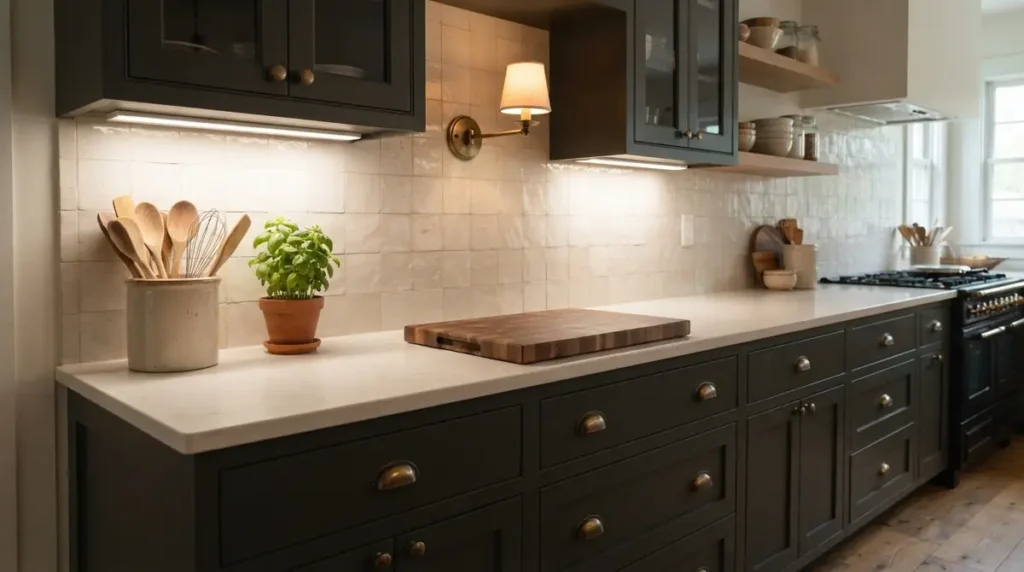
Use Modern Storage Behind Vintage-Looking Cabinets
The outside of the cabinetry can feel traditional while the inside works like a modern kitchen.
Useful systems include:
- deep drawers
- pull-out pantry storage
- tray dividers
- spice storage
- appliance garages
- hidden trash and recycling
- drawer organizers
- closed upper cabinets
- furniture-style pantry cabinets
Planning these features as part of interior kitchen layout improvements helps preserve the cottagecore appearance without sacrificing storage.
Best Countertops for Dark Cottagecore Cabinets
Warm white quartz, cream stone, and lightly veined neutral surfaces are among the easiest countertops to pair with dark cottagecore cabinetry. They brighten the working surface while allowing the cabinets to remain the visual anchor.
Warm White Quartz
Useful for:
- full dark cabinetry
- smaller kitchens
- simple maintenance
- stronger contrast
Cream or Warm Neutral Stone
Cream stone creates softer contrast than bright white and fits naturally with warm wood and aged metal.
Lightly Veined Stone
Subtle veining adds movement without competing heavily with dark cabinet color.
Dark Stone
Dark countertops can work when:
- daylight is good
- backsplash remains lighter
- upper cabinetry is controlled
- other surfaces provide contrast
Limited Wood Countertop
Wood can work on an island or secondary surface, but using wood everywhere may create too much visual weight if the floor and cabinetry already contribute natural material.
What Backsplash Works With Dark Cottagecore Cabinets?
Cream Handmade-Look Tile
A cream tile adds:
- warmth
- texture
- reflected light
without removing the darker character.
Zellige-Style Tile
The irregular surface creates a handmade appearance while keeping the color relatively simple.
Stone or Slab Backsplash
A slab backsplash works when stone is one of the main materials and the homeowner wants fewer transitions.
Vintage-Pattern Tile
Patterned tile can work, but it needs more restraint elsewhere.
A bold backsplash works best beside a quieter countertop and simpler cabinetry.
Choose One or Two Major Character Surfaces
Dark cottagecore can become visually chaotic when every permanent surface tries to make a statement.
For example:
Forest green cabinets + cream zellige
→ keep the countertop relatively quiet.
Charcoal cabinets + vintage-pattern backsplash
→ simplify countertop and hardware.
Aubergine cabinets + walnut island
→ keep backsplash restrained.
A practical rule is:
Let one or two permanent surfaces carry the strongest character. Use accessories for the rest.
What Metals Work Best in a Dark Cottagecore Kitchen?
Aged Brass
Pairs naturally with:
- forest green
- aubergine
- oak
- cream finishes
Bronze
Works especially well with:
- charcoal
- walnut
- earthy brown tones
Copper
Use copper more selectively through cookware, small accessories, or lighting details.
Blackened Metal
Useful when stronger contrast is needed around green, cream, or natural wood.
Keep Metal Finishes Controlled
Choose one primary finish for major elements such as:
- cabinet hardware
- faucet
- major fixtures
Then use a secondary metal sparingly.
For example:
aged brass hardware + copper cookware
usually feels more coordinated than brass, copper, chrome, black, and bronze all competing in the same room.
Vintage Character vs. Outdated Function
Vintage character works well through:
- hardware
- faucet styling
- lighting shapes
- tile
- pottery
- shelving
- furniture-like island details
- artwork
Keep modern performance where it matters:
- drawer systems
- appliance clearances
- electrical planning
- plumbing
- ventilation
- task lighting
- durable work surfaces
- accessible storage
A kitchen can look old-world without functioning like an old kitchen.
Think About Ventilation Before Adding Open Shelves
Displayed pottery, cookware, baskets, and textiles collect more airborne grease when they sit close to the cooking area.
Plan:
- an effective range hood
- sensible shelf distance from the range
- washable surfaces
- accessible shelf heights
- limited textiles beside cooking zones
The more objects displayed near the range, the more surfaces will need regular cleaning.
How to Make a Cottagecore Sink Area Practical
A traditionally styled or apron-front sink can fit the cottagecore look, but function should lead the decision.
Consider:
- sink size
- cabinet compatibility
- faucet reach
- dishwasher location
- landing space beside the sink
- under-sink storage
- splash exposure
The styling should work around the actual washing and cleanup routine.
How to Keep a Cottagecore Kitchen Cozy Without Creating Clutter
Use closed storage for bulk items and reserve a few places for display.
Useful strategies include:
- one or two display zones
- appliance garage
- deep drawers
- pull-out pantry
- clear prep counter
- baskets inside cabinets
- fewer decorative duplicates
A helpful question is:
Does this object earn its shelf or countertop space through use, appearance, or both?
If neither applies, it probably belongs in storage.
Dark Cottagecore in a Small Kitchen
A smaller kitchen benefits from a lighter version of the style.
Prioritize:
- dark lower cabinets
- lighter uppers or walls
- warm white countertop
- cream backsplash
- one short display shelf
- strong under-cabinet lighting
- closed vertical storage
- minimal countertop decor
Avoid combining dark cabinets, dark counters, dark backsplash, dark flooring, and multiple strong patterns in the same compact room.
Use Natural Wood Without Making the Kitchen Too Rustic
Wood can enter through:
- island
- floating shelf
- pantry cabinet
- stools
- flooring
- hood detail
- cutting boards
Useful combinations include:
- forest green + oak
- charcoal + walnut
- aubergine + medium oak
- cream + darker wood
Wood should add warmth rather than turn every surface rustic.
Choose Character Materials That Can Survive a Kitchen
A cottagecore kitchen still has to handle moisture, grease, food spills, heat, and daily cleaning.
Evaluate:
- washable cabinet finish
- durable countertops
- practical grout
- cleanable backsplash
- properly finished shelving
- durable flooring
- textile placement
- ventilation
Vintage appearance does not require fragile materials.
Build a Dark Cottagecore Material Board Before Ordering
- Add the actual cabinet color sample.
- Add flooring or island wood.
- Compare countertop samples.
- Add backsplash tile or stone.
- Compare aged brass, bronze, or blackened hardware.
- Include the appliance finish.
- Add the actual wall color.
- View everything in daylight and artificial light.
- Add decorative colors only after the permanent materials already work together.
Dark Cottagecore Kitchen Pairing Board
| Cabinet Direction | Countertop | Backsplash | Metal | Wood | Effect |
|---|---|---|---|---|---|
| Forest green | Warm white quartz | Cream zellige | Aged brass | Oak | Botanical and balanced |
| Charcoal | Cream stone | Handmade white tile | Bronze | Walnut | Smoky and warm |
| Aubergine | Warm light stone | Quiet cream tile | Aged brass | Walnut | Rich and romantic |
| Inky blue | Soft white quartz | Textured neutral | Bronze | Medium oak | Moody and restrained |
| Blue-green | Warm light stone | Cream tile | Brass | Oak | Natural and layered |
Dark Cottagecore: Pinterest Look vs. Everyday Use
| Feature | Inspiration Version | Remodel-Friendly Version |
|---|---|---|
| Open shelving | Entire wall exposed | One display area + closed storage |
| Lighting | Dim vintage pendants | Task lighting + decorative pendants |
| Dark cabinetry | Every surface dark | Concentrated dark cabinetry + lighter surfaces |
| Countertops | Covered with decor | Clear prep area + controlled display |
| Vintage style | Old-looking everything | Vintage appearance + modern systems |
| Appliances | Retro appearance first | Performance first, styling second |
| Storage | Baskets and jars everywhere | Modern drawers and pantry + selective display |
| Pattern | Several statement surfaces | One or two dominant character surfaces |
Common Dark Cottagecore Kitchen Mistakes
Making Every Surface Dark
Create contrast through countertops, tile, walls, wood, or upper cabinetry.
Replacing Too Much Closed Storage With Shelves
Use open shelving as a display feature rather than the main storage system.
Using Mood Lighting as the Only Lighting
Plan task illumination before decorative fixtures.
Covering Every Counter With Decor
Protect prep, sink, range, and serving zones.
Using Too Many Statement Materials
Choose one or two strong permanent features.
Mixing Too Many Aged Metals
Establish one dominant metal finish.
Prioritizing Vintage Appearance Over Function
Use modern storage, appliances, plumbing, ventilation, and lighting behind the vintage-inspired design.
Ignoring Grease Around Display Storage
Plan the range hood and shelf locations together.
Planning a Dark Cottagecore Kitchen Remodel in Chula Vista
A dark cottagecore kitchen works best when the aesthetic is planned alongside the practical parts of the remodel: cabinet layout, storage, countertop space, lighting, ventilation, appliances, plumbing, and electrical needs.
Thoughtful interior kitchen layout improvements can create the functional foundation before darker colors and vintage-inspired details are added.
For broader cabinetry, layout, surface, lighting, and fixture changes, Vexkitch Kitchen Remodeling also provides complete kitchen remodeling services in Chula Vista for coordinated renovation planning.
Frequently Asked Questions
What colors work best for a dark cottagecore kitchen?
Forest green, olive, charcoal, aubergine, inky blue, deep blue-green, and earthy brown can all work. Lighter stone, cream finishes, warm wood, and controlled lighting help keep those deeper colors balanced. For related planning, see Commercial Kitchen Remodeling.
How do you make a dark cottagecore kitchen feel brighter?
Use lighter countertops and backsplash, concentrate dark color rather than applying it to every surface, maintain useful ceiling and task lighting, add under-cabinet lighting, and introduce warm wood or lighter painted surfaces.
Are open shelves necessary for a cottagecore kitchen?
No. One or two display shelves can create cottagecore character while closed cabinetry provides more practical storage and keeps everyday clutter under control.
Can a cottagecore kitchen still be modern and functional?
Yes. Dark colors, vintage-inspired hardware, handmade-looking tile, and collected details can be combined with modern drawers, storage systems, appliances, ventilation, lighting, and durable work surfaces.
What countertops work with dark cottagecore cabinets?
Warm white quartz, cream stone, and lightly veined neutral surfaces are among the easiest pairings because they brighten the work area while allowing dark cabinetry to remain the visual anchor. Dark stone can also work when the room has adequate light and surrounding contrast.
How can I decorate a cottagecore kitchen without creating clutter?
Use attractive items that are also useful, such as cutting boards, cookware, mugs, herbs, and cookbooks. Keep bulk food, appliances, cleaning products, duplicates, and rarely used items behind closed doors.
Planning a Cozy, Functional Kitchen in Chula Vista?
The dark cottagecore look works best when storage, lighting, prep space, ventilation, and durable materials are resolved before decorative layers are added.
Vexkitch Kitchen Remodeling can help Chula Vista and South Bay homeowners coordinate those functional decisions with cabinetry, surfaces, and the vintage-inspired details that give the kitchen its character. Review our complete kitchen remodeling services in Chula Vista when planning the next stage of your renovation.