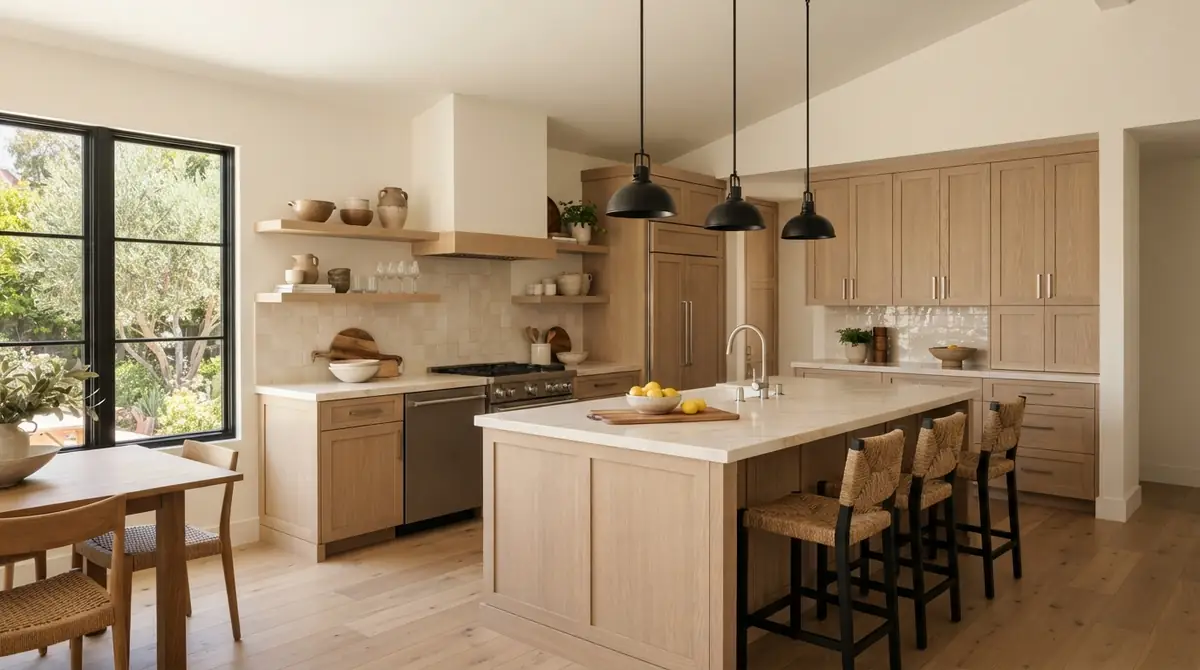
Warm Wood Kitchen Ideas: Cabinets, Islands, and Finishes for Chula Vista Homes

Warm wood kitchens bring natural color, grain, and visual warmth into a space without relying on heavy ornament or bold paint. White oak, walnut, maple, medium oak, and golden-toned woods can all work, but the finished result depends just as much on flooring, countertops, backsplash, hardware, and lighting as it does on the cabinet species. For related planning, see Dark Cottagecore Kitchen.
The main challenge for homeowners is usually coordination. New wood cabinetry may need to work beside an existing hardwood floor, stainless appliances, painted cabinetry, or an open living area with other visible wood tones.
A practical planning order is:
existing finishes → wood tone → cabinet configuration → countertop → backsplash → hardware → lighting For related planning, see Moody Blue Kitchen Cabinets.
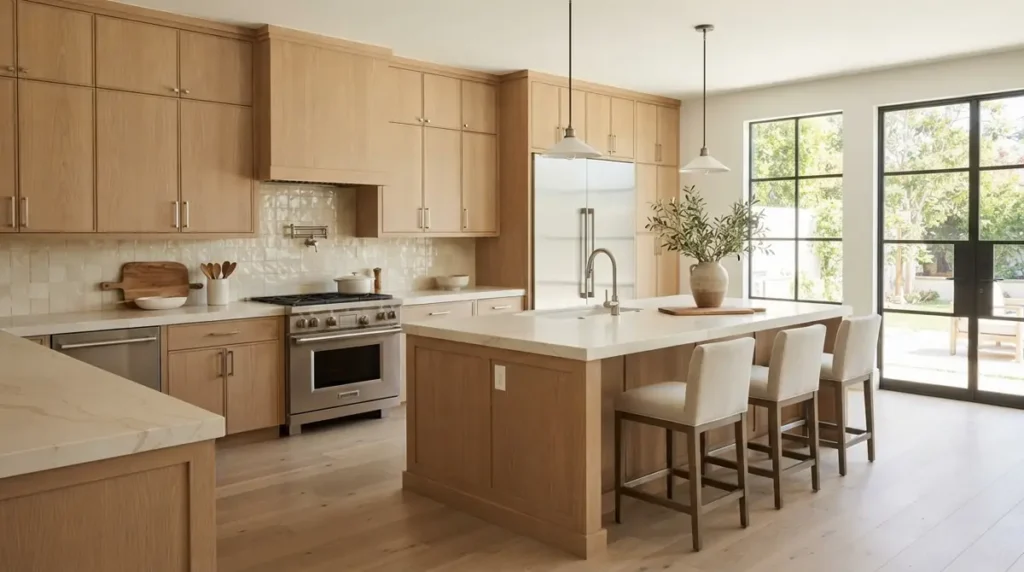
Start With the Wood and Finishes You Already Have
Before selecting cabinetry, identify the materials that will remain after the remodel. For related planning, see Cabinet Refacing vs. Replacing.
These may include:
- hardwood flooring For related planning, see White Oak and Black Kitchen.
- tile flooring
- exposed beams
- wood trim
- countertops For related planning, see Kitchen Counter Stools.
- appliances
- built-in furniture
- nearby dining or living-room pieces
The largest fixed finish should usually influence the new palette.
Existing Wood Floors
Cabinets do not need to match wood flooring exactly. For related planning, see Chula Vista ADU Kitchen Requirements.
A deliberate contrast can be easier to control than two woods that are almost the same but differ slightly in orange, yellow, red, or brown undertones. For related planning, see Range Hood Installation Cost in Chula Vista in Should Expect.
For example, a pale oak floor and medium oak cabinet can look intentional because there is clear separation. A golden floor beside slightly more orange cabinetry may be harder to coordinate if the tones appear close but not related. For related planning, see Aubergine Kitchen Cabinets.
Existing Stone or Tile
An existing countertop or tile floor can become the starting point if it is staying. Compare the cabinet sample directly against that surface before deciding on stain or finish.
The basic rule is simple:
Start with the largest fixed finish you are keeping. For related planning, see Can You Remodel a Kitchen Without Changing the Layout?.
Wood Species, Tone, Grain, and Stain Are Not the Same Thing
Choosing “oak cabinets” does not fully describe how the finished kitchen will look. For related planning, see How Much Does It Cost to Move a Kitchen.
Wood Species
The species refers to the actual wood, such as:
- white oak
- walnut
- maple
- oak
Wood Tone
Tone describes the finished visual depth:
- light
- medium
- dark
- golden
- neutral
- reddish
Grain
Some woods show a strong natural pattern, while others appear quieter and more consistent.
Stain and Finish
Stain can make the same species appear much lighter, darker, warmer, or more golden. Finish sheen also changes how the surface reflects light. For related planning, see Kitchen Island Size & Clearance Guide.
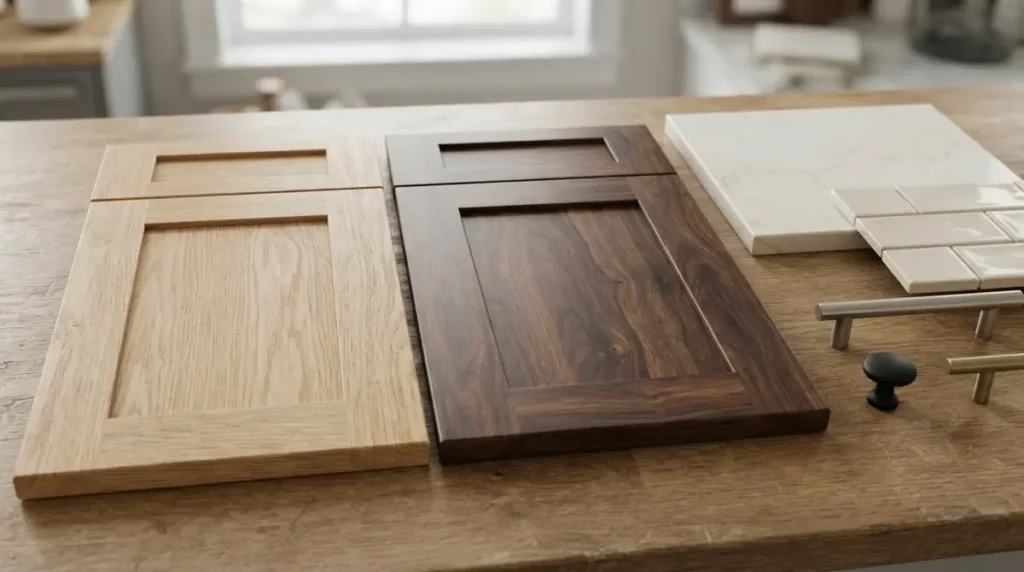
For that reason, select cabinetry from an actual door or finish sample rather than relying only on the species name.
White Oak vs. Walnut vs. Maple: Which Wood Tone Fits Your Kitchen?
Different woods create different levels of visual weight.
White Oak
White oak works well for homeowners who want visible natural grain without making the kitchen feel overly dark.
It pairs naturally with:
- warm white quartz For related planning, see Sage Green and Cream Kitchen.
- cream backsplash tile
- brushed nickel
- matte black
- restrained brass
White oak can work across full cabinetry, lower cabinets, or a feature island. For related planning, see Kitchen Sink Installation Cost in Chula Vista.
Medium Oak and Brown Wood
Medium-toned wood adds more depth than pale oak while still keeping the room warmer and lighter than walnut.
It works particularly well when surrounding materials provide some contrast through light stone, quieter tile, or lighter walls.
Walnut
Walnut gives cabinetry a richer, deeper appearance.
It can work well on:
- kitchen islands
- lower cabinetry
- pantry walls
- complete cabinet runs in brighter rooms
Lighter countertops and backsplash materials help prevent darker walnut from dominating the room.
Maple
Maple typically has a quieter appearance and can suit homeowners who want natural wood without strong grain movement.
It works well with simple stone, restrained backsplash materials, and nickel or other subtle hardware.
Golden or Honey-Toned Oak
Golden wood does not automatically make a kitchen look dated.
The final effect depends on the cabinet profile, stain, countertop, flooring, backsplash, hardware, and lighting. Golden cabinetry surrounded by several similarly warm brown surfaces reads very differently from the same wood paired with lighter stone and stronger material contrast.
How to Make Warm Wood Cabinets Look Current, Not Dated
Wood itself rarely determines whether a kitchen feels older or more contemporary. The surrounding choices matter more.
A heavier traditional combination may include:
- strongly orange or reddish stain
- ornate cabinet doors
- busy brown granite
- similarly toned flooring
- several warm finishes with little separation
A more restrained material palette may use:
- natural or muted stain
- simple Shaker or slab doors
- lighter stone
- quieter backsplash
- intentional hardware
- clearer contrast between major surfaces
The goal is not to make every wood kitchen look contemporary. It is to make the materials feel coordinated with the homeowner’s preferred style.
Keeping Existing Wood Cabinets? Update the Surroundings First
Existing wood cabinets do not always need to be painted or replaced simply because the kitchen feels dated.
First assess:
- cabinet condition
- storage layout
- door style
- wood tone
- countertop
- backsplash
- hardware
- lighting
Sometimes the cabinetry is only one part of the problem.
A darker granite countertop, heavily patterned backsplash, older hardware, and warm lighting can make the whole room feel visually heavier. Changing some of those surrounding finishes may give usable wood cabinets a different character.
Should You Use Warm Wood on Every Kitchen Cabinet?
Full wood cabinetry is only one option.
Full Wood Cabinetry
This approach creates the strongest natural-material effect.
It works best when:
- the room receives adequate light
- countertops provide separation
- backsplash remains controlled
- flooring does not compete heavily with the grain
Wood Lowers With Painted Uppers
Wood lower cabinets provide warmth while painted uppers keep the upper portion of the room visually lighter.
This can work especially well in smaller kitchens.
Painted Perimeter With a Wood Island
A wood island creates a clear focal point without committing the entire kitchen to natural wood.
Homeowners considering this combination can also review these white kitchen remodel ideas for ways lighter cabinetry can balance natural wood.
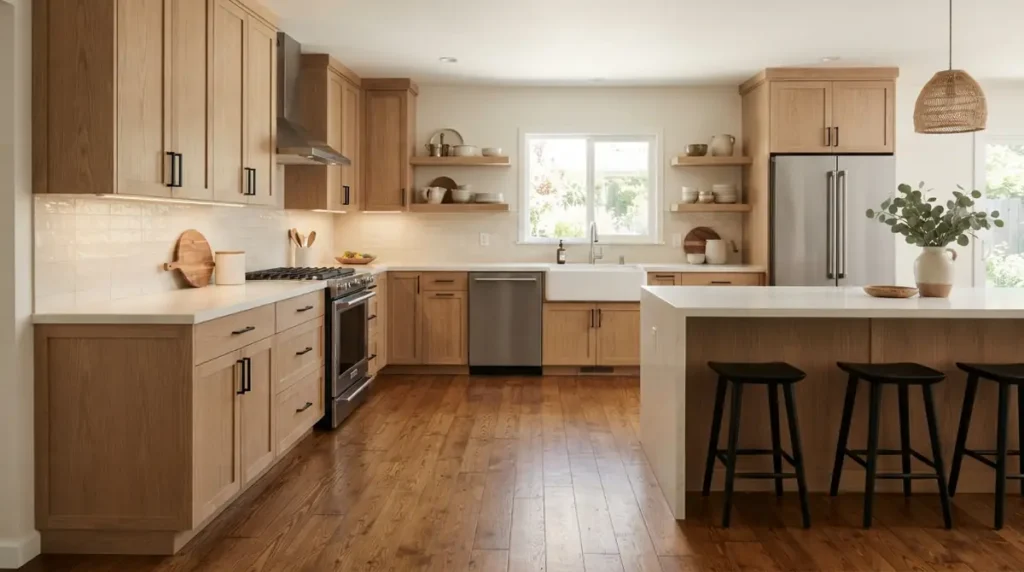
Wood Perimeter With a Contrasting Island
This reverses the relationship. Wood remains the dominant material, while the island becomes the contrasting feature.
Make Two-Tone Wood and Painted Cabinets Look Intentional
Two-tone cabinetry works best when both finishes share some visual connection.
That connection can come from:
- the countertop
- backsplash
- hardware
- repeated undertones
- flooring
- wall color
A small isolated cabinet in a completely different finish may look accidental. A full island or clear upper/lower cabinet division is easier to read as an intentional design decision.
How to Mix Wood Cabinets With Existing Wood Floors
This is one of the most important decisions in a warm wood kitchen.
Similar Undertone, Different Depth
A light oak floor and medium oak cabinet can work because the tones are related but clearly different.
Deliberate Contrast
A lighter floor with walnut cabinetry creates obvious separation.
Avoid Accidental Almost-Matches
Two woods that are nearly identical but differ slightly in orange, red, or yellow undertone can be harder to coordinate.
Compare the Grain Too
Color is only one consideration.
A floor with strong grain beside cabinetry with equally strong movement can make the room visually busy even when the colors work together.
A good working rule is:
Coordinate undertones or create deliberate contrast instead of forcing an exact match.
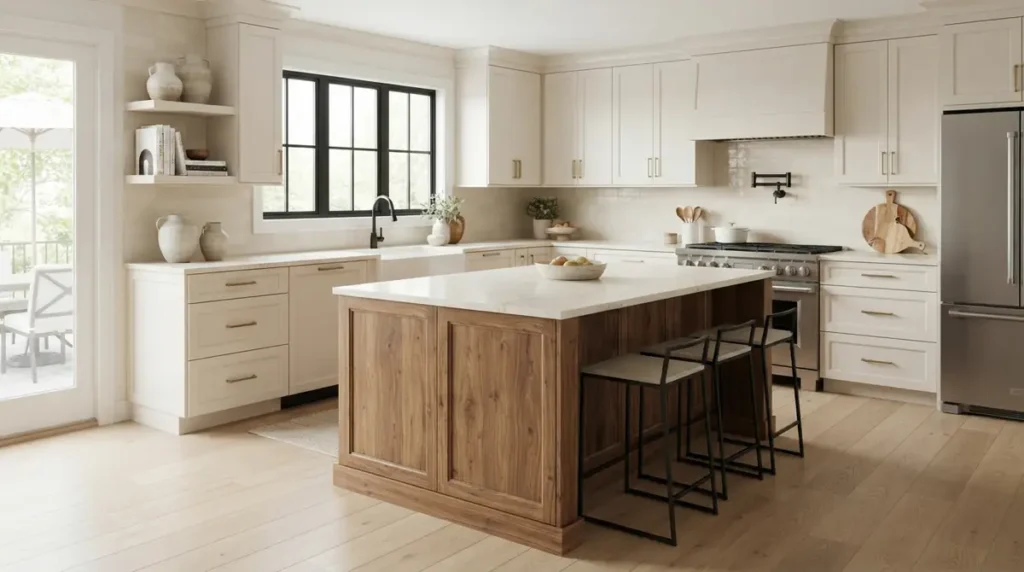
Consider the Wood Tones Outside the Kitchen
Open-plan kitchens often share sightlines with dining and living areas.
Look at:
- dining tables
- built-ins
- hardwood flooring
- stairs
- exposed beams
- nearby furniture
These elements do not need to match the kitchen cabinetry. They should simply look intentional when viewed together.
For larger Chula Vista or South Bay remodels, thinking beyond the cabinet run can help the kitchen connect more naturally with adjacent rooms. Broader kitchen design ideas can also help when coordinating layout and materials across the space.
Best Countertops for Warm Wood Kitchen Cabinets
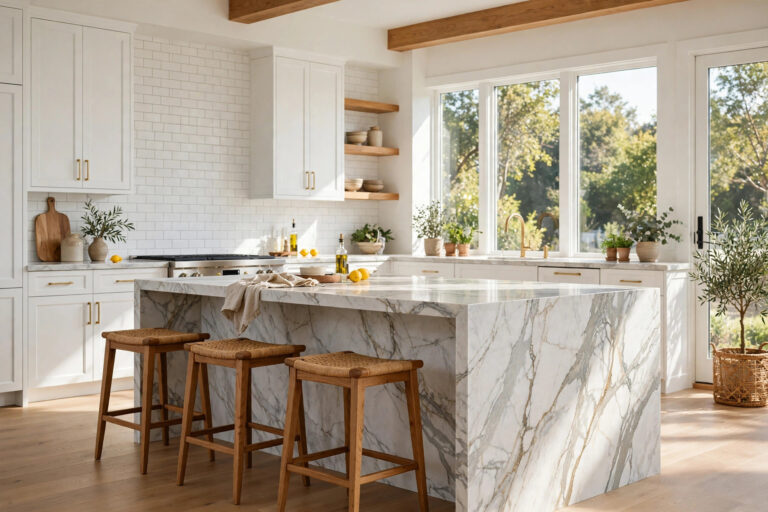
Warm white quartz and restrained light stone are among the easiest countertops to pair with warm wood cabinetry because they create visual separation while allowing the wood grain to remain prominent.
Warm White Quartz
Warm white quartz works well with:
- medium oak
- walnut
- full wood cabinetry
- stronger wood grain
It helps keep the kitchen visually lighter.
Marble-Look Quartz
Marble-look quartz adds movement.
Pay attention to the relationship between the stone and the wood:
- strong veining + strong cabinet grain creates more activity
- subtle veining + strong wood grain feels calmer
- warm veins reinforce warmth
- cool gray veins create stronger temperature contrast
Natural Stone
Natural stone can create a layered material palette, but dramatic slabs should usually be treated as a major focal surface.
Dark Stone
Dark countertops work more easily with lighter woods, good daylight, and lighter surrounding finishes.
Butcher Block
Butcher block can work as an accent, but using it alongside wood cabinets and wood floors may create too much uninterrupted wood.
Warm Wood Cabinet and Countertop Pairing Guide
| Wood Direction | Countertop | Overall Effect |
|---|---|---|
| White oak | Warm white quartz | Light and natural |
| Medium oak | Light neutral stone | Balanced warmth |
| Walnut | Light quartz | Rich contrast |
| Maple | Soft white stone | Quiet and clean |
| Golden oak | Cream stone | Warm transitional |
| Light wood | Dark stone | Stronger contrast |
What Backsplash Works With Warm Wood Cabinets?
Warm white tile, cream zellige, light stone, and restrained slab backsplashes work well because they provide contrast without competing heavily with the grain.
Warm White Tile
A simple warm white tile is useful when:
- cabinet grain is strong
- countertop contains veining
- flooring already has visible movement
Zellige or Textured Neutral Tile
Textured neutral tile can add depth and reflected light without introducing a large pattern.
Stone or Slab Backsplash
A slab backsplash reduces material transitions and can work well when stone is intended to be one of the dominant materials.
Patterned Tile
Patterned backsplash tile needs more control in kitchens where cabinets and flooring already contain strong grain.
Use the One-Dominant-Grain Rule
Wood has its own natural movement, so every other surface does not need to compete with it.
Strong cabinet grain:
Use quieter countertop and backsplash materials.
Strong wood flooring:
Consider a calmer cabinet grain or stain.
Dramatic stone:
Reduce pattern elsewhere.
A useful rule is:
Let one natural material carry the strongest visual movement.
How to Keep a Warm Wood Kitchen From Becoming Too Brown
The problem is often not the wood itself. It is a lack of contrast between several warm materials.
Create separation with:
- light stone
- white or cream backsplash
- lighter wall paint
- black or nickel hardware
- stainless appliances
- contrasting flooring
- controlled grain
Wood cabinetry, warm flooring, brown stone, and a brown backsplash can begin to blend together if every major surface has similar color and intensity.
What Hardware Looks Best With Warm Wood Cabinets?
Brushed Nickel
Works naturally with:
- stainless appliances
- light woods
- medium woods
- quieter contemporary palettes
Matte Black
Creates stronger contrast with:
- white oak
- maple
- medium oak
Black looks more intentional when repeated in lighting, faucets, windows, or other architectural details.
Brass or Brushed Gold
Brass adds additional warmth and can work well with walnut, muted oak, and warm white stone.
Bronze
Bronze works particularly well with deeper woods and warmer transitional palettes.
When Brass Adds Too Much Warmth
Brass is not automatically the best hardware choice for wood cabinets.
It can add too much warmth when:
- cabinetry is strongly golden
- flooring is warm
- countertops are creamy
- lighting is warm
- several brass fixtures are already present
Brushed nickel can calm the palette. Matte black creates stronger separation. Bronze produces a deeper, less bright form of warmth.
How to Use Walnut or Dark Wood Without Making the Kitchen Feel Heavy
Darker wood benefits from contrast.
Balance walnut or deeper cabinets with several lighter elements, such as:
- countertops
- backsplash
- walls
- flooring
- painted upper cabinetry
Dark wood can also be limited to:
- the island
- lower cabinetry
- a pantry wall
- one feature cabinet run
Good task lighting and under-cabinet lighting help preserve detail in deeper wood grain.
How Lighting Changes Warm Wood Cabinets
Wood can look noticeably different as lighting changes.
Daylight may reveal undertones more clearly. Warm artificial light can emphasize golden or reddish qualities. Cooler lighting can reduce some of the warmth and make neutral or gray characteristics more visible.
Always compare cabinet samples inside the actual kitchen before ordering.
Build a Warm Wood Material Board Before Ordering
A physical material board makes the final decision easier.
- Start with the actual cabinet door or finish sample.
- Add the existing or proposed flooring.
- Place the countertop sample beside it.
- Add backsplash tile or stone.
- Compare the actual hardware finish.
- Include the appliance finish.
- Add wall paint if it will remain visible.
- View the complete group in morning, afternoon, and evening light.
- Check it again with the kitchen lights on.
- Photograph different combinations under the same conditions.
Do not approve a wood finish from a small catalog chip alone. Grain and undertone are easier to evaluate on a larger sample.
Warm Wood Kitchen Material Pairing Board
| Wood Tone | Floor Relationship | Countertop | Backsplash | Hardware | Best Use |
|---|---|---|---|---|---|
| White oak | Compatible light wood or clear contrast | Warm white quartz | Cream tile | Nickel, black, or brass | Full or two-tone |
| Medium oak | Lighter or deliberately darker floor | Light stone | Warm neutral tile | Black or nickel | Full cabinetry |
| Walnut | Clear contrast preferred | Light quartz | Quiet backsplash | Brass or black | Island or full |
| Golden oak | Avoid orange-on-orange near-match | Cream stone | Soft neutral | Black or nickel | Full or retained cabinets |
| Maple | Controlled warm or neutral floor | Light stone | Textured neutral | Nickel | Quieter contemporary palette |
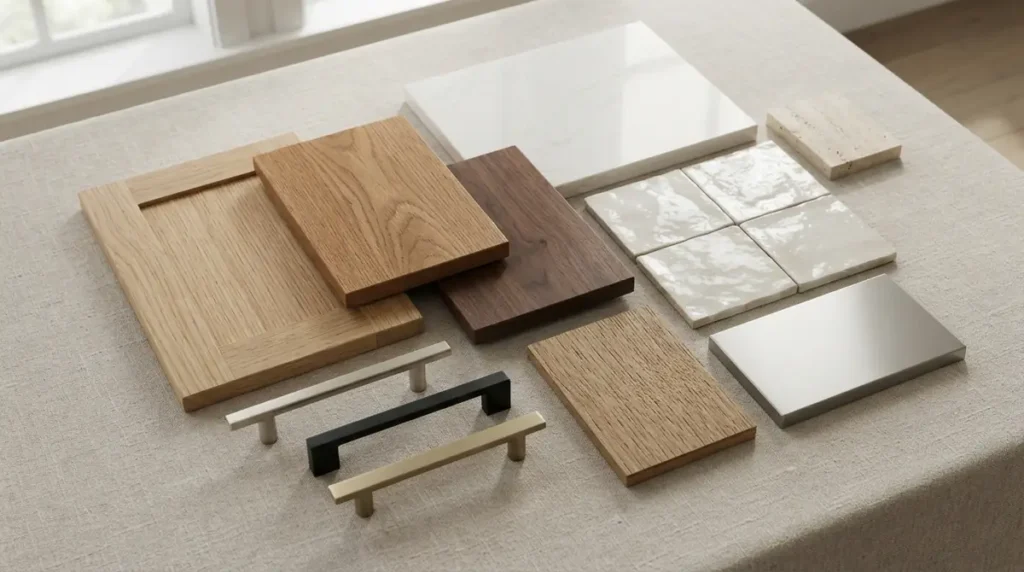
Four Warm Wood Kitchen Pairing Recipes
Light White Oak Kitchen
- white oak cabinetry
- warm white quartz
- cream zellige
- brushed nickel
- restrained flooring
Medium-Oak Kitchen
- medium oak cabinetry
- light natural stone
- warm neutral backsplash
- matte black hardware
- simple lighting
Walnut Island With Light Perimeter
- light painted perimeter cabinetry
- walnut island
- white quartz
- restrained backsplash
- brass or black accents
Updated Golden-Oak Kitchen
- muted golden oak
- cream stone
- simple neutral tile
- black or nickel hardware
- clear floor contrast
Common Warm Wood Kitchen Mistakes
Trying to Match Every Wood
Coordinate undertones or create deliberate contrast instead.
Ignoring Existing Flooring
Compare the actual cabinet door directly with the floor.
Using Too Many Strong Grains
Let one natural surface carry most of the movement.
Assuming White Oak Is One Color
Evaluate the actual stain and finish.
Assuming Wood Automatically Looks Dated
Look at the cabinet profile and surrounding materials together.
Making Every Surface Warm Brown
Introduce contrast through stone, tile, paint, metal, or flooring.
Choosing Materials Only Under Showroom Lighting
Test samples inside the actual room.
Using Too Many Metal Finishes
Choose a primary metal and give secondary finishes a clear role.
Planning Warm Wood Cabinets as Part of a Kitchen Remodel
Warm wood cabinetry affects much more than cabinet color. It influences flooring, countertops, islands, backsplash, storage, lighting, appliances, and hardware.
Planning those decisions together through custom cabinetry solutions can make it easier to coordinate wood tone, stone, and storage as one part of the remodeling plan.
For homeowners making broader layout, cabinetry, island, surface, or lighting changes, Vexkitch Kitchen Remodeling also provides complete kitchen remodeling services in Chula Vista for coordinated renovation planning.
Frequently Asked Questions
What wood cabinets are best for a warm kitchen?
White oak, medium oak, walnut, and maple can all create a warm kitchen. The best choice depends on the desired depth, grain, existing flooring, daylight, and surrounding finishes.
Do wood cabinets need to match wood floors?
No. Exact matching is not necessary. Coordinating undertones or creating deliberate contrast usually works better than using two woods that almost match but differ noticeably in tone.
Are warm wood kitchen cabinets outdated?
Wood cabinetry is not inherently outdated. Door style, stain, grain, countertop, backsplash, hardware, flooring, and lighting strongly influence whether the finished kitchen feels traditional or more contemporary.
What countertops look best with wood cabinets?
Warm white quartz and restrained light stone are among the easiest pairings because they provide separation from the cabinetry while allowing natural wood grain to remain visible. Dark stone can work especially well with lighter wood and adequate lighting.
Can you mix white and wood kitchen cabinets?
Yes. Common combinations include painted perimeter cabinetry with a wood island, wood lower cabinets with painted uppers, or wood perimeter cabinets with a contrasting island.
Is walnut too dark for a kitchen?
Not necessarily. Walnut can work well when lighter countertops, backsplash, walls, flooring, or painted cabinetry balance its deeper tone and the room has sufficient lighting.
Planning a Warm Wood Kitchen in Chula Vista?
Wood cabinetry works best when the tone, flooring, stone, tile, hardware, and lighting are selected as one connected palette.
Vexkitch Kitchen Remodeling can help Chula Vista and South Bay homeowners coordinate cabinetry and surrounding finishes as part of a larger renovation. Review our complete kitchen remodeling services in Chula Vista when you are ready to plan the next stage of the project.