Sage Green and Cream Kitchen: Remodel Ideas for a Warm, Balanced Look

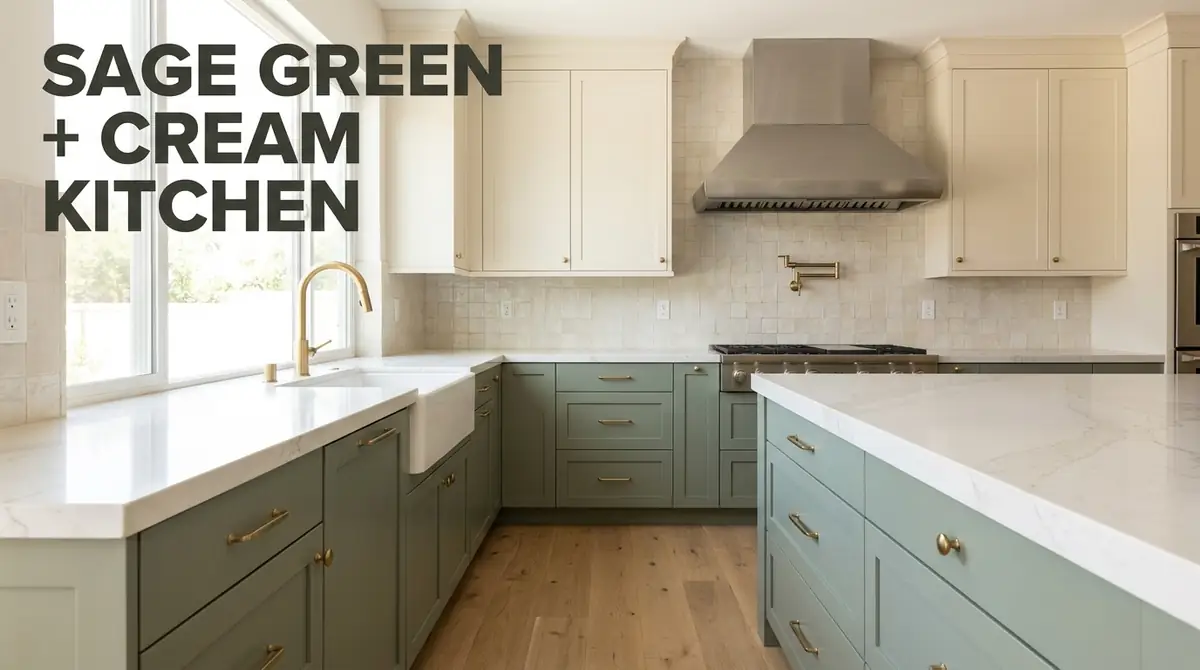
A sage green and cream kitchen can feel warm, relaxed, and more layered than an all-white space. The challenge is getting the undertones, materials, and color placement right. Sage may look soft green in one room and noticeably gray or olive in another, while the wrong cream can suddenly appear yellow beside it. For related planning, see Dark Cottagecore Kitchen.
For Chula Vista and South Bay homeowners planning a remodel, the safest approach is to treat the palette as one complete material system. Cabinetry, countertops, backsplash, flooring, hardware, and lighting should be evaluated together before permanent selections are finalized.
Why Sage Green and Cream Work Well Together
Sage adds color without the visual intensity of brighter greens. Cream provides a warmer neutral backdrop than stark white and can soften the transition between cabinetry, stone, wood, and metal finishes. For related planning, see Warm Wood Kitchen Ideas.
The combination also works well with natural materials. Oak flooring, subtle stone movement, handmade-look tile, and muted metal finishes can add depth without introducing several competing colors. For related planning, see Can You Remodel a Kitchen Without Changing the Layout?.
The important detail is that sage is not a single shade. Some versions lean gray, others lean olive, and some appear much lighter once installed across a full wall of cabinetry. For related planning, see Cabinet Refacing vs. Replacing.
Sage Is Not One Color
A gray-green sage often feels quieter and more neutral. An olive-leaning sage usually appears warmer and earthier. Pale sage can work well where the room needs to stay visually light, while deeper sage creates more contrast. For related planning, see Chula Vista ADU Kitchen Requirements.
Choose the sage direction first, then compare potential cream colors beside it. Selecting the two separately makes undertone conflicts harder to spot.
Where Should Sage Green and Cream Go in the Kitchen?
The amount of sage used can change the entire character of the kitchen. Three configurations cover most remodel situations. For related planning, see Aubergine Kitchen Cabinets.
Sage Lower Cabinets With Cream Upper Cabinets
Keeping the deeper color below eye level can reduce visual weight in a compact or lower-light kitchen. Cream upper cabinets maintain brightness while sage bases still give the room a noticeable color identity. For related planning, see Moody Blue Kitchen Cabinets.
This approach also works well when the countertop is relatively light and the flooring carries a warm or neutral tone. For related planning, see Kitchen Counter Stools.
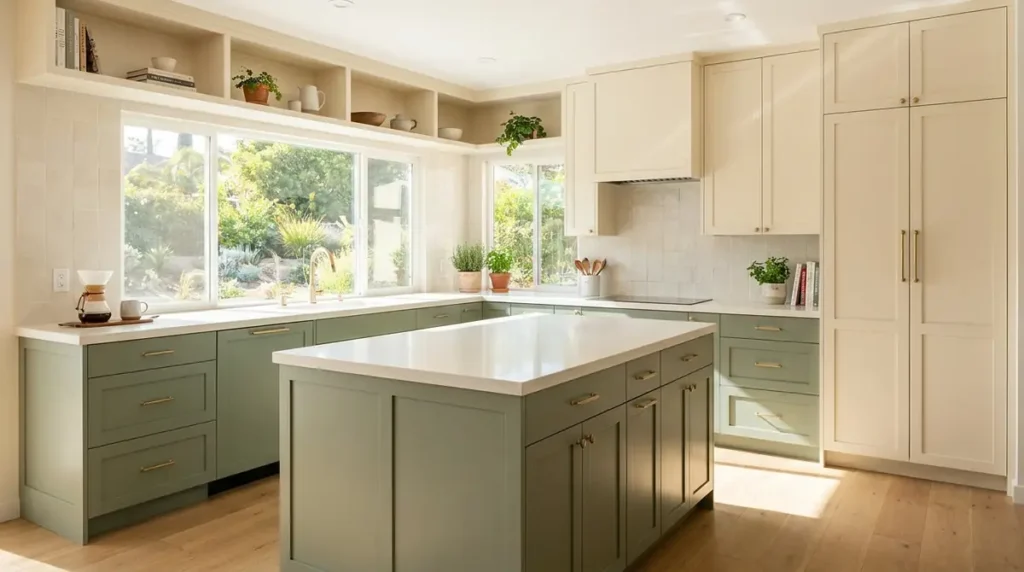
Cream Cabinets With a Sage Green Island
A sage island creates a clear focal point without committing the entire perimeter to colored cabinetry. It works particularly well in larger or open-plan kitchens where the island already acts as the visual center of the room. For related planning, see Kitchen Island Size & Clearance Guide.
Homeowners considering this arrangement can plan the color decision alongside adding a functional kitchen island so seating, storage, circulation, and finishes work together.
Full Sage Green Cabinetry With Cream Walls
Full sage cabinetry creates a stronger color statement. It tends to work best when the room has enough natural or artificial light and surrounding materials provide contrast.
Light countertops, cream walls, and warm flooring can prevent deeper sage cabinetry from making the room feel visually heavy.
How Lighting Changes Sage Green and Cream
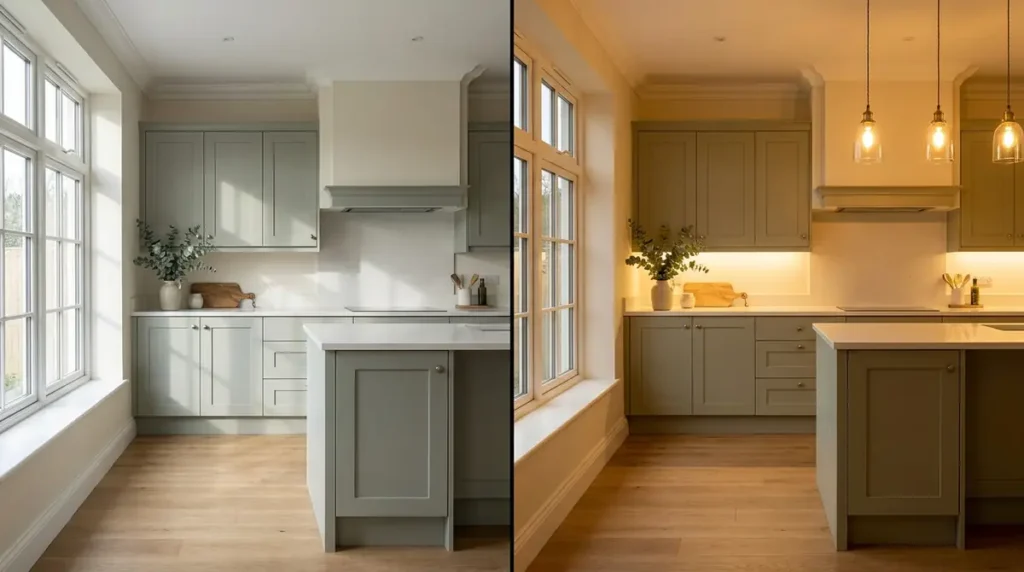
Lighting can change both colors more than homeowners expect. For related planning, see What to Expect During Kitchen Demolition Phase.
A sage cabinet that appears distinctly green in strong daylight may look grayer in a north-facing room. Warm evening lighting can make cream walls appear richer and may bring out olive undertones in the cabinetry. For related planning, see Green Kitchen ROI Calculator.
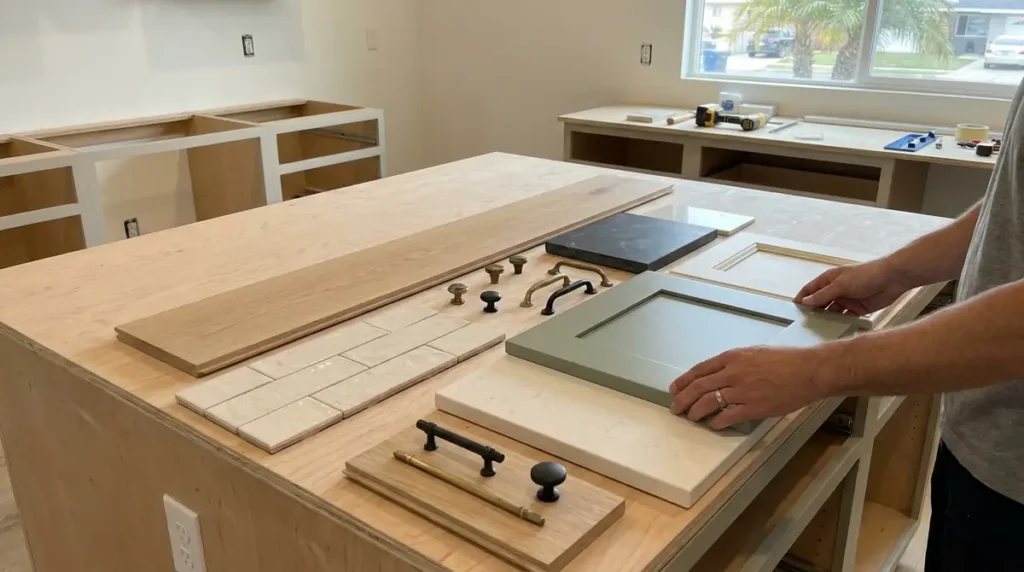
Before approving a palette, compare:
- The sage cabinet sample
- The cream paint sample
- The countertop
- The backsplash
- The flooring
- The hardware finish
Check them together in the kitchen during morning, afternoon, and evening conditions.
Lighting should also be part of the remodel plan rather than an afterthought. Proper kitchen lighting and fixtures can improve task visibility while helping the finished color palette read more consistently.
How to Choose the Right Cream for Sage Cabinets
Cream has its own undertone, so treating every off-white as interchangeable can create problems.
| Sage direction | Cream direction | Watch for |
|---|---|---|
| Warm olive sage | Warm ivory or restrained cream | Cream becoming too yellow |
| Gray-green sage | Neutral cream | An overly warm beige |
| Pale sage | Slightly richer cream | Too little separation |
| Deep sage | Light cream | Too many dark surrounding surfaces |
A cream that looks perfect on a sample card may appear much warmer once it sits beside a large wall of green cabinetry.
Testing both colors beside the actual flooring and countertop is more reliable than choosing them from separate paint displays.
Best Countertops for a Sage Green and Cream Kitchen
The countertop often determines whether the palette feels calm or overly busy. Cabinet and countertop selections should be coordinated early, especially when planning custom cabinetry solutions.
Light and Airy: Warm White or Cream Quartz
Warm white or restrained cream quartz keeps the kitchen bright and allows the cabinetry to carry most of the color.
This direction works especially well in smaller kitchens or rooms with limited daylight. Subtle warm or neutral veining can add movement without creating another dominant pattern.
Warm and Natural: Quartzite, Stone, or Wood
Natural-looking stone can reinforce the earthy quality of sage. Quartzite and other warm-toned surfaces work particularly well when the floor also contains natural wood.
Wood countertops or butcher-block sections can create an even warmer result, although the surrounding materials still need enough contrast to keep everything from blending together.
Strong Contrast: Soapstone or Dark Stone
Dark stone creates a more dramatic kitchen.
This option is easier to balance when the room has adequate light and lighter surrounding surfaces. Cream walls or upper cabinets can prevent the darker counter and sage cabinetry from competing for too much visual weight.
What Backsplash Goes With Sage Green Cabinets?
A backsplash should be selected against both the cabinetry and countertop, not against the sage cabinets alone.
Useful directions include:
- Cream handmade-look tile
- Warm white subway tile
- Ivory tile
- Zellige-style tile
- Natural stone
- Countertop material continued onto the wall
Cream and ivory tiles can soften the transition between green cabinets and lighter counters. Handmade-look surfaces introduce texture without adding another major color.
If the countertop already has strong veining, a restrained backsplash usually keeps the room easier to read.
Homeowners comparing materials can also review backsplash design improvements while planning how the wall and floor finishes will work together.
Flooring and Wood Tones That Work With Sage and Cream
Flooring occupies a large visual area, so its undertone can influence the entire palette.
Natural white oak, medium oak, warm brown wood, and neutral stone-look flooring can all work with sage and cream when their undertones are coordinated.
Problems are more likely when several strong tones compete. A cool gray floor beside warm cream, olive sage, orange-toned wood, and brass hardware may create more color conflict than expected. For related planning, see Range Hood Installation Cost in Chula Vista in Should Expect.
Try to keep wood directions consistent across flooring, stools, shelving, and decorative details. For related planning, see 15 Kitchen Stool Ideas to Elevate Your Space.
What Hardware Works With Sage Green Cabinets?
Several hardware finishes can work well.
| Hardware finish | Visual effect |
|---|---|
| Brushed brass | Warm contrast |
| Aged brass | Muted, softer warmth |
| Bronze | Earthier appearance |
| Matte black | Strong contemporary contrast For related planning, see Contemporary Kitchen Designs. |
| Nickel | Cleaner neutral or cooler direction |
There is no rule that sage cabinets must use brass.
The better choice depends on the faucet, appliances, lighting fixtures, countertop, and specific green undertone. Repeating one dominant metal and using additional finishes intentionally usually creates a more coordinated result.
How to Keep a Sage Green Kitchen From Looking Dated
Color trends change, so no cabinet color can be guaranteed to remain fashionable indefinitely.
A more practical strategy is to control how much of the expensive, permanent kitchen depends on one trend.
Harder-to-change finishes include:
- Cabinetry
- Countertops
- Flooring
- Major tile installations For related planning, see Outdoor Entertainment Installations That Transform Your Backyard.
Easier updates include:
- Wall paint
- Hardware
- Pendant shades
- Stools
- Rugs and decorative accessories
Homeowners concerned about long-term flexibility can use sage on an island, use green only on lower cabinetry, or keep counters and flooring relatively neutral.
That allows the kitchen to retain its overall structure even if color preferences change later.
How to Keep Sage and Cream From Looking Too Plain
Adding another strong color is not always necessary.
Texture can create enough visual interest through:
- Natural wood grain
- Handmade tile
- Subtle stone movement
- Fluted or reeded island details
- Cabinet door profiles
- Woven stools
- Statement pendant shapes
A limited color palette with varied textures often feels more intentional than a kitchen containing several unrelated colors and materials.
Sage Green and Cream Ideas for a Small Kitchen
Small kitchens can still use sage successfully.
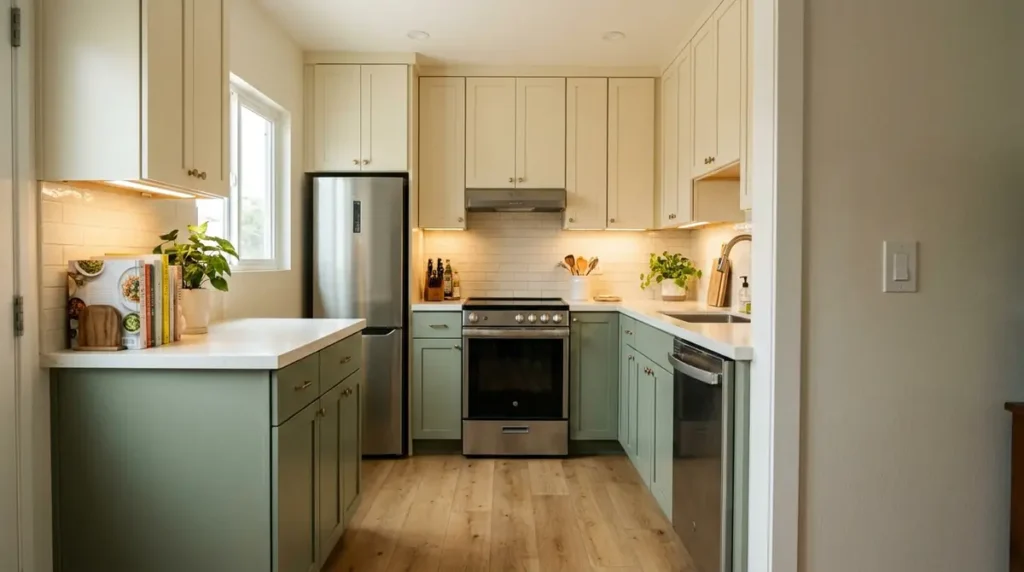
A practical combination is sage on lower cabinets with cream or another light neutral above. Light countertops and a restrained backsplash help keep material transitions simple.
Good task lighting is especially useful when natural light is limited.
Try to avoid stacking several visually heavy finishes together, such as deep sage cabinetry, dark countertops, dark flooring, and a busy backsplash. The issue is not sage itself; it is the combined visual weight of every surface.
8 Common Sage Green Kitchen Mistakes
1. Choosing Sage From a Tiny Paint Chip
A small sample does not show how the color will look across multiple cabinet doors. Test a larger sample in the actual room.
2. Ignoring the Cream Undertone
Cream can lean yellow, beige, or neutral. Compare it directly beside the sage.
3. Selecting the Backsplash Before the Countertop
The backsplash should coordinate with both major surfaces. Choose or confirm the countertop first.
4. Using Dark Finishes Everywhere in a Low-Light Room
Balance deeper cabinetry with lighter surrounding materials when the room already receives limited daylight.
5. Adding Too Many Wood Tones
Multiple unrelated woods can make a restrained sage-and-cream palette feel disjointed.
6. Mixing Metals Without a Plan
Coordinate cabinet hardware with faucets, appliances, and lighting rather than treating each finish separately.
7. Choosing Permanent Finishes Only Because They Are Trending
Use trends as inspiration, then consider how difficult each finish would be to replace later.
8. Checking the Palette Only During Daylight
Evaluate the kitchen under the artificial lighting you will use every evening.
3 Sage Green and Cream Kitchen Remodel Formulas
Formula 1: Light and Airy
- Sage lower cabinets
- Cream upper cabinets
- Warm white quartz
- Cream textured backsplash
- Natural oak flooring
- Brushed brass hardware
Best for: smaller kitchens or rooms where maintaining brightness is a priority.
Formula 2: Warm and Natural
- Sage cabinetry
- Cream walls
- Warm natural stone
- Oak flooring
- Aged brass hardware
Best for: homeowners who want natural materials and softer transitions.
Formula 3: Richer Contrast
- Deeper sage cabinetry
- Light cream walls
- Dark stone counters
- Warm flooring
- Restrained hardware
Best for: larger or brighter kitchens where stronger contrast is intentional.
The Best Order for Choosing Sage Kitchen Materials
Selecting finishes in the right order can reduce last-minute conflicts.
- Confirm the kitchen layout.
- Decide where sage and cream will be used.
- Select the sage cabinetry shade.
- Select the cream neutral.
- Choose the countertop.
- Coordinate the backsplash.
- Confirm the flooring relationship.
- Select hardware.
- Review the lighting plan.
- Test all samples together in the room.
This sequence keeps the largest and most permanent decisions at the center of the palette instead of trying to make unrelated purchases match later.
Planning a Sage Green and Cream Remodel in Chula Vista
Color selection should be coordinated with the functional parts of the remodel.
Cabinet storage, countertop dimensions, island clearance, appliance placement, lighting, flooring, and plumbing locations can all affect which finishes make sense in the completed kitchen. For related planning, see Kitchen Pantry and Storage Solutions That Improve Functionality and Organization.
Vexkitch Kitchen Remodeling has worked in the Chula Vista and South Bay market since 2017, with more than 700 completed remodeling projects and four full-time crews. Homeowners planning a larger renovation can review our complete kitchen remodeling services in Chula Vista when coordinating layout, cabinetry, surfaces, and other project decisions.
Frequently Asked Questions
Does sage green go with cream in a kitchen?
Yes. Sage and cream can work well together when their undertones are compatible and there is enough contrast between the cabinets, walls, countertops, and flooring.
What countertop goes with sage green cabinets?
Warm white quartz, cream quartz, subtle marble-look surfaces, warm natural stone, and darker stone can all work. The best option depends on the sage undertone, room lighting, flooring, and desired amount of contrast.
Should all kitchen cabinets be sage green?
Not necessarily. Sage can be used on lower cabinets, on the island only, or across the full cabinetry depending on the room size, natural light, and preferred level of color commitment.
What backsplash works with sage green cabinets?
Cream, ivory, warm white, handmade-look tile, natural stone, and countertop material continued onto the wall are useful options. Compare the backsplash with both the cabinets and countertop before making the final selection.
Does sage green work in a small kitchen?
Yes. Using sage below eye level, balancing it with lighter upper surfaces, and maintaining good task lighting can keep a small kitchen from feeling visually heavy.
Is sage green kitchen cabinetry going out of style?
Kitchen color trends continue to change, so no shade stays dominant forever. Neutral countertops, flooring, and other permanent finishes can make sage cabinetry easier to adapt as preferences change.
Planning Your Kitchen Color and Material Choices?
A successful sage green and cream kitchen depends on more than choosing two attractive colors. Cabinet placement, countertop material, backsplash, flooring, lighting, and hardware all need to work as one system.
For a larger renovation, explore Vexkitch Kitchen Remodeling’s complete kitchen remodeling services in Chula Vista to plan the layout and material selections together.