Soft Brutalism Kitchen: Design Ideas for a Modern Remodel

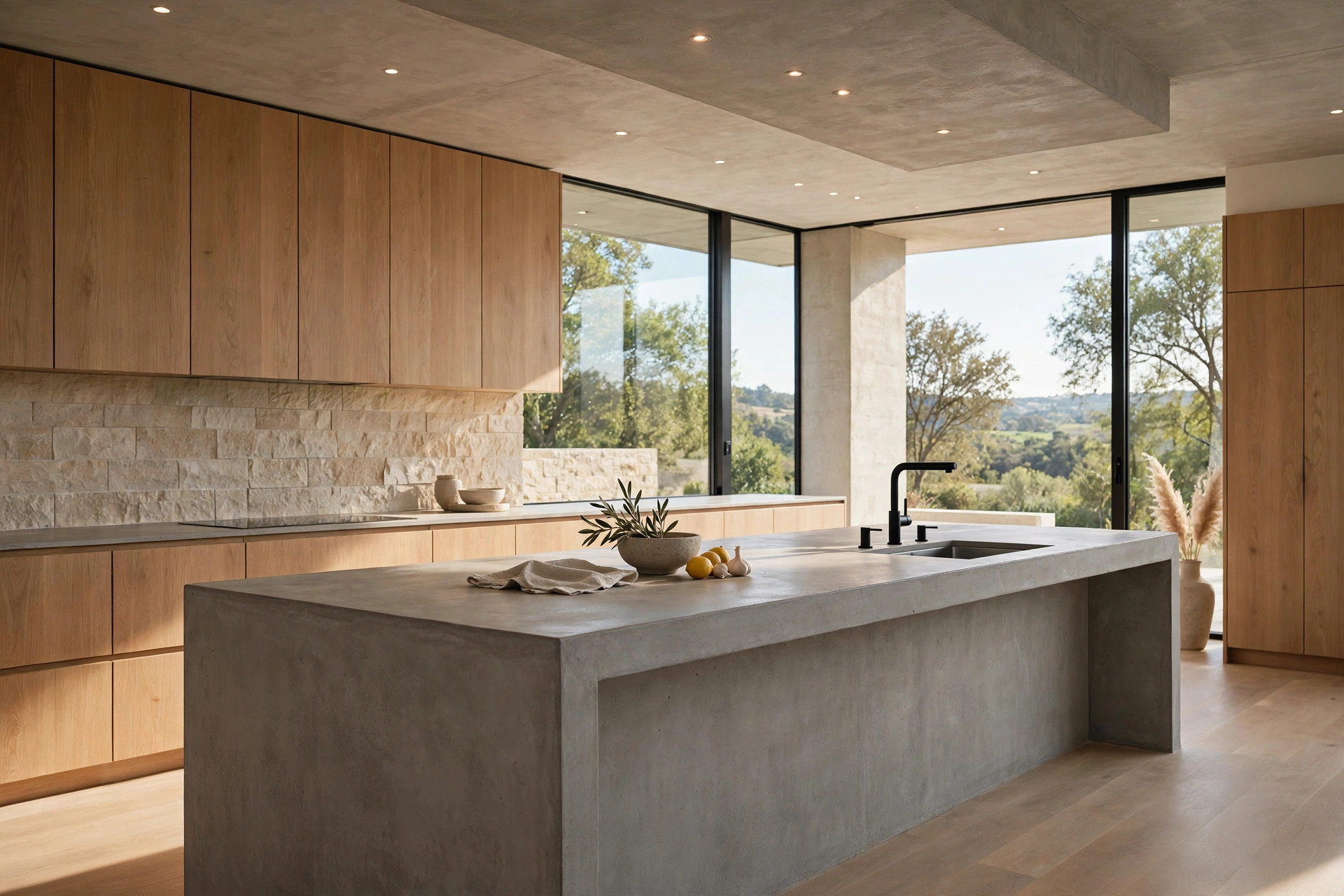
A successful Soft Brutalism kitchen isn’t built around a single material or color. It comes from combining thoughtful planning, functional layouts, durable finishes, and carefully selected textures that work together as one cohesive design.
If you’re planning to renovate your kitchen in Chula Vista or the surrounding South Bay communities, Vexkitch Kitchen Remodeling can help you create a space that balances architectural simplicity with everyday comfort.
From layout planning and custom cabinetry to countertops, flooring, and lighting, every element should support the way you cook, gather, and live.
If you’re considering a complete renovation, exploring complete kitchen remodeling services in Chula Vista can help turn these ideas into a kitchen designed around your home and lifestyle.
What Is a Soft Brutalism Kitchen?
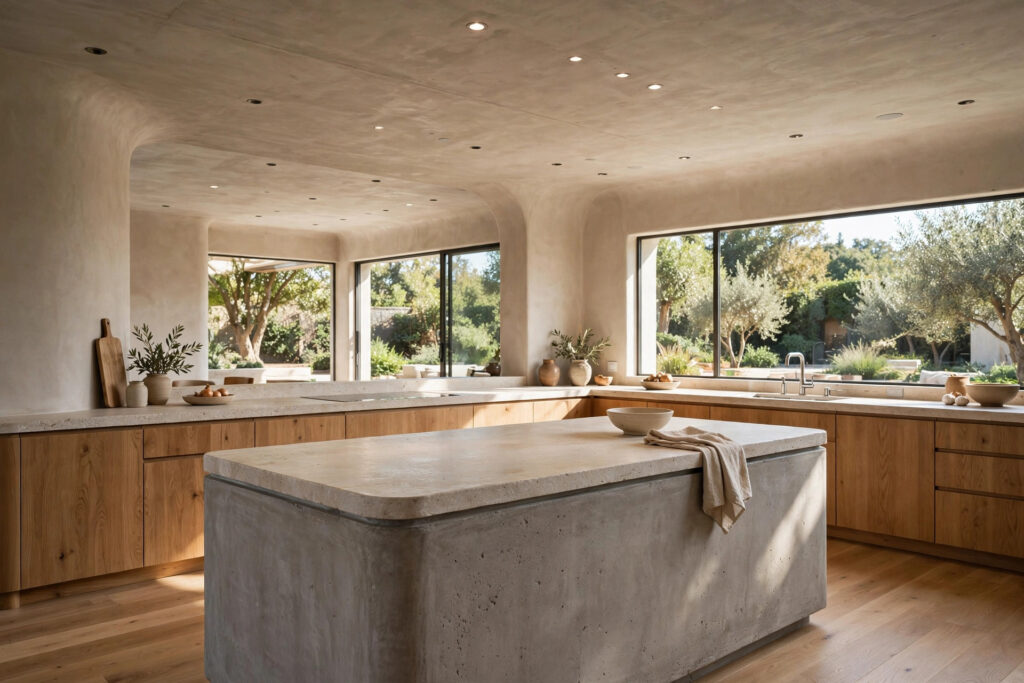
Soft Brutalism takes inspiration from traditional Brutalist architecture while removing the harsh, industrial feeling often associated with it.
Rather than filling a room with exposed concrete and heavy gray tones, the style combines strong architectural forms with softer finishes that make the space feel comfortable enough for everyday living.
A Soft Brutalism kitchen focuses on simple shapes, honest materials, and careful attention to texture. Every design choice serves both a functional and visual purpose, creating a clean space without unnecessary decoration.
Typical features include:
- Warm natural wood cabinetry
- Stone or concrete-inspired countertops
- Flat-panel cabinet doors
- Minimal hardware
- Matte finishes
- Neutral color palettes
- Integrated appliances
- Layered lighting
- Open, uncluttered layouts
The goal isn’t to make the kitchen look unfinished. Instead, the beauty comes from allowing high-quality materials to become the main design feature.
From Traditional Brutalism to Soft Brutalism
Classic Brutalism became popular through its use of exposed concrete, geometric forms, and large structural elements. While striking, those interiors often felt cold and overwhelming inside a home.
Soft Brutalism keeps the clean architectural lines but introduces warmth through materials such as oak, walnut, natural stone, plaster, linen, and textured ceramics. Lighting also plays a larger role, helping soften shadows and create a more welcoming atmosphere throughout the day.
This evolution makes the style much more practical for residential kitchen remodeling.
The Principles Behind the Style
Every successful Soft Brutalism kitchen shares several core principles.
Material honesty
Natural stone should look like stone. Wood should display its grain. Concrete should maintain its subtle texture instead of being hidden behind glossy finishes.
Simple geometry
Straight lines, oversized islands, slab cabinet doors, and balanced proportions create visual order without making the room feel sterile.
Warm minimalism
The space avoids clutter, but it never feels empty. Texture replaces decoration, allowing different materials to add visual interest.
Function first
Storage, workflow, lighting, and daily usability always come before decorative details. Many homeowners combine this design philosophy with modern kitchen layout upgrades to improve both appearance and functionality during a remodel.
Why Homeowners Are Choosing Soft Brutalism
Interior design trends come and go, but Soft Brutalism has gained attention because it solves a common challenge: creating a modern kitchen that still feels warm and comfortable.
Instead of relying on bold colors or decorative details, the style uses texture, proportion, and carefully selected materials to create visual depth.
Several factors explain its growing popularity.
It Feels Warm Without Looking Busy
Many minimalist kitchens remove so many design elements that the room starts to feel cold.
Soft Brutalism approaches minimalism differently by adding warmth through:
- Natural wood finishes
- Textured stone surfaces
- Soft lighting
- Organic decorative accents
- Earth-inspired colors
These details make the kitchen feel lived in while maintaining a clean appearance.
The Materials Age Beautifully
One reason homeowners invest in remodeling is longevity.
Materials commonly used in Soft Brutalism—including natural stone, engineered quartz, oak cabinetry, plaster finishes, and brushed metals—develop character over time instead of looking dated after only a few years.
Many projects also include custom cabinetry solutions that maximize storage while maintaining the simple lines that define the style.
It Supports Everyday Living
A beautiful kitchen still needs to perform well.
Soft Brutalism naturally complements modern remodeling priorities such as:
- Better workflow
- Larger preparation areas
- Hidden storage
- Integrated appliances
- Durable surfaces
- Easier maintenance
The result is a kitchen that supports cooking, entertaining, and family life without sacrificing design quality.
It Fits Many Home Styles
Another advantage is flexibility.
Soft Brutalism can be adapted to:
- Contemporary homes
- Mid-century properties
- Coastal California homes
- Modern farmhouse renovations
- Transitional interiors
For many Chula Vista homeowners, this flexibility makes it easier to create a kitchen that feels current while still complementing the architecture of the home. Rather than forcing a dramatic redesign, Soft Brutalism builds on existing strengths with thoughtful material choices and functional improvements.
Essential Design Elements of a Soft Brutalism Kitchen
A Soft Brutalism kitchen isn’t defined by one material or color. It’s the combination of architectural simplicity, natural textures, and practical design choices that creates the finished look. Each element should complement the others instead of competing for attention.
The sections below cover the design features that give this style its distinctive character.
Natural Stone Countertops
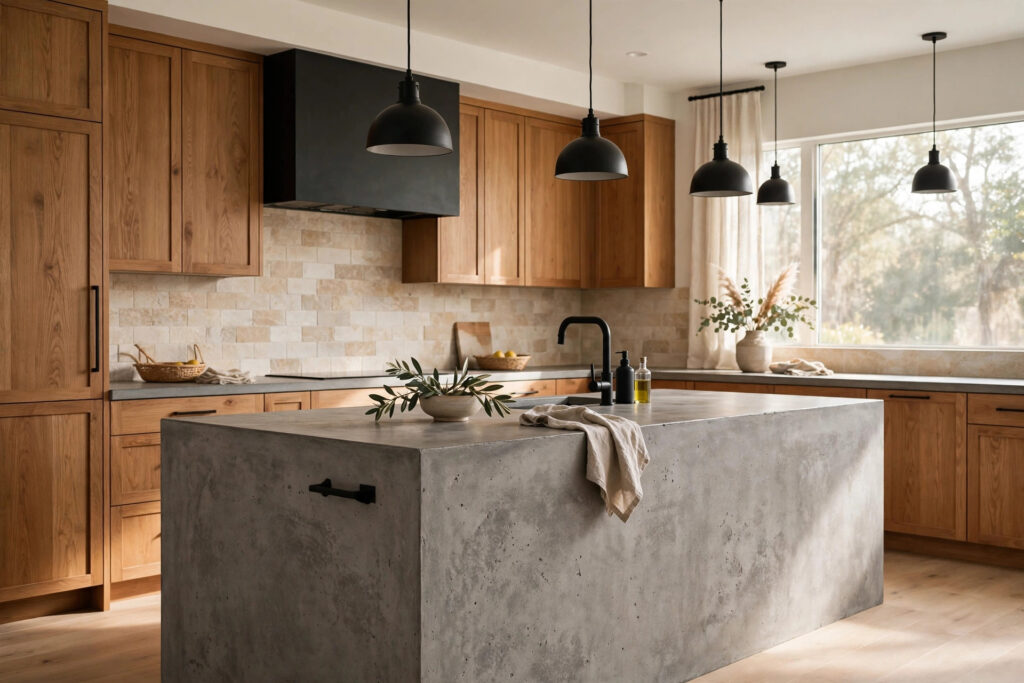
Stone is one of the most recognizable materials in Soft Brutalism. It introduces texture and subtle variation without relying on decorative patterns or bold colors.
Popular options include:
- Honed quartz
- Limestone
- Travertine
- Soapstone
- Concrete-look quartz
- Porcelain slabs with stone finishes
Honed or matte finishes usually suit this style better than polished surfaces because they create a softer, more natural appearance.
When selecting countertop materials, durability matters just as much as appearance. Choosing quality surfaces through countertop installation services helps ensure the finished kitchen remains practical for everyday use.
Concrete Without Making the Room Feel Cold
Concrete is closely associated with Brutalist architecture, but Soft Brutalism uses it more selectively.
Instead of covering every surface, concrete becomes a feature element.
Examples include:
- Kitchen islands
- Waterfall countertop edges
- Range hood surrounds
- Floating shelves
- Fireplace accents in open-concept spaces
Limiting concrete to one or two focal points creates architectural interest while allowing warmer materials to balance the room.
Warm Wood Cabinetry
Wood is what transforms Brutalism into Soft Brutalism.
Natural grain introduces warmth, movement, and visual comfort without overwhelming the clean lines of the kitchen.
Popular wood choices include:
| Wood Species | Style |
|---|---|
| White Oak | Bright and modern |
| European Oak | Soft neutral appearance |
| Walnut | Rich contemporary look |
| Ash | Light Scandinavian influence |
Instead of glossy finishes, matte oils or low-sheen coatings allow the natural grain to remain the focal point.
Flat-Panel Cabinet Doors
Simple cabinet profiles reinforce the architectural feel of the room.
Soft Brutalism typically favors:
- Slab cabinet doors
- Full-overlay construction
- Minimal visible framing
- Continuous horizontal lines
This creates a calm appearance that pairs naturally with stone countertops and textured walls.
Projects focused on improving storage and maintaining clean lines often benefit from modern kitchen layout upgrades during the planning stage.
Matte Black and Brushed Metal Hardware
Hardware should complement the design instead of becoming the center of attention.
Common finishes include:
- Matte black
- Brushed stainless steel
- Brushed nickel
- Dark bronze
Many homeowners also choose integrated finger pulls or handleless cabinets to maintain uninterrupted cabinet faces.
The result is a cleaner visual flow throughout the kitchen.
Integrated Appliances
Visible appliances can interrupt the simple forms that define Soft Brutalism.
Panel-ready appliances help maintain a continuous cabinet wall by concealing:
- Refrigerators
- Dishwashers
- Beverage centers
- Freezers
Even when fully integrated appliances aren’t part of the budget, selecting appliances with flat fronts and minimal detailing can achieve a similar effect.
Open Shelving Used Sparingly
Open shelving isn’t mandatory, but it can soften the room when used carefully.
Instead of displaying large collections, homeowners often use one or two shelves for:
- Handmade ceramics
- Stoneware dishes
- Wooden cutting boards
- Small plants
- Neutral glassware
Limiting decorative items prevents visual clutter while adding personality.
Texture Replaces Decoration
Rather than filling walls with artwork or decorative accessories, Soft Brutalism relies on material texture to create depth.
Examples include:
- Limewash walls
- Venetian plaster
- Natural stone backsplashes
- Fluted wood panels
- Ribbed glass cabinet inserts
- Handmade ceramic tiles
These finishes add character while preserving the minimalist aesthetic.
Choosing the Right Color Palette
Color plays a major role in Soft Brutalism. While the style is rooted in neutral tones, it avoids feeling flat by combining shades with varied textures and natural materials.
A balanced palette often includes:
| Color | Best Use |
|---|---|
| Warm White | Walls and ceilings |
| Greige | Cabinetry |
| Taupe | Feature walls |
| Sand | Backsplash and flooring |
| Charcoal | Accent cabinetry and fixtures |
| Soft Black | Hardware and lighting |
| Natural Oak | Cabinets and shelving |
| Walnut Brown | Islands and furniture |
The goal isn’t to create high contrast. Instead, colors should transition smoothly from one surface to the next, allowing the textures of wood, stone, and plaster to stand out naturally.
For homeowners remodeling in Chula Vista, these warm neutral palettes also complement the region’s abundant natural light, helping the kitchen feel bright throughout the day while maintaining the grounded look that defines Soft Brutalism.
Materials That Define a Soft Brutalism Kitchen
Material selection has a bigger impact than decorative accessories in a Soft Brutalism kitchen. Instead of mixing many finishes, the design relies on a small group of high-quality materials that add depth through texture and natural variation.
The goal is to create visual interest without making the space feel busy.
Concrete
Concrete remains one of the signature materials of Brutalist design, but Soft Brutalism uses it with restraint.
Good applications include:
- Waterfall kitchen islands
- Countertops
- Floating shelves
- Range hood surrounds
- Decorative wall panels
Large concrete surfaces should be balanced with wood, stone, or plaster to keep the room from feeling too industrial.
Limestone
Limestone introduces a softer appearance than polished stone while maintaining a refined architectural feel.
Homeowners often choose limestone for:
- Countertops
- Backsplashes
- Feature walls
- Flooring
Its subtle texture pairs naturally with warm wood cabinetry and neutral paint colors.
Travertine
Travertine has become increasingly popular in contemporary kitchen design because it adds warmth without introducing strong patterns.
It works especially well as:
- Full-height backsplashes
- Countertops
- Island cladding
- Open shelving accents
Its earthy tones help soften concrete and darker cabinetry.
Quartz
Quartz offers many of the visual qualities of natural stone with lower maintenance requirements.
Popular finishes include:
- Concrete-look quartz
- Warm white quartz
- Soft gray quartz
- Honed quartz surfaces
For busy households, quartz provides an attractive balance between durability and everyday practicality.
Natural Oak
Oak is often the material that transforms a kitchen from traditional Brutalism into Soft Brutalism.
Its visible grain creates warmth while maintaining the clean lines associated with minimalist design.
Common uses include:
- Cabinet fronts
- Floating shelves
- Kitchen islands
- Ceiling beams
- Dining furniture
Walnut
Walnut adds richness and contrast without relying on bold colors.
It works particularly well for:
- Statement islands
- Pantry cabinetry
- Built-in shelving
- Open display units
Using walnut as an accent instead of throughout the entire kitchen helps maintain visual balance.
Limewash and Plaster Walls
Paint alone rarely creates the depth associated with Soft Brutalism.
Many designers instead choose textured wall finishes such as:
- Limewash
- Venetian plaster
- Mineral paint
- Clay plaster
These finishes catch natural light differently throughout the day, adding subtle movement to otherwise simple walls.
Cabinet Ideas for a Soft Brutalism Kitchen
Cabinetry covers much of the kitchen, making it one of the most important design decisions. The right cabinets create a calm, architectural appearance while maximizing storage and functionality.
Many homeowners include custom cabinetry solutions during a remodel to achieve this clean, tailored look.
Slab Cabinet Doors
Flat-panel, or slab, cabinet doors are a defining feature of Soft Brutalism.
Their uninterrupted surfaces create a streamlined appearance that highlights the beauty of wood grain and natural finishes.
Benefits include:
- Clean architectural lines
- Easier maintenance
- Timeless appearance
- Compatibility with integrated appliances
Handleless Cabinets
Removing visible handles creates a more seamless design.
Popular options include:
- Integrated finger pulls
- J-pull profiles
- Push-to-open hardware
- Recessed edge pulls
These systems preserve the minimalist aesthetic without reducing functionality.
Integrated Appliances
A refrigerator surrounded by matching cabinet panels helps maintain uninterrupted lines throughout the kitchen.
Panel-ready appliances commonly include:
- Refrigerators
- Dishwashers
- Beverage coolers
- Freezers
The result is a kitchen where cabinetry remains the visual focus rather than individual appliances.
Hidden Storage Solutions
Minimalism works best when clutter has a dedicated place.
Modern storage features include:
- Pull-out pantry systems
- Appliance garages
- Deep drawer organizers
- Corner storage solutions
- Built-in recycling bins
- Vertical tray storage
Storage planning is often one of the biggest improvements homeowners make through complete kitchen remodeling services in Chula Vista, allowing the kitchen to stay organized while maintaining its clean appearance.
Countertops That Complement Soft Brutalism
Countertops anchor the entire design, so selecting the right surface is about more than appearance. Durability, maintenance, and texture all influence how well the material performs over time.
| Material | Appearance | Maintenance | Best For |
|---|---|---|---|
| Quartz | Consistent, modern | Low | Busy family kitchens |
| Concrete | Bold, architectural | Moderate | Statement islands |
| Soapstone | Natural and rich | Moderate | Warm minimalist designs |
| Granite | Organic texture | Low to moderate | High-use kitchens |
| Porcelain Slabs | Thin, contemporary | Low | Modern remodels |
Matte and honed finishes generally suit Soft Brutalism better than glossy surfaces because they reduce reflections and emphasize natural texture.
Choosing a countertop should also consider how it works with cabinetry, flooring, lighting, and the home’s overall architecture rather than evaluating the material on its own.
Flooring Options That Complete the Look
Flooring creates the foundation for every other design element in a Soft Brutalism kitchen. It should complement the cabinetry, countertops, and walls while standing up to everyday wear.
Large, uninterrupted floor surfaces help reinforce the clean architectural lines that define this style.
Large-Format Porcelain Tile
Large-format porcelain tile is one of the most practical flooring choices for Soft Brutalism.
Benefits include:
- Minimal grout lines
- Easy maintenance
- Excellent durability
- Concrete and stone-look finishes
- Suitable for high-traffic kitchens
Neutral shades such as warm gray, beige, taupe, and soft limestone work particularly well.
Polished Concrete
Polished concrete delivers the authentic Brutalist appearance while remaining highly durable.
It works best in:
- Open-concept homes
- Contemporary architecture
- New construction
- Homes with radiant floor heating
Because concrete can feel visually cool, pairing it with wood cabinetry and warm lighting creates a more comfortable atmosphere.
Natural Stone Flooring
Stone flooring introduces subtle texture that artificial materials often struggle to replicate.
Popular choices include:
- Limestone
- Travertine
- Slate
- Sandstone
Each stone develops character over time, making it a strong option for homeowners looking for a timeless kitchen rather than one driven by short-term trends.
When planning flooring as part of a full renovation, many homeowners coordinate it with flooring upgrades for kitchens to achieve a consistent look across the entire space.
Wide-Plank Wood Flooring
Wood flooring softens the strong architectural forms found throughout a Soft Brutalism kitchen.
Popular finishes include:
- White oak
- European oak
- Engineered oak
- Light walnut
Matte finishes preserve the natural appearance while reducing glare from daylight and interior lighting.
Lighting That Softens Brutalist Design
Lighting is one of the biggest differences between traditional Brutalism and Soft Brutalism.
Classic Brutalist interiors often emphasize dramatic shadows. Soft Brutalism uses layered lighting to create a warmer, more welcoming environment without losing the style’s architectural character.
Layer Ambient, Task, and Accent Lighting
Instead of relying on a single ceiling fixture, combine multiple light sources.
A balanced lighting plan typically includes:
- Recessed ceiling lights for general illumination
- Under-cabinet lighting for food preparation
- Pendant lights above the island
- Accent lighting for shelving or display niches
Each layer serves a different purpose while making the room feel more inviting.
Recessed Lighting
Recessed fixtures keep the ceiling clean and uncluttered.
Spacing them evenly creates consistent illumination without drawing attention away from the kitchen’s materials and architectural forms.
Warm white LEDs between 2700K and 3000K usually complement wood, stone, and plaster finishes better than cooler color temperatures.
Statement Pendant Lights
Pendant lighting adds visual balance over islands and dining areas.
Choose fixtures with simple forms, such as:
- Cylindrical pendants
- Stone pendants
- Matte black metal shades
- Frosted glass globes
- Sculptural ceramic fixtures
Oversized decorative chandeliers generally compete with the minimalist aesthetic rather than enhancing it.
Maximize Natural Light
Natural light is one of the most effective ways to soften concrete, stone, and neutral color palettes.
Ways to increase daylight include:
- Larger windows
- Slim window frames
- Glass patio doors
- Skylights
- Clerestory windows where appropriate
Many homes in Chula Vista benefit from abundant sunshine throughout the year, making natural light an important part of a Soft Brutalism remodel.
How to Make a Soft Brutalism Kitchen Feel Inviting
A common misconception is that Brutalist-inspired interiors always feel cold. In reality, Soft Brutalism focuses on creating balance between strong architectural forms and comfortable living.
Small details often make the biggest difference.
Introduce Organic Shapes
Straight lines dominate cabinetry and countertops, so curved elements create visual contrast.
Examples include:
- Rounded bar stools
- Circular dining tables
- Curved pendant lights
- Soft-edged decorative bowls
- Arched shelving details
These subtle curves reduce the rigid appearance associated with traditional Brutalism.
Add Natural Textiles
Although kitchens are highly functional spaces, textiles still play a role.
Consider:
- Linen café curtains
- Woven runner rugs
- Cotton seat cushions
- Textured dining chairs
Neutral fabrics add warmth without overwhelming the minimalist design.
Decorate with Purpose
Accessories should support the overall design rather than create clutter.
A few carefully selected pieces are often enough:
- Handmade ceramic bowls
- Wooden cutting boards
- Stone vases
- Olive branches
- Indoor plants
- Neutral pottery
Leaving open surfaces uncluttered helps highlight the beauty of the materials themselves.
Balance Hard and Soft Surfaces
A successful Soft Brutalism kitchen combines contrasting textures throughout the room.
For example:
| Hard Surface | Soft Element |
|---|---|
| Concrete | Warm oak |
| Stone | Linen |
| Matte metal | Natural greenery |
| Plaster | Woven textures |
| Porcelain tile | Upholstered seating |
This balance keeps the kitchen feeling comfortable while preserving its architectural identity.
Common Mistakes to Avoid
Soft Brutalism looks effortless when it’s done well, but a few design choices can quickly make the kitchen feel cold, impractical, or overly industrial. Avoiding these common mistakes helps create a space that’s both visually appealing and comfortable to use every day.
Using Too Much Concrete
Concrete is one of the defining materials of Brutalist design, but it shouldn’t dominate the entire room.
A kitchen with concrete floors, walls, countertops, and ceilings can feel heavy and uninviting.
Instead, use concrete as a focal point, such as:
- A waterfall island
- A feature wall
- A custom range hood
- Floating shelves
Balance it with warm wood, textured plaster, or natural stone to create visual harmony.
Choosing Cold Lighting
Lighting has a major influence on how materials appear.
Cool white LEDs above 4000K often make gray surfaces look sterile and reduce the warmth of wood cabinetry.
A softer lighting plan should include:
- Warm white LEDs (2700K–3000K)
- Under-cabinet lighting
- Dimmable fixtures
- Accent lighting for shelves and niches
The right lighting enhances the natural textures that define Soft Brutalism.
Ignoring Storage
Minimalist kitchens only stay minimalist when everything has a place.
Without enough storage, countertops become cluttered with:
- Small appliances
- Cooking utensils
- Pantry items
- Everyday dishes
Storage features worth considering include:
- Deep drawers
- Pull-out pantry systems
- Appliance garages
- Corner organizers
- Hidden recycling bins
Many homeowners incorporate these features through custom kitchen island installation to increase storage and improve workflow.
Following Trends Instead of Function
A beautiful kitchen still needs to support daily life.
Before selecting finishes or fixtures, think about:
- Cooking habits
- Family size
- Storage needs
- Cleaning requirements
- Entertaining space
Design decisions based on daily routines usually remain satisfying much longer than those driven solely by trends.
Overlooking Texture
A room filled with flat gray surfaces can feel unfinished.
Texture creates depth without adding clutter.
Examples include:
- Limewash walls
- Fluted wood panels
- Honed stone
- Handmade ceramic tiles
- Natural linen fabrics
These materials give the kitchen character while maintaining its clean aesthetic.
Can Soft Brutalism Work in Small Kitchens?
Yes. Soft Brutalism adapts surprisingly well to compact kitchens when the focus remains on simplicity, proportion, and efficient use of space.
The goal isn’t to make a small kitchen feel dramatic. It’s to make it feel calm, organized, and open.
Keep the Color Palette Light
Lighter neutral tones reflect more natural light and help smaller kitchens appear larger.
Good choices include:
- Warm white
- Sand
- Greige
- Light oak
- Soft beige
Darker accents can still be used for hardware or lighting without making the room feel enclosed.
Choose Slim Cabinet Profiles
Bulky cabinetry can overwhelm a compact kitchen.
Instead, consider:
- Flat-panel doors
- Integrated handles
- Full-height cabinets
- Continuous cabinet lines
These details create a cleaner appearance and maximize storage.
Make the Most of Vertical Space
Every inch counts in a smaller kitchen.
Storage ideas include:
- Ceiling-height cabinets
- Tall pantry units
- Floating shelves
- Wall-mounted organizers
- Built-in appliance storage
Improving storage often has a greater impact than increasing square footage.
Let Natural Light Take Center Stage
Natural light makes compact kitchens feel more spacious.
Simple ways to increase brightness include:
- Larger windows where possible
- Minimal window coverings
- Reflective stone surfaces
- Glass cabinet inserts
- Open sightlines into adjacent living areas
Reduce Visual Clutter
Minimalism works especially well in small spaces.
Keep countertops clear by storing:
- Coffee machines
- Toasters
- Mixers
- Small appliances
Hidden storage creates a cleaner, more relaxing environment while allowing the architecture and materials to stand out.
Remodeling Tips for Chula Vista Homes
Soft Brutalism complements many homes throughout Chula Vista because it emphasizes natural light, durable materials, and practical layouts that fit modern California living.
A few local considerations can help shape a successful remodel.
Take Advantage of Natural Sunlight
Many homes in the South Bay receive abundant daylight throughout the year.
Warm wood cabinetry, textured plaster, and honed stone surfaces become more visually dynamic as natural light changes throughout the day.
Designing around existing windows often creates a brighter kitchen without relying solely on artificial lighting.
Choose Durable Materials for Everyday Living
Kitchen surfaces should perform as well as they look.
Materials commonly selected for long-term durability include:
- Quartz countertops
- Porcelain tile flooring
- Engineered hardwood
- Quality plywood cabinetry
- Matte metal fixtures
These materials resist daily wear while preserving the clean appearance associated with Soft Brutalism.
Improve the Layout Before Updating Finishes
Replacing cabinets and countertops can improve appearance, but a better layout often has the biggest impact on how the kitchen functions.
During a renovation, homeowners frequently prioritize modern kitchen layout upgrades to improve traffic flow, increase storage, and create more usable workspace before selecting finishes.
A thoughtful layout provides the foundation for every successful design style.
Plan the Entire Remodel Together
Soft Brutalism depends on consistency across every element of the kitchen.
Planning cabinetry, flooring, countertops, lighting, plumbing, and appliances as one coordinated project helps ensure every material works together.
For homeowners considering a full renovation, professional kitchen remodelers can help coordinate each stage of the project so the finished kitchen feels cohesive, functional, and built to last.
Is a Soft Brutalism Kitchen Right for Your Home?
Soft Brutalism isn’t the right choice for every homeowner, but it offers lasting appeal for those who value clean design, durable materials, and practical functionality.
Before committing to this style, consider how it fits your home, lifestyle, and remodeling goals.
It May Be a Great Fit If You…
A Soft Brutalism kitchen works well if you appreciate:
- Clean, uncluttered spaces
- Natural materials with visible texture
- Timeless design instead of short-term trends
- Neutral color palettes
- High-quality craftsmanship
- Functional storage solutions
- Low-maintenance finishes
These qualities create a kitchen that feels sophisticated without becoming overly decorative.
It May Not Be the Best Choice If…
Another design style may suit your preferences better if you enjoy:
- Bright, colorful interiors
- Traditional raised-panel cabinetry
- Ornate decorative details
- Glossy finishes
- Bold patterned backsplashes
- Rustic farmhouse styling
Your kitchen should reflect how you live, not simply what’s popular.
Think Beyond the Current Trend
Soft Brutalism has gained attention in recent years, but many of its core principles have remained relevant for decades.
Simple layouts, quality materials, and thoughtful craftsmanship rarely go out of style.
Instead of asking a style will still be fashionable in ten years, ask questions like:
- Will this layout make cooking easier?
- Are these materials practical for my family?
- Will I still enjoy these finishes every day?
- Does the design suit the architecture of my home?
Answering these questions often leads to better remodeling decisions than following design trends alone.
Work with Your Home’s Architecture
The most successful remodels feel like a natural extension of the home.
A Soft Brutalism kitchen can be adapted for:
- Contemporary homes
- Mid-century homes
- Transitional homes
- Coastal California properties
- Modern custom homes
Rather than copying photos from social media, use them as inspiration while selecting materials and layouts that suit your home’s structure and daily needs.
Free Download
Soft Brutalism Kitchen Planning Checklist — a one-page printable covering palette, materials, cabinetry, lighting, and layout decisions from this article, with checkboxes you can bring to a design consultation.
Download the Soft Brutalism Kitchen Planning Checklist (PDF)
Frequently Asked Questions
What is a Soft Brutalism kitchen?
A Soft Brutalism kitchen combines the clean architectural forms of Brutalist design with warm materials such as natural wood, stone, plaster, and soft lighting. The result is a space that feels modern, functional, and comfortable rather than cold or industrial.
Is concrete required for a Soft Brutalism kitchen?
No. Concrete is just one option. Many kitchens achieve the same look with concrete-look quartz, limestone, porcelain slabs, or textured plaster while maintaining the style’s architectural character.
What colors work best in a Soft Brutalism kitchen?
Warm neutrals usually produce the best results, including:
- Warm white
- Greige
- Taupe
- Sand
- Soft gray
- Charcoal accents
- Natural oak
- Walnut
These colors create depth without overwhelming the space.
Are wood cabinets part of Soft Brutalism?
Yes. Wood cabinetry is one of the defining features of the style. White oak, European oak, walnut, and ash are commonly used because they balance stone and concrete with natural warmth.
Can Soft Brutalism work in a small kitchen?
Absolutely. Compact kitchens often benefit from the style’s emphasis on clean lines, integrated storage, light neutral colors, and uncluttered surfaces, all of which help the room feel larger.
Which countertop material is best?
There isn’t a single best option.
Popular choices include:
- Quartz
- Limestone
- Travertine
- Soapstone
- Porcelain slabs
- Concrete
The right material depends on your budget, maintenance preferences, and the overall design of your kitchen.
Is Soft Brutalism expensive?
The cost depends more on the materials and scope of the remodel than on the design style itself. Premium natural stone and custom cabinetry increase the investment, while engineered quartz, porcelain, and stock cabinetry can achieve a similar appearance at a lower cost.
Does Soft Brutalism increase home value?
A thoughtfully designed kitchen featuring durable materials, efficient storage, and timeless finishes can improve buyer appeal. While no remodeling style guarantees a specific return, focusing on quality workmanship and practical design tends to support long-term value.
Explore our complete kitchen remodeling services in Chula Vista to learn how a professionally planned remodel can bring your vision to life.