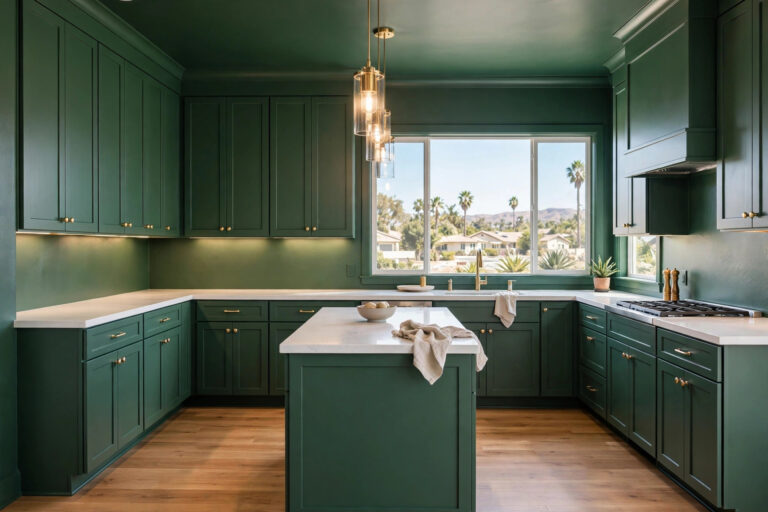
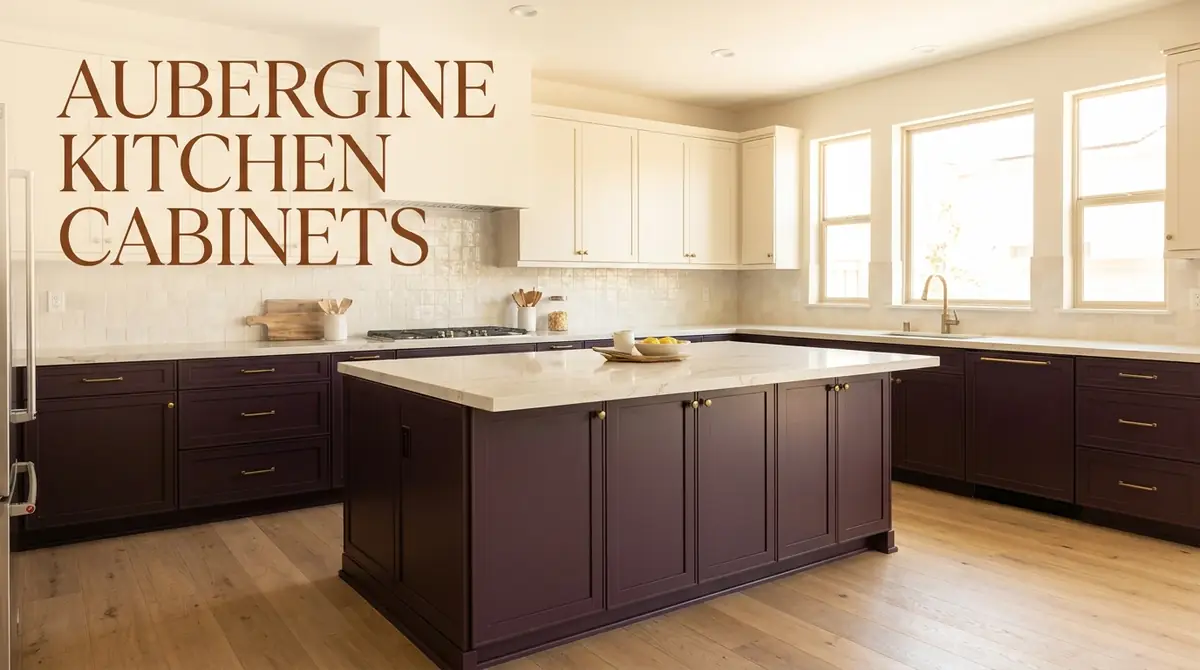
Aubergine Kitchen Cabinets: How to Use Deep Purple in a Modern Remodel

Aubergine kitchen cabinets can give a kitchen depth and personality without relying on the usual white, gray, or navy palette. The challenge is that aubergine is a complex dark color. One shade may look plum in daylight, burgundy under warm lighting, or nearly black in a darker corner. For related planning, see Dark Cottagecore Kitchen.
For Chula Vista and South Bay homeowners, the safest approach is to decide how much aubergine the room can support before selecting countertops, backsplash, flooring, and hardware. The surrounding materials should help the cabinet color look intentional rather than compete with it.
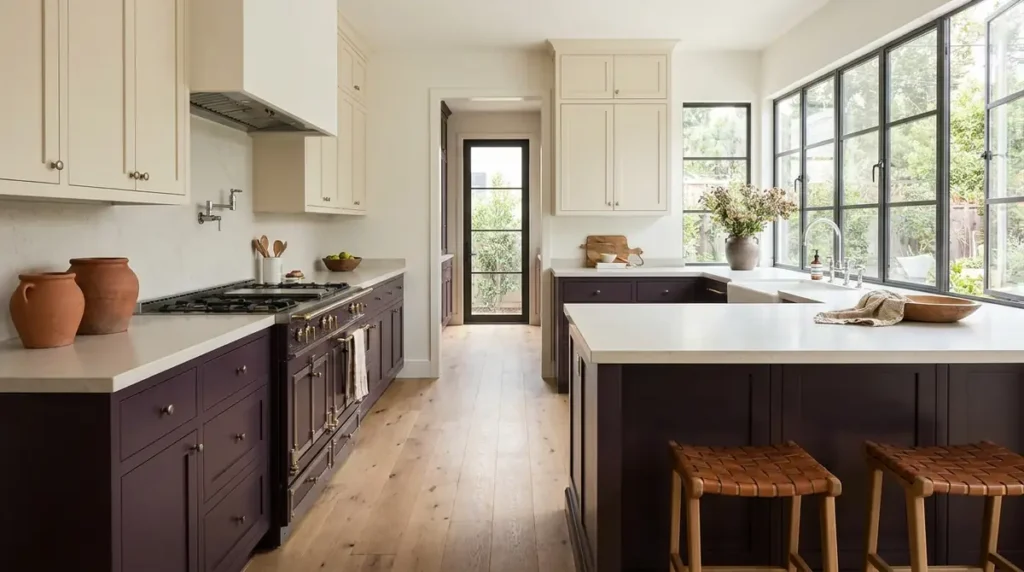
What Color Is Aubergine on Kitchen Cabinets?
Aubergine is a family of deep purple tones rather than one exact color.
| Aubergine direction | How it tends to read |
|---|---|
| Red-purple | Warmer and wine-like For related planning, see White Oak and Black Kitchen. |
| Brown-purple | Earthier and more muted |
| Plum | More obviously purple |
| Near-black aubergine | Darker and more dramatic |
A red-purple cabinet may work naturally with brass, copper, or warm wood. A brown-purple shade can feel quieter and easier to combine with stone and neutral finishes. For related planning, see Cabinet Refacing vs. Replacing.
The cabinet sample should always be reviewed beside the actual materials planned for the room. Choosing by the paint name alone can hide important undertone differences.
How Much Aubergine Should You Use?
There is no fixed percentage that works in every kitchen.
Room size, natural light, ceiling height, flooring, countertops, and adjacent rooms all affect how visually heavy the cabinetry will feel. For related planning, see Moody Blue Kitchen Cabinets.
| Kitchen condition | Practical starting point |
|---|---|
| Small or low-light | Island or lower cabinets For related planning, see how to clean kitchen cabinets grease Fast and Safely. |
| Medium kitchen | Aubergine lowers with lighter uppers |
| Bright kitchen | Larger areas of aubergine cabinetry |
| Large open-plan kitchen | Full cabinetry can be considered |
| Unsure about commitment | Aubergine island only |
The darker the shade, the more important it becomes to create visual separation with lighter or warmer surrounding surfaces. For related planning, see Sage Green and Cream Kitchen.
Aubergine Island, Lower Cabinets, or Full Cabinetry?
Placement changes the character of the kitchen just as much as the color itself.
Aubergine Kitchen Island
An aubergine island gives the kitchen a strong focal point without covering the entire room in deep color. For related planning, see Can You Remodel a Kitchen Without Changing the Layout?.
It works especially well when:
- perimeter cabinets are cream, warm white, or wood
- the island already acts as the visual center
- homeowners want a lower-commitment way to use aubergine
The finish should be planned alongside storage, seating, and circulation when adding a functional kitchen island.
Aubergine Lower Cabinets With Light Uppers
This is often easier to balance in a smaller or lower-light room.
Aubergine stays below eye level while cream, warm white, or light wood uppers keep the top half of the kitchen visually lighter.
Full Aubergine Cabinetry
Full cabinetry creates a much stronger statement.
It works better when:
- natural or artificial light is adequate
- countertops and walls provide separation
- the cabinet color is intended to be the dominant feature
A dark inspiration photo should not be copied without testing the same color in the actual room.
How Lighting Changes Aubergine Cabinets
Aubergine can shift noticeably under different lighting.
The same cabinet may look:
- plum in strong daylight
- wine-colored under warm lighting
- brown-purple beside warm oak
- nearly black in shadow
Before approving the color, compare:
- Cabinet sample
- Countertop
- Backsplash
- Flooring
- Wall color
- Hardware
Review them during morning and afternoon daylight, then again under the kitchen’s evening lighting. For related planning, see What to Expect During Kitchen Demolition Phase.
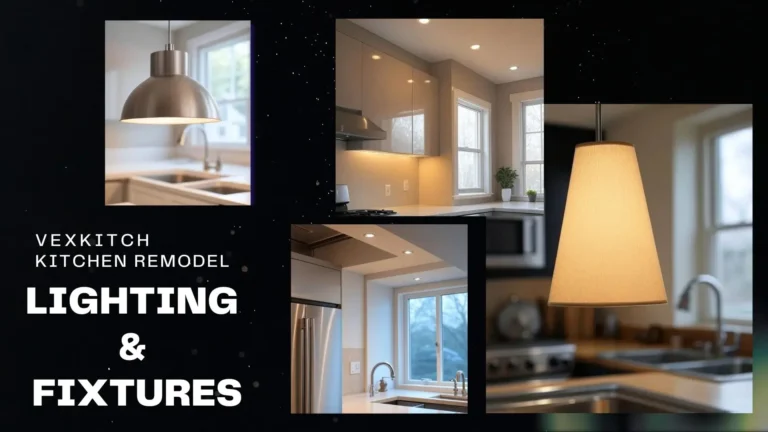
A broader kitchen lighting and fixtures plan should be coordinated early because under-cabinet, task, and ambient lighting can change how dark cabinetry reads after installation.
Best Countertops for Aubergine Kitchen Cabinets
The countertop should either support the aubergine cabinetry or become the main visual feature. Trying to make both equally dramatic can create too much competition.
Planning cabinetry and surfaces together through custom cabinetry solutions makes it easier to compare the complete palette before ordering materials.
Quiet Light Countertops
Warm white quartz, pale quartzite, and restrained natural stone work well when aubergine should remain the focal point.
A lighter counter can also create visual separation in rooms where deep cabinetry covers a large area.
Statement Stone
Strongly veined marble or quartzite can work with aubergine, but the rest of the palette should become quieter.
If the stone is dramatic, consider:
- simpler cabinet profiles
- more muted aubergine
- restrained backsplash
- limited hardware contrast
Dark Countertops
Dark stone can create a deliberately moody kitchen, but it needs adequate light and enough contrast elsewhere. For related planning, see Chula Vista ADU Kitchen Requirements.
A smaller kitchen with aubergine cabinets, black countertops, dark flooring, and a dark backsplash can become visually heavy very quickly.
Should the Cabinets or Countertop Be the Focal Point?
A practical kitchen usually benefits from one clear visual lead.
If aubergine is the focal point:
Choose:
- quieter stone
- restrained backsplash
- simpler hardware
- controlled flooring
If the countertop is the focal point:
Use:
- a slightly more muted aubergine
- simple cabinet doors
- restrained tile
- fewer competing finishes
Not every permanent surface needs to make a statement.
What Backsplash Works With Aubergine Cabinets?
The backsplash should usually be selected after the countertop.
Think in this order:
Cabinet → Countertop → Backsplash
Warm White, Cream, or Ivory
These are useful when the cabinetry already provides strong color.
Natural Stone or Slab Continuation
Continuing the countertop material up the wall reduces the number of competing finishes and can suit a cleaner modern design.
Muted Green or Another Controlled Color
A muted green can work with aubergine when the undertones coordinate, but the rest of the room should remain restrained. For related planning, see Green Kitchen ROI Calculator.
Avoid stacking saturated purple cabinetry, strong green tile, dramatic stone, patterned flooring, and several metal finishes unless a deliberately maximalist kitchen is the goal.
Homeowners comparing wall and floor finishes can review backsplash design improvements before final selections are made.
What Wood Tones Work With Aubergine?
Wood helps soften the appearance of dark painted cabinetry.
Light Oak
Natural or white oak adds brightness and grain, making aubergine feel less visually dense.
Walnut
Walnut creates a richer, moodier pairing that works better when the room has adequate light.
Warm Wood Flooring
Warm flooring can ground the cabinetry, but strongly orange or red wood should be checked carefully against red-purple aubergine. For related planning, see Range Hood Installation Cost in Chula Vista in Should Expect.
The goal is to introduce natural texture without creating another competing saturated color.
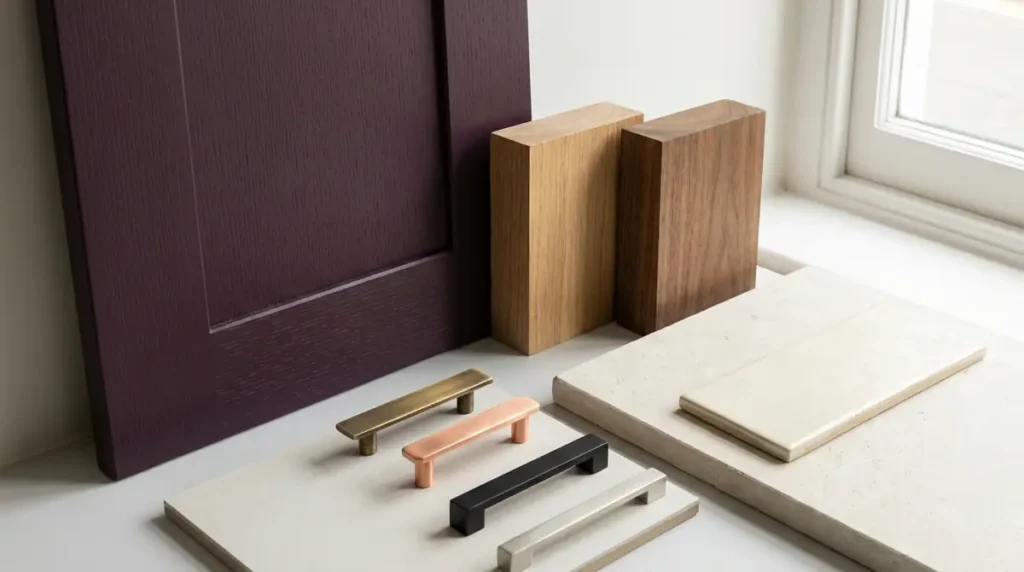
What Hardware Works With Aubergine Cabinets?
Several finishes can work.
| Finish | Effect |
|---|---|
| Brass | Warm contrast |
| Aged brass | Softer warmth |
| Copper | Strong relationship with red-purple shades |
| Matte black | Dark contemporary contrast |
| Nickel | Cleaner neutral break |
Brass is not automatically the best choice.
Cabinet hardware should be coordinated with the faucet, appliances, lighting, countertop, and specific aubergine undertone.
Can Aubergine Work in a Small Kitchen?
Yes, but placement matters.
A compact kitchen can use:
- aubergine lower cabinets
- cream or warm-white uppers
- light countertop
- restrained backsplash
- adequate task lighting
Try not to stack several dark horizontal and vertical surfaces in the same small room.
Aubergine itself is not the problem. The combined visual weight of the cabinetry, countertops, floor, backsplash, and lighting determines how dark the kitchen feels.
How to Keep Aubergine From Looking Too Themed
Repeating purple throughout the entire room can make the kitchen feel more like a color theme than a coordinated remodel.
There is rarely a need for:
- purple walls
- purple backsplash
- purple stools
- purple accessories
- purple decor
simply because the cabinetry is aubergine.
Natural stone, wood, warm neutral paint, restrained tile, and controlled metal finishes usually provide enough contrast.
Treat aubergine as a cabinet finish rather than a color that needs to appear everywhere.
Check Aubergine Against Adjacent Rooms in an Open Plan
Open-plan kitchens need to coordinate with the rooms visible beyond the cabinetry.
Compare the aubergine against:
- dining furniture
- living-room upholstery
- shared flooring
- nearby wall colors
- window frames
- visible metal finishes
A kitchen may look balanced when viewed alone but disconnected when seen alongside a nearby dining or living area.
What About Fingerprints, Wear, and Touch-Ups?
Dark painted cabinetry can show everyday use differently from lighter finishes.
Depending on the sheen and surface, homeowners may notice:
- fingerprints
- grease
- edge wear
- hand marks
- touch-up differences
A real finished sample is useful for judging both color and surface behavior.
Homeowners keeping their existing cabinetry can review kitchen painting and finishing for the refinishing side of the project.
Paint Existing Cabinets Aubergine or Replace Them?
Changing cabinet color does not automatically require new cabinetry.
Painting May Make Sense When
- cabinet boxes are structurally sound
- the existing layout works
- storage is adequate For related planning, see Kitchen Pantry and Storage Solutions That Improve Functionality and Organization.
- color is the main problem
Replacement May Make More Sense When
- cabinet boxes are damaged
- storage is inadequate
- appliance locations are changing
- island configuration needs redesigning
- door or drawer sizes no longer suit the layout
Color can improve the appearance of a functioning kitchen, but it cannot correct an inefficient cabinet layout.
How to Keep Aubergine Cabinets From Looking Dated
Aubergine has strong trend momentum, but no cabinet color can be guaranteed to stay fashionable indefinitely.
Think about which choices are harder to change.
Harder to Change
- cabinetry
- countertops
- flooring
- backsplash
Easier to Change
- hardware
- wall paint
- stools
- lighting
- decor
Homeowners concerned about long-term flexibility can use aubergine on an island or lower cabinets while keeping countertops, flooring, and other large surfaces relatively restrained.
8 Common Aubergine Kitchen Cabinet Mistakes
1. Choosing Aubergine From a Tiny Swatch
Review a larger finished sample in the actual kitchen.
2. Ignoring the Undertone
Determine whether the shade leans red, brown, plum, or nearly black.
3. Using Full Dark Cabinetry Without Checking Light
Evaluate the room during both daytime and evening conditions.
4. Making Cabinets and Countertops Compete
Choose which permanent surface should lead visually.
5. Selecting the Backsplash Before the Countertop
Coordinate the countertop first, then choose the backsplash.
6. Adding Too Many Saturated Colors
Let aubergine provide most of the color unless a maximalist design is intentional.
7. Ignoring Adjacent Rooms
Check the cabinet color against shared flooring, furniture, and wall colors.
8. Choosing Aubergine Only Because It Is Trending
Use the color because it works with the room and homeowner preference, not because it is temporarily popular.
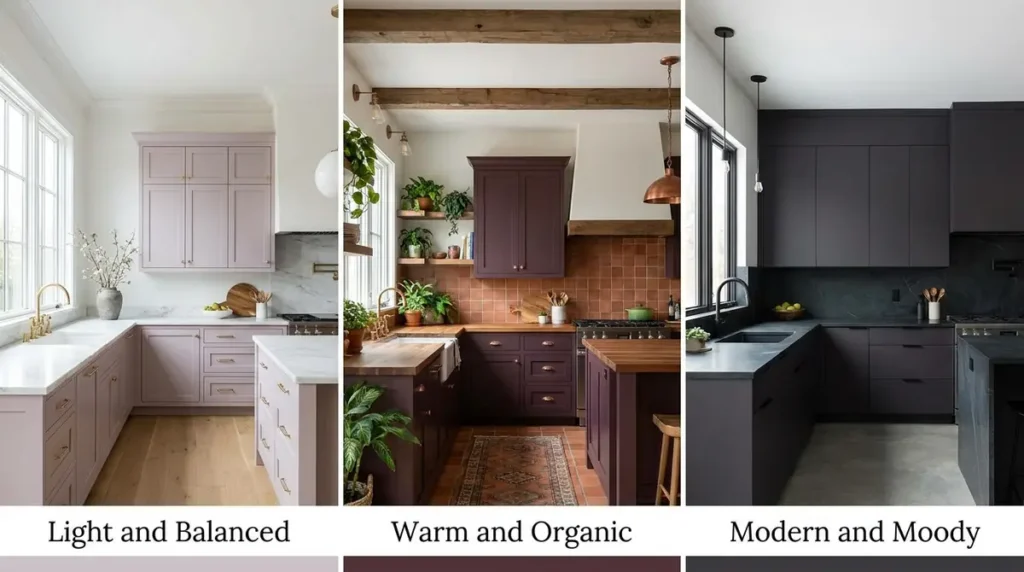
3 Aubergine Kitchen Remodel Formulas
Formula 1: Light and Balanced
- Aubergine lower cabinets
- Cream upper cabinetry
- Warm white quartz
- Ivory backsplash
- Light oak flooring
- Aged brass hardware
Best for: smaller or lower-light kitchens.
Formula 2: Warm and Organic
- Full aubergine cabinetry
- Warm natural stone
- Natural oak flooring
- Restrained cream backsplash
- Brass or copper accents
Best for: brighter kitchens where wood and stone can soften the deep cabinet color.
Formula 3: Modern and Moody
- Deep aubergine cabinetry
- Pale statement stone
- Simple backsplash
- Dark or neutral flooring
- Restrained black or metallic hardware
Best for: larger kitchens with adequate lighting and a deliberate darker palette.
Best Order for Choosing Aubergine Kitchen Materials
A structured selection order reduces conflicts between permanent finishes.
- Confirm the kitchen layout.
- Decide where aubergine will be used.
- Select the aubergine undertone.
- Select cabinet finish and sheen.
- Choose the countertop.
- Coordinate the backsplash.
- Confirm flooring.
- Select wall color.
- Select hardware.
- Review the lighting plan.
- Compare all samples together in the room.
The largest and hardest-to-change surfaces should be coordinated before smaller decorative details.
Planning an Aubergine Kitchen Remodel in Chula Vista
A bold cabinet color works best when it is planned alongside the functional remodel.
Cabinet layout, storage, island dimensions, countertop material, flooring, backsplash, lighting, appliance placement, and plumbing can all affect which aubergine configuration makes sense.
Vexkitch Kitchen Remodeling has served the local market since 2017, with more than 700 completed remodeling projects and four full-time crews. Homeowners considering a larger project can review our complete kitchen remodeling services in Chula Vista when coordinating cabinet layout and material selections.
Frequently Asked Questions
Is aubergine a good color for kitchen cabinets?
Aubergine can work well when homeowners want a deeper alternative to standard navy, gray, or black cabinetry. Its success depends on undertone, lighting, material placement, and how much of the room is covered in the color.
Does aubergine make a kitchen look dark?
It can add visual weight, especially in low-light rooms. Using it on an island or lower cabinets and balancing it with lighter counters, uppers, backsplash, and appropriate lighting can reduce that effect.
Should all kitchen cabinets be aubergine?
Not necessarily. Aubergine can be used on an island, lower cabinets, selected tall cabinetry, or throughout the entire kitchen depending on room size, lighting, and desired color commitment.
What countertop goes with aubergine cabinets?
Warm white quartz, pale quartzite, natural stone, dramatic statement stone, and selected dark countertops can work. The best choice depends on whether the cabinets or countertop should be the main focal point.
What backsplash works with aubergine cabinets?
Warm white, cream, ivory, natural stone, slab backsplash, and carefully selected muted colors can work. Choose the countertop first so the backsplash supports both major surfaces.
What hardware works with aubergine cabinets?
Brass, aged brass, copper, matte black, and nickel can all work depending on the aubergine undertone and other fixtures in the kitchen.
Can aubergine work in a small kitchen?
Yes. Aubergine lower cabinets or an aubergine island paired with lighter upper surfaces, countertops, and adequate lighting can work well in a compact kitchen.
Planning Your Cabinet Color and Material Choices?
Aubergine cabinetry works best when the color, layout, stone, backsplash, flooring, wood, hardware, and lighting are planned as one system.
For projects involving new cabinetry or broader layout changes, explore Vexkitch Kitchen Remodeling’s complete kitchen remodeling services in Chula Vista to coordinate the major decisions before materials are ordered.